The Bhutanese Leading the way.
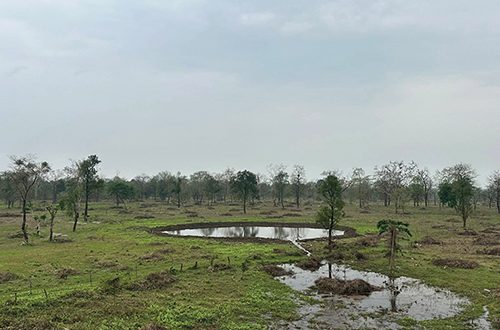
The 5th Gelephu Mindfulness City (GMC) Volunteers, who arrived from 21 to 25 February this year, initiated habitat enrichment activities at the Zombabe waterhole, marking an important step in ongoing conservation efforts in the area.
Their work focused on planting elephant-palatable and wildlife-supporting species such as banana, Napier grass, and maize, with the aim of improving food availability and habitat conditions for wildlife.
This initial effort was further strengthened and upscaled during the 6th GMC Volunteers programme. In addition to continuing the planting and enrichment work, further interventions were introduced, including the addition of mineral salt to improve habitat attractiveness for wildlife. These combined efforts reflect a continued and expanding approach to enhancing the ecological value of the waterhole.
Zombabe is a key habitat enrichment area within the Gelephu Mindfulness City project in Chuzergang, Bhutan, aimed at restoring ecological corridors and supporting human-wildlife coexistence.
It is a part of the ecological corridor of the Gelephu Mindfulness City. The GMC ecological corridor is a key feature of the 2,600-square-kilometre development, designed to protect wildlife movement, particularly for endangered Asian elephants, between the Royal Manas National Park and Phibsoo Wildlife Sanctuary. This corridor is intended to ensure that wildlife can move safely between habitats while maintaining ecological balance within the region.
In the early stages of the waterhole’s development, the first visitors of the Zombabe waterhole were cattles that were gathered around to drink from it.
Wildlife visitation has steadily increased over time, indicating the positive response of fauna to the habitat improvement efforts carried out under the volunteer programmes.
Notably, since 16 April 2026, a herd of approximately seven elephants has been regularly visiting the waterhole. The repeated presence of elephants marks a significant development in the area’s ecological recovery and suggests that the interventions are beginning to meet the needs of larger wildlife species.
In addition to elephants, several other wildlife species have also been recorded at the site. These include barking deer, hog deer, wild hare, and peafowl, reflecting a growing diversity of fauna utilizing the waterhole and surrounding habitat.