The Bhutanese Leading the way.
Concerns over rainfall and Thorthomi
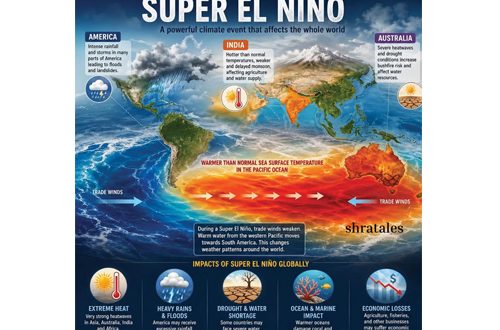
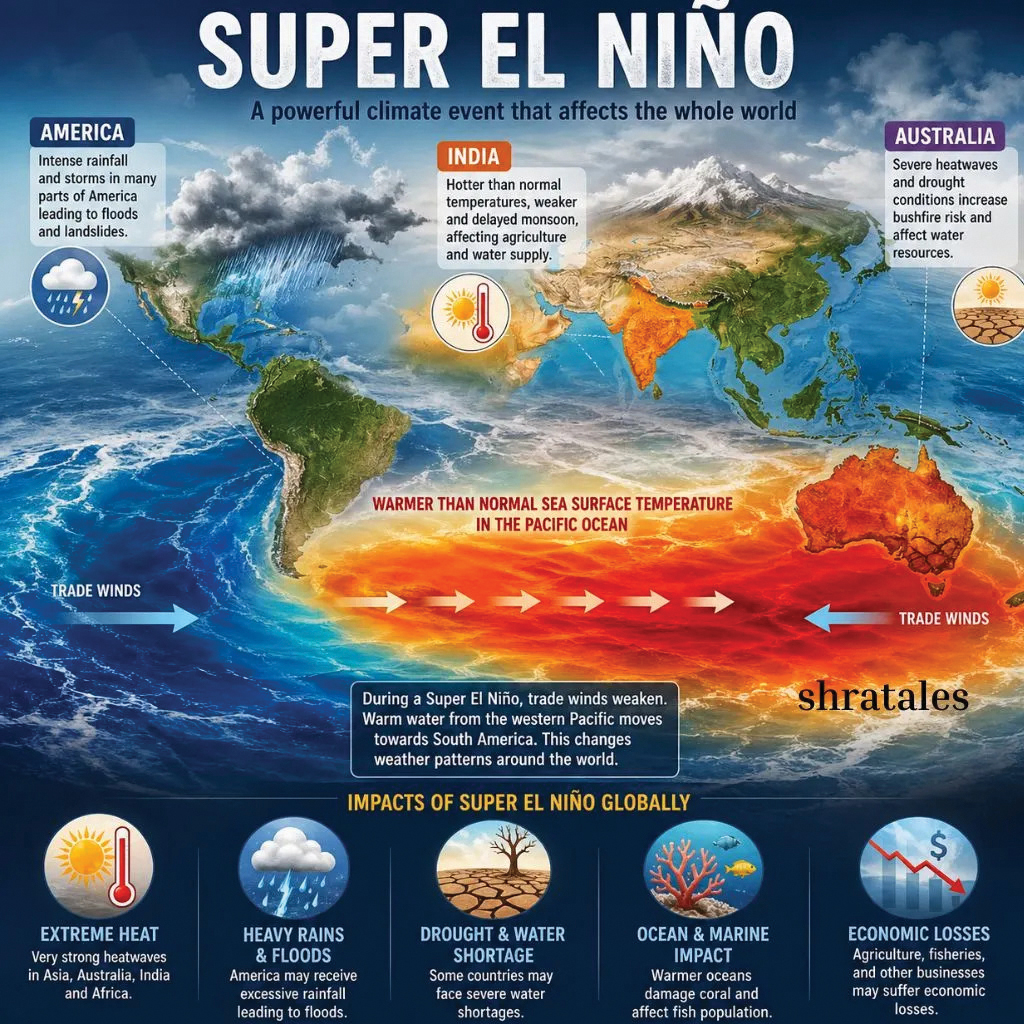
International climate research agencies forecast that global temperatures could spike up this year, as experts say there is a high chance of a ‘super’ El Niño’.
This developing phenomenon is expected to bring higher temperatures to India and the Hindu-Kush Himalayas (HKH), raising concerns over glacier melting rates and potential risks for Glacial Lake Outburst Floods (GLOFs).
The ‘super’ El Niño is termed for a very strong El Niño where the warming of sea surface temperatures is higher than 2 degrees Celsius (C) above normal. According to an article from The Guardian, it may “supercharge weather events around the world.”
The India Meteorological Department (IMD) has already warned of increased upcoming heatwave days, with a hottest day of 42.8 degrees C being recorded in Delhi this year.
An official from the National Centre for Hydrology and Meteorology (NCHM) Ugyen Chophel said that according to data recorded from international models, there is an approximate 70 percent chance that a super El Niño may occur this year.
However, it is too early to get a definitive picture of this phenomenon.
Ugyen said, “The current forecasts are only a global outlook and we cannot say anything in certainty about its implications for now.”
He added that El Niño causes weaker summer monsoons, with lesser rainfall and slightly warmer temperatures in the Southeast Asian region.
Because Bhutan lies in the Himalayan foothills rather than the core southern monsoon belt, the NCHM notes that there is no ‘1:1 association’ between El Niño and reduced local rainfall.
Local precipitation is primarily driven by Bay of Bengal moisture and the ‘orographic effect,’ where rising mountain air triggers rainfall, factors that historically have maintained normal levels during previous El Niños.
“For these reasons, we cannot definitely say that there will be less rainfall in the upcoming monsoon season,” said Ugyen.
“Published literature on previous El Niño occurrences showed that Bhutan received normal rainfall even though predictions say there would be weaker monsoons but it is hard to tell how it would be for the upcoming season,” he added.
NCHM will provide a definitive monsoon outlook for Bhutan following the National Climate Outlook Forum in late May, which will synthesize global ocean data with local variables.
On Thorthomi Lake
Although El Niño forecasts are not definite yet, the risks remain alarming.
One special concern is the risks of accelerated glacier melting in the Himalayas and in Bhutan.
To get an overall picture of glacial retreat in Bhutan; an official from the Cryosphere Division in NCHM, Karma Toeb said that it is a natural phenomenon that with the coming summer season and warmer temperatures, glaciers would melt in the mountains.
He said, “It is known that the rate of warming is more in the highlands. International literature also mentions that there is accelerated retreat of glaciers in the eastern part of the Himalayas, where Bhutan’s glaciers are situated.”
Glacial retreat rates differ with type of glaciers as well. Large debris covered valley-type glaciers like those in Lunana were recorded to have an average melting rate of 32-35 metres per year.
While Bhutan hosts over 700 glaciers, NCHM monitors three ‘benchmark’ glaciers (Thana, Gangju La and Shodug) which serve as representatives for the country’s overall cryospheric health.
These three glaciers are the clean type and represent the overall 700. He said that they have analyzed these glaciers and recorded the retreat rate of 12-16 metres per year.
Based on this scope of analysis, he said that it may have an impact on our water resources in the longer run.
In terms of the super El Niño, the official said that they are currently not in a position to say how it is going to affect Bhutan.
Temperature spikes would affect glacier retreat rates and may even affect moraine wall stability.
“If the temperature in Lunana increases abruptly, the stability of the ice cored moraine walls surrounding the lakes may be compromised. In that scenario, it would have an impact,” Karma added.