The Bhutanese Leading the way.
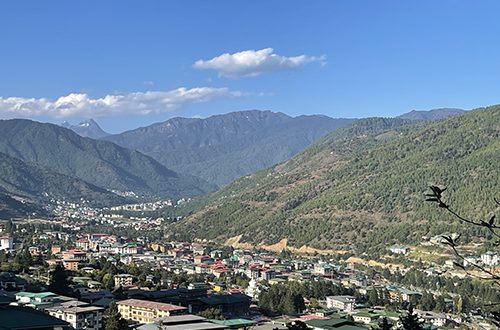
Finding decent and affordable accommodation in Thimphu remains a challenge for many residents as rental costs continue to put pressure on household incomes. At the same time, several commercial buildings and shop spaces in parts of the capital appear to remain vacant, raising questions about the gap between available properties and the growing need for affordable housing.
The situation brings into focus whether Thimphu is facing an overall shortage of housing or a shortage of residential accommodation that ordinary residents can afford. High rental expectations, property owners’ financial commitments, limited housing options and a possible mismatch between property supply and demand could all be contributing to the problem.
Leki, a Thimphu resident who runs a small pan shop, said she shares a rented house in Upper Motithang with two other friends to manage the cost of accommodation. The monthly rent is Nu 16,000, with an additional Nu 150 for water. Divided among the three occupants, each pays approximately Nu 5,384 a month. “Every morning, I have to hire a taxi, which costs me Nu 250 a day. My shop is small compared to others, so I do not make much profit. My husband and I depend on the income from this small shop to sustain our family,” she said.
Leki said she had tried to find accommodation closer to her shop but had difficulty finding an available house. Even when accommodation was available, she said the high rental costs made it difficult for her to afford.
An official from the Department of Human Settlement under the Ministry of Infrastructure and Transport (MoIT) said that Thimphu’s housing demand has increased over the years, partly due to the growing number of smaller households. According to the Population and Housing Census of Bhutan (PHCB) 2017, Thimphu Thromde had about 30,059 regular households. The average household size has also declined from 4.6 persons in 2005 to 3.7 persons in 2025, adding to the demand for separate housing units.
The official said the latest household figures cited in the report are from the 2017 census, which recorded 30,465 households in Thimphu. Of these, about 77 percent were tenants, while only 19 percent were owner-occupiers. The vacancy rate stood at just 1.6 percent, indicating limited availability of unoccupied housing. The census also found that about 10 percent of tenants lived in basements, attics or building extensions with poor ventilation and inadequate natural light. Nationally, the number of urban households increased by about 50 percent between 2005 and 2017, while the number of urban housing units grew by only 34 percent. This left a gap of approximately 8,000 households that could not be accommodated by the additional housing stock.
The official attributed the shortage of affordable housing to several factors, including high construction costs and the expense of developing supporting infrastructure. Most rental accommodation is also supplied by individual landlords who construct buildings gradually, often adding a few floors at a time, rather than by developers undertaking large-scale housing projects. Limited public housing is another challenge. The National Housing Development Corporation Limited (NHDCL) has a waiting list of more than 1,500 applicants in Thimphu, with waiting periods ranging from six months to over three years.
He said Bhutan’s housing governance framework has strong policy intentions, but fragmented institutional responsibilities and weak coordination continue to hinder effective implementation. The official said housing policy, spatial planning, land administration, infrastructure planning and financing systems are not yet fully integrated, making coordinated housing delivery difficult. Housing targets are also rarely defined in spatial planning instruments. While these plans regulate land use and building development, they often do not specify the number of housing units required, the types of housing needed or affordability requirements.
Regulatory gaps, particularly in the governance of multi-unit housing, have also limited the development of higher-density and more efficient urban housing. Although data systems are improving, they remain insufficiently integrated to support coordinated, evidence-based housing policies and investment decisions. Despite policy commitments to prioritize housing in national and local planning, its integration into spatial plans remains inconsistent. Local Area Plans (LAPs), for instance, often classify land under the general category of “residential” without specifically allocating plots for public, rental or affordable housing. As a result, these plans rarely identify land for low- and middle-income housing.
The official said that although the National Housing Strategy and Policy (NHSP) 2019 requires urban development schemes and mega-projects to include land for housing, this has not been implemented on a significant scale. LAPs often lack specific housing provisions and regulatory incentives to encourage private investment in affordable housing.
The MoIT is responsible for monitoring land use and preventing the unauthorized conversion of land designated for housing to commercial or institutional purposes. However, weak enforcement has allowed significant areas designated for residential use to be converted to other purposes or remain undeveloped, further limiting the supply of land available for housing. He said Bhutan has nevertheless made progress in addressing these challenges through the development of the National Housing Strategy (NHS). The September 2026 working draft, toward a National Housing Strategy for Bhutan: A Guidance Note, is an important step towards translating the National Housing Policy 2020 into a more practical framework.
The draft is built around six strategic objectives and 29 strategic actions, supported by phased implementation plans that identify lead and supporting agencies, implementation stages and expected outputs. Importantly, the draft recognizes affordable rental housing as a central part of Bhutan’s housing system, rather than treating homeownership as the only desirable housing option, the official said.
A building owner in Babesa said he has been advertising his vacant commercial space on social media for the past month but has yet to receive a positive response from potential tenants. He said the space was previously used as a store and rented out for Nu 50,000 a month. However, he has now reduced the monthly rent to Nu 30,000 in an effort to attract tenants, but the space remains unoccupied. “I will wait for a few more months to see if anyone is interested in renting it as a commercial space. If it remains vacant, I plan to seek approval to convert it into an apartment,” he said.
An official said several challenges continue to limit private-sector investment in housing. The absence of a condominium law has created legal uncertainty around shared spaces and building management, making buyers, lenders and developers hesitant to invest in multi-unit housing. The official said the developer base is fragmented, with limited capacity to prepare large-scale projects and a lack of reliable market data. High land costs and low returns, particularly in smaller towns, further discourage investment. In some cases, landlords have converted residential properties into commercial spaces or hotels to generate better returns. He said the National Housing Strategy report, which is still under preparation, recognizes that the private sector alone cannot expand multi-unit housing at the required scale without public support to reduce investment risks.
Trashi, who works as a salesperson at a clothing shop in Thimphu, said she has been looking for an affordable place to rent for almost a year but has yet to find suitable accommodation. She is currently staying with her cousin while continuing her search for a place of her own. She said finding a house within her budget has been difficult, as the available rental options are often beyond what she can afford. Despite working in the capital, she has been unable to secure accommodation that fits her income.
For workers earning modest salaries, high rental costs can make independent living difficult and leave them dependent on relatives or shared accommodation.
Several initiatives are under way to address Bhutan’s housing challenges, including the formulation of a Housing Bill aimed at creating an enabling environment for safe and affordable housing. The proposed legislation is expected to promote homeownership, address the housing needs of vulnerable groups and strengthen governance through a clearer institutional framework for the housing sector.
About 1,000 affordable housing units are also under construction with funding from the Asian Development Bank-supported Green and Resilient Affordable Housing Sector Project (GRAHSP). The units are being developed across several urban centres, including Thimphu, Phuentsholing, Nganglam, Samdrup Jongkhar, Samtse and Trashiyangtse.
Draft condominium regulations are also being developed with support from the ADB. Meanwhile, the NHDCL, together with the Ministry of Finance, is reviewing its maintenance financing arrangements. The National Housing Strategy also recommends expanding public rental housing and ensuring fairer allocation of units, with coverage extended beyond Thimphu. It calls for improved access to serviced land and essential infrastructure, as well as a stronger legal framework for condominiums and shared property ownership.
“The strategy further recommends creating more homeownership opportunities for upper-middle-income households through savings schemes, microfinance and concessional housing loans. It also highlights the need to improve housing data systems and strengthen the capacity of local governments to plan and manage housing development,” the official said. The strategy recommends tailoring housing solutions to the needs of different locations, including exploring ways to make better use of vacant houses in rural areas, commonly known as gungtongs.