The Bhutanese Leading the way.
As Bhutan’s population ages, the government is looking at ways to keep older citizens economically active, including revising the retirement age and providing opportunities for them to return to work after retirement.
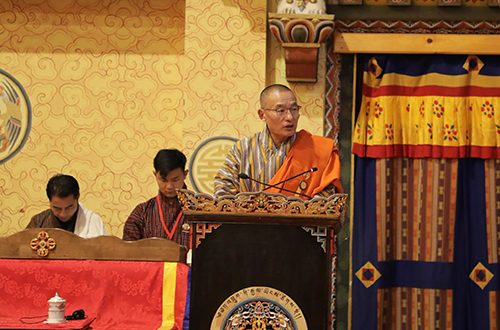
During the Question Hour of the National Council’s 5th Sitting of the 38th Session, Prime Minister Dasho Tshering Tobgay said that the growing number of senior citizens was a concern, particularly as the country faces a declining fertility rate and a smaller working-age population.
The PM responding to a question from Eminent Member of NC, Kesang Chuki Dorjee on whether older citizens from farming, public service, uniformed services and other backgrounds would be prioritised for reskilling and re-engagement, the PM said that the government would explore opportunities to make use of their experience and skills.
One of the measures being considered is increasing the retirement age. Currently, the retirement age for civil servants ranges from 57 to 63 years, depending on their position category.
Bhutan is projected to become an ageing society by 2027, with people aged 65 and above accounting for more than seven percent of the population.
By 2047, the country is expected to become an aged society, when the share of people aged 65 and above reaches 14 percent or more.
The PM said, “The increase in the senior citizen population was largely due to two factors: people living longer and declining fertility rates.”
Life expectancy has increased from 66 years in 2005 to 74 years today.
The Prime Minister described this as good news, attributing the improvement to development, peace and happiness in the country, as well as free health services.
The declining fertility rate, however, presents another challenge.
The fertility rate, which stood at 5.6 children per woman in 1994, dropped to 2.5 in 2005 and further declined to 1.7 in 2017. The fertility rate required to maintain the population is 2.1.
The PM said, “People are now postponing marriage and seeking better opportunities abroad after receiving quality education. This has also contributed to fewer births.”
Nearly 72,000 Bhutanese youths are currently living abroad, either studying or working.
The changing population structure is also reflected in the median age.
It increased from 22 years in 2005 to 27 years today and could reach 40 by 2047.
The PM said, “Countries such as South Korea, Singapore and Japan were already dealing with similar challenges. However, unlike these developed countries, Bhutan is still in the process of becoming a rich country and had fewer resources to manage the impact.”
According to PM, when the older population becomes larger than the youth population, there will be fewer people in the workforce and, consequently, fewer taxpayers. This is a serious concern for the country’s economy.
The PM said that a smaller workforce and fewer taxpayers could make it difficult to provide the support needed by senior citizens.
The government is also looking at ways to support older citizens beyond public service.
The PM said that the eight focus areas of the 21st Century Economic Roadmap could also provide opportunities to utilize the experience and skills of older citizens.
The PM pointed out several existing initiatives for senior citizens, including Gyalzin Gensho Tshogpa, established through a Royal Kasho in 2011, which now has more than 900 members. Other initiatives include Gensho Tshamkhang, Kidu Mobile Unit and Gensho Zhabto Kidu.
The government is also working on the Policy Action Plan for Senior Citizens, National Sustainable Development Strategy, National Social Protection Plan and National Human Capital Development Plan.
New initiatives include Club Houses, with support from India, and Senior Citizen Tewa, supported by the Asian Development Bank.
The PM also expressed gratitude to His Holiness the Je Khenpo for initiating a house in Punakha for monks and nuns aged 60 and above and contributing Nu 10 million towards their pension.
He said the upcoming National Population and Housing Census would provide more accurate information on the country’s ageing population.