The Bhutanese Leading the way.
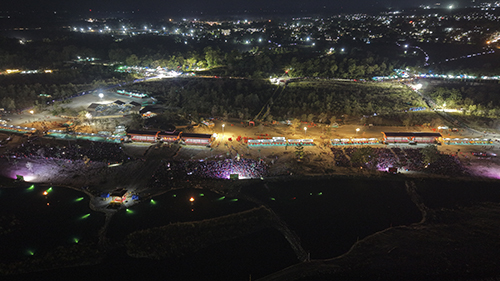
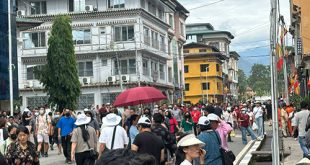
The historic construction of the 108 Jangchub Chortens in a single day drew the largest gathering of people in Bhutan’s event history. The sheer scale of the turnout significantly surpassed the turnout at last year’s Global Peace Prayer Festival.
However, with such a massive crowd converging on Gelephu, logistical challenges inevitably arose in managing traffic, crowd movement, sanitation, seating, and accommodation.
Heavy Traffic and Peripheral Congestion
Traffic congestion emerged early as the event approached. By 8 am, gridlock stretched from Hongtsho all the way to Dochula Pass. A primary trigger was the routine vehicle checkpoint at Hongtsho. Once the heavy congestion became clear, the Royal Bhutan Police (RBP) suspended vehicle checks at the post to restore traffic flow.
In addition to the narrow, two-lane road toward Dochula, impatient drivers overtaking long queues further compounded the delays. The immediate deployment of additional RBP personnel temporarily eased the bottleneck. Later in the evening, however, congestion flared up again from the Loring Bridge toward Sarpang, as well as at the Gelephu and Sheychamthang ICP entry points.
Transport and Public Transit Logistics
More severe traffic issues unfolded around the peripheries of Gelephu town. Because main town thoroughfares were closed, vehicles were rerouted through designated peripheral roads. The RBP had anticipated over 40,000 vehicles for the event.
The mix of private vehicles, taxis, and buses led to frequent congestion for commuters traveling between the town center and peripheral areas such as Pelrithang, Sershong, and Chuzergang.
Ugyen, a local taxi driver, suggested: “If private vehicles had been restricted and access granted only to taxis and buses, traffic would have moved much faster.” A resident echoed this view, noting that prioritizing public transit and taxi shuttles could have ensured a continuous traffic flow.
Despite extended waiting times, the RBP managed the complex traffic situation commendably. No major road accidents were reported. Congestion was largely driven by the high volume of private vehicles, which hindered smooth operations for taxis and commuters alike.
Taxi Coordination Challenges
To commemorate the auspicious occasion, many taxi drivers volunteered to offer free rides. Beyond foregoing fares, many worked late into the night in the spirit of community service.
However, given the unprecedented crowd, the available taxi fleet proved insufficient. Long queues formed at taxi stands as passengers waited for rides. Frustration mounted, leading to occasional disputes among drivers.
Some attendees reported that taxis refused to stop for commuters along the highways. In other instances, drivers overcharged passengers, demanding up to Nu 500 for local trips that normally cost Nu 200. Drivers attributed some of the pickup issues to regulations restricting them to designated loading zones.
“I was charged Nu 500 after waiting for hours in the heat at the Zeeray,” said Gyem, an attendee. “Exhausted and just wanting to get home, I had no choice but to pay the price.”
Other attendees noted seeing exhausted drivers sleeping in their cars and turning down paying passengers.
“We worked until 3 am or 4 am offering free services. It is unfair for people to speak negatively about all of us because of a few bad examples,” said Ugyen the taxi driver.
In contrast, operations at the main bus terminal ran smoothly, supported by coordinating officials from the Bhutan Construction and Transport Authority (BCTA) and Desuups. “It would have helped if officials were also deployed at taxi stands to coordinate pickups,” remarked a female attendee.
Sanitation and Water Shortages
Sanitation infrastructure was expanded for this event, with restrooms placed closer to attendee zones. However, the sheer volume of users combined with a lack of running water caused severe disruptions, leading to clogged facilities and forcing some attendees to use nearby forested areas.
Gelephu town also faced broader water shortages affecting local residences and commercial establishments. Water tankers were deployed to supply fresh water to buildings, providing crucial relief to residents. Nevertheless, many business owners were forced to lock their restrooms due to water scarcity, further limiting public access. Sanitation management is expected to improve as municipal infrastructure and water treatment systems in Gelephu continue to upgrade.
Wildlife Management and Public Safety
Human-elephant conflict management was a clear success in GMC area, with zero elephant-related incidents or casualties reported. Officials confirmed that 125 personnel were deployed for wildlife monitoring and public protection.
Quick Response Teams (QRTs) were stationed on the ground to monitor movement, issue alerts, conduct public awareness, and ensure the safety of residents and visitors. Pre-event training and monitoring allowed wildlife teams to manage elephant movements effectively. Visitors were even able to see calm, managed elephants near Central Park without safety risks.
Infrastructure and Waste Management
While street lighting setup across key zones helped illuminate major pedestrian paths, waste management stood out as one of the event’s smoothest operations.
Teams from the Bhutan Waste Management and Recycling Association (BWMRA), Ucykal Pvt. Ltd., and Zero Waste GMC (Gelephu Thromde) worked continuously behind the scenes to manage event waste. Volunteers ensured that the Zeerays, campsites, and town spaces remained clean throughout the gathering. During the Royal Tokha, His Majesty The King personally commended and praised the dedicated waste management teams for their hard work.