 The Bhutanese Leading the way.
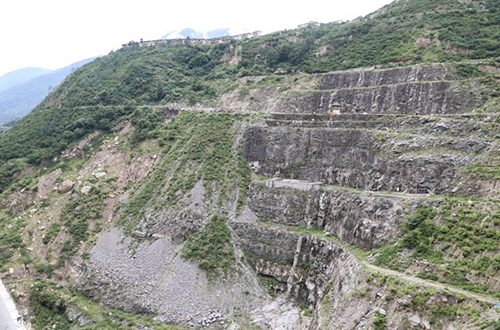
According to the Ministry of Energy and Natural Resources, the right bank slope stabilization remains a critical factor that could affect both the timeline and cost of the P I Project, as specialized engineering works pose significant challenges.
Measures such as reinforced cement concrete (RCC) piles and high-capacity cable anchors are required for slope stabilization, while removal of overburden from the right-hand hillslope is another activity with major implications for time and cost. Additional key works include implementation of a modified spillway structure, repurposing of one diversion tunnel, and the design and installation of deep drainage wells to control seepage.
These risk-related activities come as the project prepares to move into the dam construction phase, which is expected to commence by March 2026. The project management is currently working out the implementation timeline in line with the scope of works being finalized, which will provide a clearer indication of when commissioning can be expected.
The project was originally scheduled for commissioning in 2016. However, failure of the right-hand hillslope of the dam in July 2013, followed by subsequent failures in 2016 and 2019, led to dam construction coming to a standstill from 2020 onward.
As part of ongoing preparatory efforts, construction of the approach road to the dam and realignment of the national highway diversion are underway. The scope of works for the dam contractor is also being finalized. Detailed designs related to stabilization measures are in progress, with most of the designs expected by the end of February 2026 and the remaining by April 2026.
The overall physical progress of the project stands at 87.75 percent, with Nu 87.744 billion spent so far. The current works on the approach road and highway diversion are intended to facilitate the implementation of stabilization measures and future dam concreting.


