The Bhutanese Leading the way.
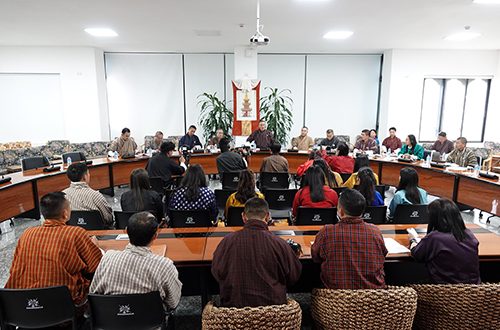
MoICE Minister Lyonpo Namgyal Dorji addressed recent concerns regarding the cancellation of a private newspaper’s license, clarifying that the decision was strictly procedural.
The license expired on 30th October 2025, and despite the full 120-day renewal window, including grace and penalty periods, and multiple reminders, the required documents were not submitted. Lyonpo emphasised that the cancellation was procedural, not discretionary.
On broader concerns regarding press freedom, access to information, and the Meet-the-Press platform, Lyonpo Namgyal Dorji acknowledged that these are important issues that are taken seriously. He noted that the Meet-the-Press platform was instituted to strengthen transparency and ensure regular, direct engagement between the government and the media. The Prime Minister’s Office was recently recognised with a Media Award at the Bhutan Media Forum, which the minister said underscores the platform’s positive impact and credibility.
At the same time, Lyonpo stated that concerns of agencies withholding information without a valid reason should be formally brought to the MoICE for appropriate action. He also highlighted the importance of considering both Bhutan’s global standing, including the RSF Press Freedom Index, and the substance of the country’s media ecosystem.
On media development, Lyonpo Namgyal Dorji outlined steady progress under the Economic Stimulus Programme (ESP) between 2024 and 2026. The program supported multiple rounds of capacity-building for young journalists, initiated media engagement platforms such as the Bhutan Media Forum, strengthened media and digital literacy programmes, supported equipment and content creation, and continued collaboration on journalism awards.
Lyonpo also stated that, under the Media Enterprise Development Budget program, all private media houses receive direct annual financial support of approximately Nu 0.6 mn, complemented by professional capacity-building delivered through civil society organizations, such as the Bhutan Media Foundation and the Journalists’ Association of Bhutan.
On the question of a private TV channel, and the transformation of BBS into a Public Service Broadcaster, Lyonpo Namgyal Dorji stated that both initiatives are intended, with the transformation of BBS already mandated under the ICM Act 2018. However, both initiatives currently hinge on the absence of a comprehensive media and broadcasting policy framework. Preparatory work including market assessments, stakeholder consultations, and internal reviews has been completed, but proceeding without a clear policy framework would not be prudent. Once the Media Policy is in place, informed and sustainable decisions can be made.
Regarding BBS, the minister clarified that the transformation is not simply a matter of changing nomenclature. It requires a well-considered restructuring to ensure long-term sustainability, given its dual nature as a company and a state-owned enterprise, and will require close coordination with its management, Board, and relevant agencies.