The Bhutanese Leading the way.
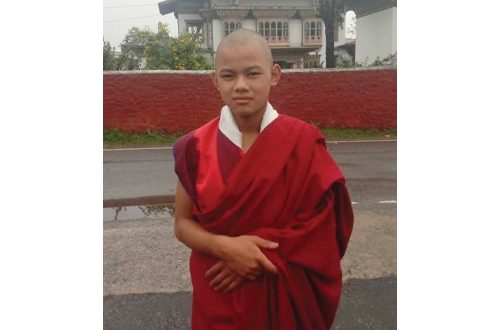
A grieving mother has appealed to the Sarpang Dzongkhag Court, claiming that justice has not been delivered to her deceased 17-year-old son, Sonam Tshering, a former monk, as she continues to link his death by suicide to an earlier assault at his monastery.
The appeal follows after judgment by the Dungkhag Court on 31st March 2026, which sentenced a 38-year-old Kudrung (senior monk/teacher) for the offence of battery but did not establish any causal link between the assault and the boy’s death.
Mother recounts events leading to son’s death
The mother shared that on 31st October 2025, she and her husband visited their son at his monastery in Sarpang. She found him lying in his room and, upon asking, he said he had stomach pain. Concerned, she suggested taking him to the hospital, but he refused. Knowing he liked fried rice, she also offered to take him out for a meal, but he declined.
Sensing something was wrong, she returned to his room after briefly leaving.
Upon checking his body, she discovered severe bruises on his buttocks. When she asked about them, her son told her that the Kudrung had beaten him the previous day for leaving the Dratshang premises without permission and playing basketball at a nearby school.
He explained to her that even if he had sought permission, it would not be granted, so he went out without informing anyone. Upon his return he skipped dinner and attended the evening prayers. After the prayers, the Kudrung questioned him and then instructed four senior monks to hold him while he was beaten on the lower parts of his body.
The mother immediately informed the father, who had been waiting outside. They then approached the Kudrung, requesting permission to take their son to the hospital. However, she claims the Kudrung initially insisted that they would treat the wounds themselves.
The mother refused, stating that if proper care had been intended, it would have already been provided.
They then took their son to the hospital, where doctors advised that the case be reported to the police before treatment could proceed. The parents followed this instruction and filed a complaint.
Police investigation and court proceedings
The Royal Bhutan Police registered the case and charged it as battery.
According to court records, on 30th October 2025, the deceased had left the Dratshang without permission and gone to Kundrup School.
Upon returning around 4:00 PM, he was questioned by the Kudrung regarding an alleged interaction with a girl. When he denied it, the Kudrung claimed to have evidence and ordered four monks to restrain him before administering corporal punishment using a leather whip (taycha).
Medical examination later recorded multiple bluish discolorations and abrasions on the buttocks, categorized as non-grievous injuries.
The Kudrung admitted to administering the punishment, stating that it was in line with monastic disciplinary practices.
On 15th November 2025, about two weeks after the incident, the boy died by suicide at his residence.
Following the death, the mother alleged that the suicide was a result of the earlier beating. However, police investigations did not establish a causal link between the battery and the suicide, concluding instead that the death was due to personal and social factors.
The case was subsequently closed in this regard, though the battery charge proceeded.
Court findings and sentencing
In its judgment, the court found that the Kudrung committed the offence of battery by striking the deceased with a leather whip, causing bodily injury.
The court sentenced the Kudrung to three months’ imprisonment under Section 159(a) of the Penal Code for a petty misdemeanor. However, under Section 28 of the Penal Code, the sentence can be commuted upon payment of a fine within 20 days.
The court also ordered the Kudrung to pay Nu. 11,250 as compensation to the family, calculated based on three months’ minimum daily wage, after deducting Nu. 100,000 already provided by the monastery as condolence money (semso).
The court clarified that its role is limited to adjudicating charges brought before it and that it cannot investigate or rule on matters not formally charged.
It stated that determining any link between the battery and the death falls within the jurisdiction of investigative and prosecutorial agencies.
While acknowledging that corporal punishment may have been practiced traditionally, the court emphasized that any use of physical force is a criminal offence unless justified under specific legal provisions such as self-defense.
Mother disputes findings
The mother, however, strongly disputes several findings presented in court.
She said her son had never mentioned any interaction with a girl and denied claims that he had expressed a desire to leave monastic life. Instead, she said that after the incident, she had considered withdrawing him from the monastery, but her son insisted on continuing his monastic path.
She further shared that her son had become emotionally distressed after the incident. At one point, he reportedly told his mother that despite her efforts to seek justice, it felt impossible for a disadvantaged family like theirs to receive it.
After filing the police complaint, she brought her son home to care for his injuries.
Later, when she planned to attend a religious gathering in Thimphu, she invited her son to accompany her. He declined, saying he would stay back to recover.
On 15 November 2025, while she was returning to Sarpang after the gathering, she received a call from her husband informing her that their son had died by suicide.
The mother believes that her son’s death is directly linked to the earlier assault and subsequent events.
She alleged that a day before his death, her son had gone back to the Dratshang, hoping to be accepted again after earlier assurances from the Kudrung and senior monks that he would be welcomed back or assisted in joining another monastery if needed.
She said that during an earlier meeting, both she and her daughter were present when such assurances were made.
However, she claims that when her son returned, he was denied entry, leaving him emotionally devastated.
She believes this rejection, combined with the earlier assault, led him to lose hope and ultimately take his own life.
With the appeal now before the Sarpang Dzongkhag Court, the mother continues to seek recognition of what she believes is a direct link between the assault and her son’s death, and accountability beyond the battery charge already established.