The Bhutanese Leading the way.
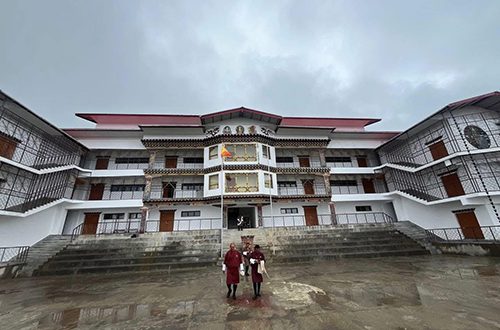
The Ministry of Education and Skills Development (MoESD) launched the Recovery School in Yonphula in August last year.
The school, formally known as Yarabling Higher Secondary School, is a specialised institution designed to provide a structured and supportive environment where students can continue their academic learning while undergoing guided recovery.
Unlike conventional schools, the Recovery School does not operate as a regular academic institution. Instead, it functions as a transitional support centre, combining education with rehabilitation.
Once students have made sufficient progress in their recovery journey, they are reintegrated into their original schools.
The Yonphula Recovery School enrolled its first cohort on 8 August 2025, with 64 students 60 boys and 4 girls, from 13 dzongkhags.
The current student population is 55, with additional student referrals currently under process.
The school focuses on both academic learning and behavioural transformation.
According to the Ministry, it adopts a structured recovery approach based on the Transtheoretical Model of Behaviour Change, guiding students through progressive stages, from developing awareness to taking action and sustaining positive behavioural change.
As of 10 April 2026, 31 students are in the maintenance stage, five in the action stage, and 19 in the preparation stage.
Students are expected to complete the programme cycle by June 2026.
Upon completion, students are supported to reintegrate into their parent schools wherever possible. “The reintegration process involves close coordination with schools and parents, along with aftercare support to reduce the risk of relapse,” the Ministry said.
In some cases, students may wish to continue at Yarabling due to concerns about relapse, reflecting the challenges of recovery and the need for sustained support.
The Ministry also highlighted that many students enter the programme with significant learning gaps, ranging from one to nine years, which are addressed alongside recovery.
The recovery programme provides intensive counselling and support services, including individual and group counselling, resilience-building sessions, mentoring, skills development, and walk-in support.
The Ministry said that the focus is on holistic development across intellectual, emotional, physical, social, ethical, and spiritual domains to ensure long-term recovery and successful reintegration.
The establishment of the Recovery School comes with growing concerns about substance use among Bhutanese youth.
National health and related reports indicate that exposure to substances such as alcohol and tobacco often begins during the school years, with initiation commonly occurring in the teenage period.
Authorities have also observed that a notable share of drug-related cases in recent years involve young people, highlighting an emerging trend that requires targeted intervention.
Experts point to factors such as peer influence, early exposure, and limited support systems as key drivers placing students at risk, reinforcing the importance of structured recovery programmes like the Yonphula Recovery School.
The school is currently staffed by 11 teachers, two counsellors, two School Sports Instructors, a Vice-Principal, and a Principal.
According to the Ministry, all staff hold relevant professional qualifications such as B.Ed. and PGDE, with counsellors additionally trained in contemplative counselling psychology.
Staff have also undergone specialised training in substance use disorder prevention and management in Bhutan, India, and Thailand.
There is no involvement of police or law enforcement personnel in the day-to-day recovery programme, reinforcing its approach as a health- and education-based intervention rather than a punitive one.
When this paper asked the Ministry to facilitate access to the school and students undergoing recovery, the Ministry stated that the programme is still in its early stages and that media visits or interviews will not be facilitated at this time.
“Priority is being given to safeguarding the wellbeing, privacy, and recovery of students,” the Ministry said.
Media engagement, including visits and interviews, may be considered at a later stage once the first cohort has completed the programme and appropriate safeguards are in place, including informed consent from students and their parents or guardians.