The Bhutanese Leading the way.
During the Mid Term Review, the Prime Minister, Dasho Tshering Tobgay, mentioned the fact that quite a few ministers and cabinet staff had higher than normal lead levels in their blood after a test.
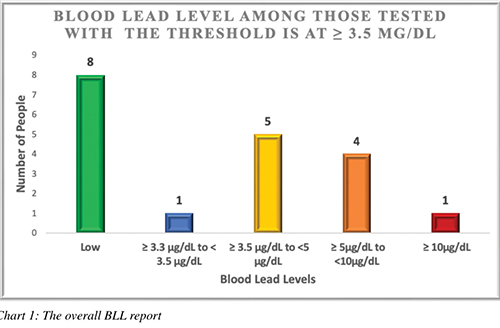
This paper followed up and found that a total of 19 cabinet members and staff were tested, consisting of 7 ministers, 7 cabinet staff, 2 security personnel, 2 catering staff, and one child.
The Blood Lead Level (BLL) screening showed that 52.6% of individuals exceeded the reference level of 3.5 μg/dL (micrograms per decilitre), and a maximum value of 10.3 μg/dL was observed. This suggests a notable proportion of elevated exposure to lead within the screened population.
A blood lead level (BLL) at or above 3.5 μg/dL in adults is considered elevated and acts as a marker for potential overexposure to lead.
The findings further indicate that 47.3% of individuals had blood lead levels (BLL) below 3.5 µg/dL, of which 42% were categorised as “low”, meaning levels were below the detection limit of the LeadCare II analyser. The LeadCare II device is capable of detecting BLLs within a range of 3.3 µg/dL to 65 µg/dL.
Even low levels of lead exposure, such as 3.5 µg/dL, can be linked to chronic adverse health effects, including increased blood pressure (hypertension), cardiovascular issues, and kidney damage over time. For women who are pregnant or planning to become pregnant, this level is considered a potential danger and may require immediate reduction in exposure.
The testing was carried out using the LeadCare II analyser.
In addition, the team conducted source tracing at the office using an X-ray fluorescence (XRF) analyser, examining items such as cups and jewellery.
The results from the XRF analyser were consistent with findings from the National Blood Lead Level Survey 2024, indicating that items such as painted cups contained lead, whereas plain, unpainted items did not show the presence of lead.
Findings from the National Blood Lead Level Survey (2024) in Bhutan indicate widespread exposure: 75.9% of children aged 1–6 years have recorded blood lead levels equal to or greater than 3.5 µg/dL, the threshold level. In addition, 58.9% of pregnant and breastfeeding women, and 86.0% of children in monastic institutions, had BLLs equal to or higher than 3.5 µg/dL.
Identified sources of exposure include Jinlab (Mendrup/Damzey), contaminated food, and various household materials.
The Ministry of Health is currently in the process of developing a National Lead Poisoning Clinical Guideline.
The programme has completed the clinical assessment of Blood Lead Levels (BLL) among sick patients in hospital settings using the established protocol. The assessment aimed to determine the prevalence and severity of elevated blood lead levels, particularly identifying cases that may require chelation therapy.
Following the completion of the clinical assessment of Blood Lead Levels (BLL) in hospital settings, and considering the limited remaining test kits, the programme conducted BLL screening for Cabinet Members, accompanied by a sensitisation session to foster high-level commitment and support for the programme.
In this context, and with approval from the Prime Minister’s Office, the Ministry conducted voluntary BLL testing for Cabinet Members on 19 April 2026.
The findings suggest ongoing exposure to lead within the population and highlight the need for further investigation into possible sources.
There needs to be strengthened surveillance, targeted awareness, and preventive interventions to reduce exposure and protect public health.
Lead is a highly toxic metal and continues to be a significant public health concern. Notably, even low levels of exposure can lead to serious health consequences. It adversely affects multiple organ systems, with children being particularly vulnerable, often resulting in irreversible neurodevelopmental damage.
Among adults, lead exposure is associated with hypertension, kidney disease, and anaemia. Exposure pathways include air, water, food, household dust, and various consumer products such as paints, utensils, cosmetics, and traditional items.