The Bhutanese Leading the way.
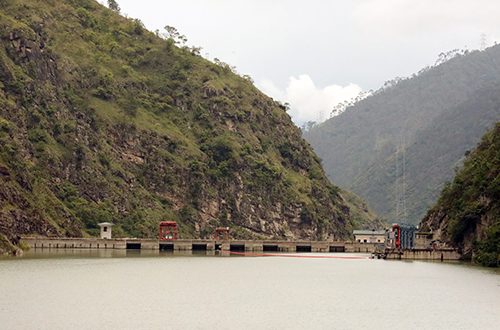
Bhutan’s economic growth has historically been driven by large investments in hydropower, which, despite generating relatively limited direct employment, have played a fundamental role in the country’s development. Responding to concerns about its reliance on hydropower, its public debt, and whether growth is translating into tangible benefits for households, Finance Secretary Leki Wangmo said during the 33rd Meet-the-Press (MTP) that much of the country’s accumulated public debt had been used to finance hydropower development.
The Finance Secretary said these investments generate export earnings and government revenues that support national development priorities, including free healthcare and education, infrastructure development and other essential public services. However, the Finance Secretary acknowledged that economic growth must translate into tangible improvements in people’s lives rather than being reflected only in GDP figures.
She said the government was increasingly emphasizing investments in sectors that generate employment, create economic opportunities and directly improve household livelihoods. According to the Finance Secretary, continued investments in health and education have equipped Bhutanese with the skills, knowledge and capabilities to compete for opportunities both within the country and abroad.
She said the ability of Bhutanese to seek and secure employment internationally also reflects the returns on the country’s longstanding investment in human capital. However, she stressed that the larger national objective should be to build a domestic economy that provides meaningful employment, entrepreneurship and career growth opportunities, allowing people to realize their aspirations within Bhutan.
This, she said, requires greater investment in sectors that have a direct bearing on household incomes and livelihoods, particularly agriculture, which remains the mainstay of a large section of the population. Investments in agricultural infrastructure, irrigation, farm roads, technology, market access and value addition are aimed at improving productivity, increasing farm incomes and strengthening rural livelihoods. She added that investments in education and healthcare also contribute to human development, access to opportunities and overall quality of life.
The impact of these investments, she said, should ultimately be measured through improvements in household incomes, employment, agricultural productivity, access to essential services and overall living standards. On debt sustainability, the Finance Secretary said not all borrowing carries the same level of risk, noting that much of Bhutan’s hydropower debt is linked to productive investments backed by future revenue streams from electricity exports.
However, she acknowledged that high debt levels expose the economy to risks, particularly from project delays, cost overruns, foreign exchange fluctuations and changes in electricity revenues. She said the government closely monitors debt levels, repayment obligations, foreign exchange reserves, fiscal revenues and the financial viability of major projects.
While the debt threshold under the Public Debt Management Policy provides an important reference point, the government also considers its capacity to service debt and withstand economic shocks. The latest joint assessment by the International Monetary Fund (IMF) and the World Bank places Bhutan at moderate risk of debt distress, with limited capacity to absorb shocks. This, she said, reinforces the need for prudent borrowing and careful management of fiscal risks.
The government is also changing its approach to financing future hydropower investments, with an increasing shift towards Public-Private Partnerships (PPPs) instead of financing projects entirely through sovereign borrowing. According to the Finance Secretary, this approach helps reduce the debt burden on the government’s balance sheet while sharing investment risks with private partners. However, it also means that project returns and revenues will have to be shared with other investors.
She said the shift represents a deliberate effort to mobilize private capital while preserving fiscal space for other national priorities. Ultimately, the government’s objective is to ensure that Bhutan’s development ambitions remain financially sustainable while ensuring that the benefits of economic growth are more widely shared. The Finance Secretary Leki Wangmo said this would require not only continued investment in large strategic infrastructure but also strengthening agriculture, building human capital, creating opportunities for the private sector and maintaining investment in essential social services.
She emphasized that the success of Bhutan’s economic transformation should not be measured simply by how fast the economy grows, but by whether people experience better livelihoods, higher incomes, improved access to services and greater economic opportunities without compromising the country’s long-term financial stability.