The Bhutanese Leading the way.
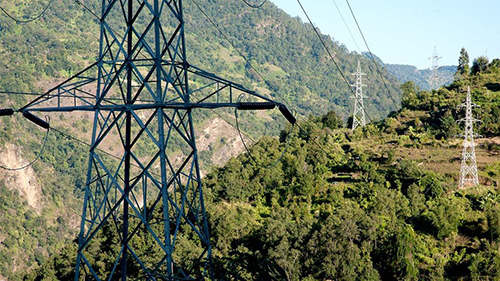
The Bhutan Power Corporation (BPC) has revealed that nearly 9,575 acres of private land across the country are affected by the presence of transmission and distribution (T&D) lines. The study, conducted in August 2024 using geo-spatial data and private land records from the National Land Commission Secretariat (NLCS), found that 67,213 private plots are potentially impacted with 18% by transmission lines and 82% by distribution lines.
As of 31st December 2023, BPC manages over 1,736 km of transmission and 17,252 km of distribution lines, serving around 243,285 customers. Despite efforts to avoid private land during construction and following all regulatory guidelines, public concerns have persisted. Over the years, BPC has carried out 375 distribution system shifting works at a cost of Nu 94 million (mn) on a cost-sharing basis.
The study found that 12,364 private plots are affected by transmission lines, with 1,057 towers occupying 60.31 acres of private land and an additional 2,635 acres falling within the Right of Way. Distribution lines, meanwhile, impact 54,849 plots, covering 6,939.57 acres, with 3,365 distribution transformers in place.
Shifting or relocating the infrastructure presents major challenges. BPC estimates the cost of relocating transmission lines at Nu 15.133 billion (bn) and distribution lines at Nu 7.204 bn. These figures account for alignment issues requiring multiple towers to be moved together, obtaining new Right of Way permissions, and potential power supply disruptions. The relocation process would also demand extensive human, financial, and time resources.
Due to these constraints, BPC has stated that relocating transmission lines is not practical and proposes land substitution for affected owners instead. Physical surveys will be carried out to assess the actual impact, and the results will inform a comprehensive report with findings and recommendations. A new Right of Way regulation is currently being formulated to address such issues in the future. BPC notes that the cost and time involved in these efforts may also affect future electricity tariffs unless separate funding is secured.