 The Bhutanese Leading the way.
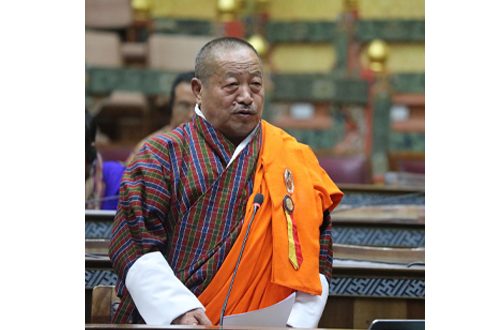
During the Question Hour session of the Fifth Session of the Fourth Parliament, Members of Parliament (MPs) from Khamdang–Ramjar and Kengkhar–Weringla constituencies questioned the proposed electricity tariff revision.
MP Namgay Dorji of Khamdang-Ramjar constituency said hydropower remains a natural asset, one that translates to affordable energy for all Bhutanese, with the PDP manifesto committing to it.
Yet the proposed tariff revision more than doubles the rate for Low Voltage consumers from Nu 2.66 to Nu 5.63 who represent 99.96 percent of all customers, but consume only around 10 percent of domestic electricity, while just 23 High Voltage consumers account for 88 percent of consumption and face no comparable burden.
The MP asked if it was a tariff revision or a redistribution of the burden onto common people.
In light of the ongoing war in the Middle East and the implementation of the GST regime, MP Namgay Dorji asked if there are any considerations and subsidies for those unable to meet daily expenditures.
At the same time, MP Dorji Wangmo of Kengkhar-Weringla constituency asked for clarification regarding the proposed revision of the tariffs.
She added that the tariff will only be a new burden to the people who are already bogged down with rising living costs due to GST and surging fuel prices.
MP Dorji Wangmo pointed out that what should be considered an abundant natural resource that reflects domestic affordability is choking those who are overburdened by the current economic reality.
Additionally, she asked whether the government is going to proceed with this revision and what subsidy it will provide.
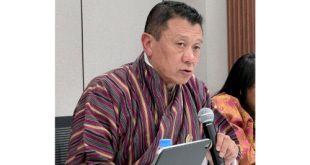
Lyonpo Gem Tshering, Minister of the Ministry of Energy and Natural Resources (MoENR) explained that tariff reviews are mandated under the Electricity Act.
“Under the Electricity Act of Bhutan, section 11, the Druk Green Power Corporation and Bhutan Power Corporation are mandated to offer recommendations for tariff changes every 3 years,” Lyonpo said.
They follow due process and consultation in line with the government’s mandates and reflect different technical costs for various consumer categories.
In terms of high voltage, those that are 66kb and above, these entities must bear their own costs for transmission lines, building substations, demand charges, and higher energy taxes.
Lyonpo Gem Tshering said, “Subsidy for electricity has been given since the 2nd government, allotting 200 units for those in the highlands and 100 units for others.”
In the region, Bhutan has the lowest electricity charges and is comparatively lower. West Bengal Nu 7, Assam with Nu 8, Bangladesh with Nu 7.5, and Tibet with Nu 8.
“For Bhutan, it is Nu 5.68 plus 200 and 100 free units in highlands and elsewhere respectively,” the MoENR Minister added.
He said that the government has to consider the proposals for tariffs as it comes from the corporations, but the revision is done so with regulations and government mandates.
The Electricity Regulatory Authority (ERA) had sent a proposed tariff to the MoENR but based on the instructions of the Prime Minister the ERA has been asked to look at affordability and the tariff proposal has been sent back to them.
When looking at global metrics, statistics, and rankings, Bhutan stands out for having some of the lowest or fewest instances of several specific global measures, largely driven by its unique geography, political philosophies, and environmental policies:
1. Lowest Net Greenhouse Gas Emissions (Carbon Negative)
Bhutan famously has the lowest net carbon footprint in the world. It is not just carbon neutral; it is actively carbon negative. Because its constitution mandates that at least 60% of the country remain under forest cover (it currently sits over 72%), Bhutan absorbs significantly more carbon dioxide than it emits.
2. Extremely Low Crime Rates
Bhutan is globally recognized for having one of the lowest crime rates in the world. Violent crime is incredibly rare, and the country consistently ranks as an exceptionally safe destination for both residents and travelers due to strong community ties and cultural emphasis on collective well-being.
3. One of the Lowest Income Inequalities (Gini Coefficient)
According to recent World Bank and development data, Bhutan has a Gini coefficient of 28.5, which is considered very low. A lower score signifies a more equal distribution of income, meaning Bhutan has some of the lowest wealth disparity gaps globally, aligning with its focus on “Gross National Happiness” rather than just commercial wealth.
4. Low Population Density in Asia
While not the lowest globally, Bhutan has one of the lowest population densities in Asia, averaging only about 20 to 21 people per square kilometer. Its rugged, mountainous terrain means that large portions of the country remain untouched, pristine wilderness.
5. No Air Force or Navy
From a military standpoint, Bhutan has some of the lowest defense infrastructure requirements. It has zero naval forces (as it is entirely landlocked) and no active air force, relying instead on a small standing army and a close security relationship with neighboring India.
Please can u increase those too