The Bhutanese Leading the way.
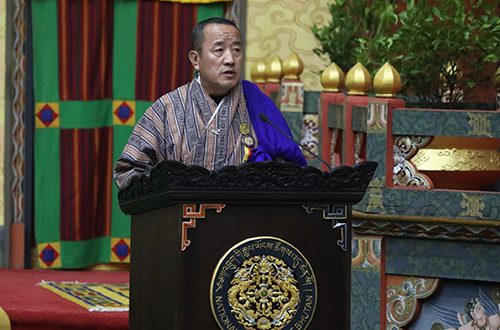
The National Assembly on 4th December 2025 endorsed six additional recommendations to the Anti-Corruption Commission’s (ACC) Annual Report 2024–2025, following deliberations led by the Good Governance Committee (GGC). Four recommendations were proposed by the ACC, while two additional recommendations were submitted by GGC.
The ACC’s recommendations focus on strengthening the country’s anti-corruption architecture through stricter sentencing standards particularly in cases involving senior officials, mandatory use of the Audit Information Management System (AIMS) across all budgetary agencies, incentivizing ethical and accountable leadership, and enhancing integrity mechanisms within law enforcement and regulatory bodies.
Presenting the GGC’s review report, the Chairperson of the committee, Member of Parliament (MP) from Khamdang-Ramjar, Namgay Dorji, highlighted persistent vulnerabilities across the governance system. GGC expressed serious concern over ACC findings that consistently point to finance, procurement, ministries, and local governance as entrenched sources of corruption.
Financial mismanagement accounts for 33.9 percent of reported cases, procurement-related corruption for 33 percent, and abuse of power remains the most prevalent offence at 51.2 percent.
Civil servants and local government officials continue to be the most frequently implicated groups.
To address these systemic weaknesses, GGC called for the creation of a single, secure, end-to-end digital government platform. The proposal includes mandatory e-payments to eliminate cash handling, complete digitization of procurement systems with full transparency and audit trails, automated digital approvals to curb discretionary authority, and integrated HR systems that promote objective, rule-based personnel management.
According to GGC, digitization is no longer optional but a governance imperative essential for transparency, accountability, and the reduction of human interference to restore public trust.
GGC also raised concerns based on recent assessments, including the National Integrity Assessment, National Corruption Barometer Survey, and the Youth Integrity Assessment.
As per the review report by GGC, public perception of corruption has risen significantly from 14 percent in 2012 to 38.3 percent in 2022 with 39 percent of citizens stating they have become “accustomed” to corrupt practices.
Gift-giving, reported by 45 percent, remains widely normalized under the pretext of cultural exchange. The Youth Integrity Assessment found troubling trends as half of Bhutanese youth surveyed admitted they would lie to parents or teachers, while 45 percent said they would cheat if they believed it caused no harm.
Further, the reports highlight weak media scrutiny with only 13 percent of journalists engaging in analytical reporting and just 3 percent in investigative journalism has further contributed to misinformation and declining public confidence.
The committee urged the house to integrate ethics, integrity, and anti-corruption principles across the national curriculum and public service systems.
The House endorsed all recommendations and emphasized the importance of ensuring rural access to digital services by leveraging the BICMA universal service fund.
Members further proposed that an action-taken report on past and current GGC recommendations be tabled in the winter session.
The House instructed GGC to review and report on challenges related to organizational integrity systems, procurement and internal control mechanisms, the need for an Administrative Tribunal, incentives to retain expertise across all sectors, and the strengthening of integrity systems within regulatory and law-enforcement agencies.
The House also underscored the need to improve awareness programs, particularly targeting women and supported continued integration of ethics education in schools and teacher training institutes.
The House directed all concerned agencies to begin immediate implementation of the endorsed recommendations and to submit progress reports in the next session.