The Bhutanese Leading the way.
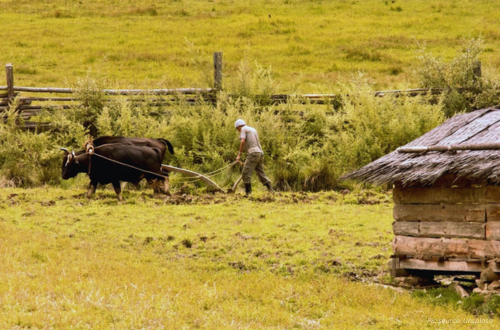
The ESP Steering Committee has revealed that the Bhutan Development Bank Limited (BDBL) approved over 1,865 applications specifically for farmers and livestock owners. Despite high demand leading to an additional Nu 242.88 million (mn) in funding, the Committee maintains strict screening against Non-Performing Loans (NPL).
Out of the 3,969 applications received for ESP Concessional loan, BDBL approved 2,200 applications. Of the total approved loans, 1,865 applications were for agriculture and livestock ventures (up to Nu 1 mn investment size at 90:1 debt equity ratio), which translates to over 85 percent of the approved loan.
Additionally, in response to the excess demand for this category, the ESP Steering Committee also accorded in-principle approval for an additional Nu 242.88 mn over and above the Nu 500 mn initial allocation for concessional loans for primary agriculture and livestock sector.
When asked about whether there are any plans for giving flexibility for farmers to access loans, the committee says that it is mainly based on screening loan applications through NPL.
The Committee stated, “Not only BDBL, but all Financial Institutions (FIs) use the Credit Information Bureau (CIB) as one of the primary criteria for screening loan applications. As per the RMA Prudential Regulations (PR), Section 4.5.5, granting new loans to accounts classified as non-performing is not permitted.”
The Committee further stated, “Restricting fresh or additional lending to NPL clients protects borrowers from further indebtedness and enables focused recovery of existing non-performing loans, thereby creating a clear pathway for future access to credit.”
As public funds, loan applications are, therefore, screened on the basis of previous credits and granting more loans to NPL clients poses serious risks to the individual and the FIs.
“As the ESP CCL loan has been introduced as a special initiative, the associated lending risk is inherently high due to the low interest rate and its collateral-free nature. Given this level of risk, granting any exception to NPL norms in particular would pose significant risk,” the Committee said.
In approving ESP CCL loans, all existing internal credit policies, underwriting standards, and risk evaluation procedures have been strictly followed by BDBL.
“Furthermore, for medium scale and few CSI loans, considering the risk arising from the substantial investment involved, applicants were also provided the opportunity to pitch their project proposals as part of the assessment process,” the Committee adds.
Although a segment of farmers did not get approval for loans, the Steering Committee says that the farmers did have access to the Nu 2 billion Business Reinvigoration Fund (RGF) through two modalities from their banks to clear and rectify their earlier bad loans.
“At present, there are no additional concessional credit windows under the ESP but if there are unused funds from the monetary or fiscal intervention measures, the Cabinet may consider where best to invest those funds,” the Committee added.
“Complementary interventions under the ESP, such as the Price Guarantee Scheme (PGS) have already gained substantial gains. Crop and livestock insurance, and education loans are providing much-needed benefits mostly to farmers and their children. Farmers are, therefore, encouraged to participate in this scheme,” the ESP Steering Committee said.