The Bhutanese Leading the way.
When someone collapses, chokes or suddenly stops breathing, the first few minutes can determine whether that person survives. But in many emergencies, the people present at the scene are family members, friends or passersby who may not know what to do before medical help arrives.
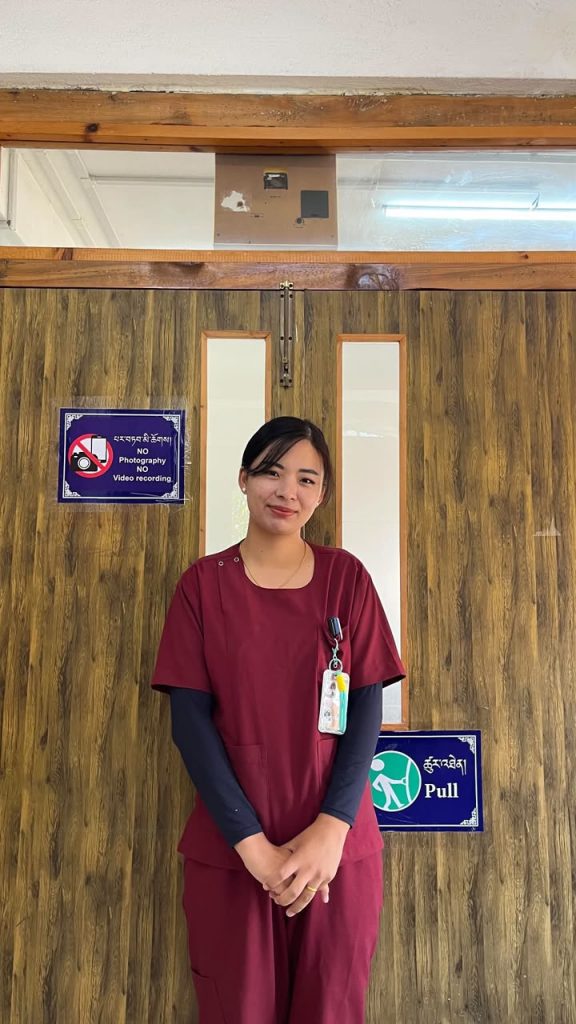
Recognising this gap in public awareness, Tenzin Choden, an Emergency Medical Responder (EMR) at Punakha District Hospital, has started a personal initiative to teach fellow Bhutanese basic life support, first aid and other essential life-saving interventions through social media.
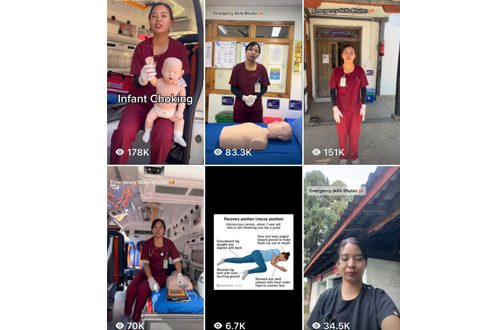
Her initiative, Emergency Skills Bhutan (ESB), aims to make emergency response knowledge accessible to ordinary people through short, easy-to-understand videos in the national language.
Tenzin is among the first batch of Emergency Medical Responders in Bhutan to graduate from the Faculty of Nursing and Public Health (FoNPH) in Thimphu.
Her experience working in emergency response made her realize the importance of the first few minutes before medical professionals can reach and attend to a patient.
“I have seen how crucial the first few minutes of an emergency can be. The outcome of a person really depends on what is done during the initial timings,” she said.
She started ESB after realizing that there was a gap in public awareness about basic life support and first aid, particularly among people without medical backgrounds.
She believes that people do not need complicated medical knowledge or specialized equipment to perform certain basic interventions that could save someone’s life.
“Everyone deserves a chance at life, and the actions taken by someone during an emergency can make a significant difference,” she said.
The Facebook page was officially launched in October 2026, with its first introductory video posted on 19th October.
So far, she has posted videos on cardiopulmonary resuscitation (CPR), choking and the recovery position, using live demonstrations to show viewers how each technique is done. She chose these topics because such emergencies can happen anywhere, from the home to the workplace to public gatherings.
Choking, for instance, can strike during an ordinary meal, and knowing how to respond can keep it from turning fatal.
She also highlights the recovery position, in which an unconscious person who is breathing normally is placed on their side to keep the airway clear.
However, Tenzin Choden emphasises that emergency response differs between trained medical professionals and ordinary members of the public.
For instance, healthcare professionals assess a person’s pulse when determining the need for CPR. However, members of the public without medical training should not delay CPR by attempting a pulse check. If someone is unresponsive and not breathing normally or is only gasping, they should call for emergency help and begin CPR.
She said one of the most common mistakes people make during emergencies is panicking and delaying calls for help.
Other inappropriate responses include attempting to remove an obstruction from a choking person’s throat with fingers, which could push it further into the airway, or trying to wake an unconscious person by slapping them or pouring cold water on their face.
She advises people to remain calm, ensure the scene is safe, call for emergency assistance and follow the appropriate first aid steps.
In Bhutan, she said emergency calls made through 112 are routed through the Health Help Center in Thimphu before being connected to Emergency Medical Responders at the incident site. This process can take time, making public awareness of basic emergency interventions particularly important while waiting for professional assistance.
“During an emergency, every second counts. While waiting for emergency help, if a person can perform even a simple move such as a recovery position, the survival chance of the person needing help increases,” she said.
To ensure the information she shares is reliable, she studies updated medical guidelines, makes multiple revisions to her videos and consults fellow colleagues and doctors before publishing them.
Although balancing the initiative with her professional and personal responsibilities can be challenging, she said the positive response from viewers has encouraged her to continue.
Her videos have collectively received more than 150,000 views within a short period, with viewers sharing appreciation, asking questions and requesting more demonstrations. She hopes the growing reach will translate into greater awareness and confidence among Bhutanese in responding to emergencies.
Speaking to The Bhutanese, Clinical Nurse Pasang Tenzin from Trongsa, who follows the Emergency Skills Bhutan page, said the initiative is important as it provides people with an opportunity to learn basic emergency response and life-saving skills that could prove useful in real-life situations.
“As a nurse, I am also gaining knowledge on how to handle emergencies and save lives. I believe our medical professionals should also follow and learn from this initiative. Most importantly, raising awareness about emergency response is essential for the people of Bhutan,” he said.
Tenzing Choden said she hopes the information shared through the videos will reach Bhutanese who may one day find themselves in an emergency and need to help someone before professional medical assistance arrives.
She has also received requests from different institutions for practical first aid training.
Beyond social media, she believes basic first aid and emergency response training should be introduced in schools and made more widely available in offices, workplaces and eateries.
She said children and educators should be given opportunities to learn these skills early, helping build a community that is more confident and prepared to respond to emergencies.
She also acknowledged existing efforts such as Druk Sokchob, which provides practical first aid training to non-medical people, and said she would be happy to contribute to hands-on training through appropriate channels.
For now, her focus is on expanding the reach of Emergency Skills Bhutan and helping more people understand basic emergency response.
Her long-term vision is to develop the initiative beyond online videos and create opportunities for practical learning across the country.
“Medical professionals provide essential care, but the first person present may be a family member, friend or a passerby. Sometimes calling for help and taking one correct action can make a life-saving difference,” she said.
For her, the objective is simple: more people should know what to do when someone needs help, because an emergency can happen to anyone, anywhere.