The Bhutanese Leading the way.
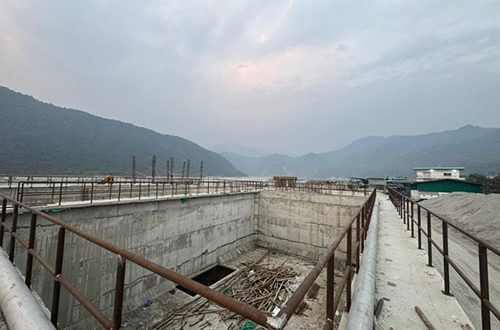
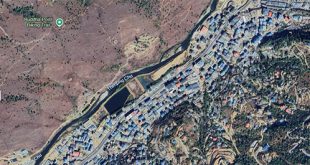
The Phuentsholing Township Development Project (PTDP), one of Bhutan’s largest urban development initiatives, is steadily progressing under the leadership of the Druk Holding and Investments (DHI). Situated on 157.66 acres of reclaimed land along the Amochhu River, the project is designed to support long-term urban growth while reducing flood risks in Phuentsholing, Bhutan’s commercial capital.
PTDP is financed through a combination of equity from DHI and loans from the Asian Development Bank (ADB). The project is being implemented in phases, with Phase 1 focused on river training and land reclamation. The current stage includes infrastructure development such as roads, drainage, sewerage, water supply, and utility networks. The design and execution follow principles of New Urbanism, with an emphasis on walkability, open public spaces, and mixed-use planning.
As per official documents and updates, the township will consist of nine urban precincts encompassing residential, commercial, mixed-use, and recreational zones. Planned structures include 165 residential buildings, 30 mixed-use buildings, 4 commercial complexes, and 5 convention centers. The project is designed to house a population of approximately 11,000 to 15,000 residents. More than 50% of the area is dedicated to green and open spaces, including amusement parks and sports facilities.
In terms of institutional governance, DHI has initiated steps to integrate the township’s administrative structure with that of Phuentsholing Thromde. This includes the development of standard operating procedures (SOPs) and business processes for township governance. Efforts are underway to align the PTDP’s service delivery and revenue collection systems with those of the Thromde, to ensure consistency and seamless administration.
A shared governance model is being developed to clearly define the respective roles of DHI, the Construction Development Corporation Ltd. (CDCL), and Phuentsholing Thromde. According to project updates, the long-term objective is for the township to fall fully under the jurisdiction of the Thromde once key service delivery and infrastructure benchmarks are met.
To support this transition, a municipal Enterprise Resource Planning (ERP) system is being implemented to integrate core urban management functions—planning, budgeting, billing, and service delivery—into a unified platform. A Strategic Action Plan is being finalized to guide the sustainable development and management of the township. Capacity-building programs are also being conducted for Thromde officials to ensure institutional readiness for eventual handover.
The PTDP has faced some delays, which are attributed to documented external challenges. These include prolonged impacts of the COVID-19 pandemic from 2020 to 2022, which disrupted supply chains, hindered contractor mobilization, and affected cross-border logistics. Additionally, monsoon-induced slope instability led to significant debris accumulation on-site, obstructing access and requiring advanced geotechnical mitigation.
Despite these setbacks, project activities have continued with close coordination among implementing agencies, technical experts, and government authorities. As of August 2024, approximately 65% of the project budget had been utilized.
The PTDP’s location near Jaigaon in India offers strategic access to regional markets, enhancing its potential as a center for trade and commercial investment. According to DHI, the township offers investment opportunities in areas such as digital infrastructure, data centers, and green industries. Land parcels within the township are designed to be flexible to accommodate various business models and development needs.
Once complete, the PTDP is expected to provide critical urban infrastructure, expand economic potential in the region, and strengthen Bhutan’s resilience to climate-related risks through flood mitigation and structured urban growth.