The Bhutanese Leading the way.
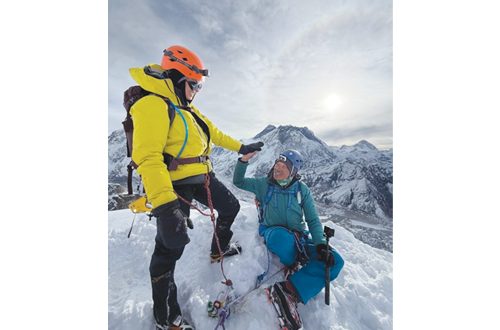
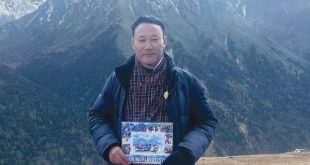
A 42-year-old man from Lhuentse has successfully summited Lobuche East Peak in Nepal, standing at 6,119 metres.
Tashi Dorji, a tourist guide by profession since 2006, achieved the climb after nearly two decades of building his career through persistence and self-reliance.
Lobuche East is widely regarded in the mountaineering community as a key acclimatisation peak, often used by Everest aspirants to prepare for the extreme altitude and thin air of the world’s highest mountain.
For Tashi, the climb is not just a personal achievement but also a reflection of the same determination that has defined his professional life as a guide, facing challenges, building trust with clients, and continuously pushing his own limits in both Bhutan and abroad.
Tashi and his client had initially set out with plans to cross three passes in Nepal. However, the expedition soon faced uncertainty as weather conditions remained highly unstable. Locals in the region also cautioned that safely crossing the pass would likely require a larger group of around 10 to 20 people.
With conditions shifting quickly, the plan had to be changed without delay. “Thus, my client and I had an instant change of plan. There was a short weather window on 27th March, which turned out to be the only day when the conditions were relatively stable, and we successfully summited Lobuche Peak,” Tashi said.
Tashi shared that, despite his busy schedule accompanying tourists, he prepared for the climb by walking and running for 25 days. Similarly, his client also developed an interest in the preparation and undertook her own training ahead of the expedition.
As the expedition leader, Tashi had to make a decisive call in challenging circumstances, one that was immediately accepted by his client. In the end, the pair seized the narrow window of opportunity and completed the summit in a single day, making the most of the brief break in the weather.
Tashi said that to reach the summit, they had to spend a night at the high camp the day before the final push, as proper acclimatization is essential when attempting a 6,000-metre peak. “We cannot climb a 6,000-metre peak at once, so we ascended from 4,800 metres to 5,000 metres and then moved up to around 5,200 metres before descending back to the camp,” he explained.
That night at the high camp, Tashi observed several groups returning after abandoning their summit attempts due to difficult conditions. “However, my client and I were determined to cross the peak, as we had already come this far,” he said.
The final ascent began around 1 am and by 7 am on 27th March, they had successfully reached the summit.
While other groups were forced to turn back and some reportedly suffered from altitude sickness, Tashi said they were fortunate to complete the climb successfully without the use of supplemental oxygen or medication.
As a freelance guide, Tashi had to continually seek clients and consistently prove his reliability to tour operators. Since 2017, he has had the opportunity to interact with tourists and travel to several countries, working between Bhutan and abroad while guiding clients as a leader.
His journey into serious mountaineering and high-altitude trekking began mainly in 2024, when he accompanied the same client on a 26-day trek in Nepal, covering around 26 km a day.
Tashi said that before attempting this peak, he had climbed a 5,500-metre mountain in Nepal. “Crossing this 6,000-metre peak was a shock to me. Moreover, the De-Suung training that I underwent was very helpful, as it included a few days of basic mountaineering training, which helped me a lot,” he said.
He further added, “I have not climbed many mountains, but when I did, I did it as a leader, and this gave me immense satisfaction.”
Tashi said he decided to come forward not to show off his achievement, but to encourage fellow guides like himself. “I believe tourist guides like us remain guides throughout our lives, while in other professions people are promoted to higher positions,” he said.
He further noted that in earlier times, it was often foreign leaders who led trekking groups, and that Bhutan currently does not have formal leadership training specifically for guides. “In the olden days, it was foreigners who would lead the group as leaders. There is no such training in Bhutan that provides leadership training for guides,” he said.
However, Tashi shared that during his travels abroad as a leader, he received positive feedback from international tourists. “They told us that Bhutanese guides are well-mannered and have good hospitality. They recommend us,” he said. “Therefore, I would like other guides to take up leadership roles and seize opportunities.”
Tashi added that he is currently in the process of preparing for and aiming to summit more mountains and peaks in the future.