The Bhutanese Leading the way.
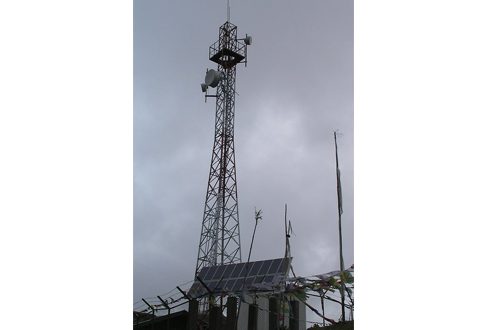
In a concerted effort to bridge the digital divide, the Ministry of Industry, Commerce and Employment (MoICE) has unveiled a comprehensive roadmap to bring reliable mobile connectivity to the nation’s most isolated regions.
According to a recent Action Taken Report (ATR) presented by Lyonpo Namgyal Dorji, Minister of MoICE, the country is entering a critical phase of its Rural Connectivity Program (RCP), targeting the final areas of the population still living off the digital grid.
While mobile network coverage now reaches nearly every corner of rural Bhutan, a few remote highland areas remain unconnected due to the high cost of infrastructure relative to the small number of households.
To address this, the government launched RCP Phase 7 (Supplementary) on 6th May 2025.
This 18-month project aims to connect 17 villages across 12 gewogs, providing essential services to approximately 255 households in seven dzongkhags.
“To date, more than 850 villages across all 20 dzongkhags have already been integrated into 2G and 4G networks,” said Lyonpo Namgyal.
The government’s focus is shifting from simple geographic expansion to the Quality of Service (QoS). The Minister added that the main focus is on improving the internet service quality.
A nationwide assessment is currently underway to evaluate signal strength, data speeds, and network reliability.
Technical evaluations have already been completed in Lhuentse, Samtse, Samdrup Jongkhar, Trashiyangtse and Mongar.
These findings will form a “national connectivity mapping framework” to guide future strategic investments.
Funding the future
The expansion into these hard-to-reach areas is financed primarily through the Universal Service Fund (USF). Managed by the Bhutan InfoComm and Media Authority (BICMA), the fund is sustained by an annual 4 percent revenue contribution from the nation’s two telecom giants, Bhutan Telecom Limited (BTL) and Tashi InfoComm Limited (TICL).
Projects are awarded through a transparent, competitive tendering process to ensure cost-effectiveness.
The Member of Parliament (MP) from Nganglam, Lamdra Wangdi, raised doubts on BICMA’s collection of the USF from the telcos. He asked whether the authority is vested with the power to collect this money and not with the Ministry of Finance.
He also raised concern over the unavailability of internet services in southern areas and beyond the border as acquiring an Indian SIM is also not easy.
“If problems such as accidents occur, some are left stranded for days. How is the ministry addressing this?” he said.
Cutting through systemic complications
One of the primary hurdles for network expansion remains the bureaucratic process of land clearance and right-of-way approvals.
While procedures involving the Department of Forests and Park Services and the National Land Commission are already in place, the ministry is exploring a “single-window clearance system”. This move is intended to eliminate systemic delays and expedite the rollout of critical infrastructure.
The 5G affordability debate
While the National Assembly has pushed for a strategy to make 5G-enabled phones more affordable for low-income and rural communities, the MoICE clarified that device pricing remains driven by global market forces and supply chains rather than regulatory mandates.
However, the government pledged to maintain fair market competition and protect consumers through regular market surveillance by the Competition and Consumer Affairs Authority (CCAA).
Ensuring accountability
To keep operators accountable, BICMA has implemented robust monitoring, including monthly dzongkhag-wise assessments and quarterly performance reports.
Operators are also required to submit detailed monthly Operation Support System (OSS) reports, providing the government with a granular view of network performance across the country.
On satellite phones
The MP from Nyisho Sephu, Kuenga, recommended that the government give emergency satellite phones to people living in poor connectivity areas.
He said that this recommendation came during previous parliamentary sessions, but satellite phones haven’t been distributed.
He gave an instance of a person passing away due to an avalanche during a cordyceps hunt, and his wife, a heart patient was left struggling, until she found a stationed officer and was airlifted to the hospital.
“Until transmission lines reach there, the alternative of providing one emergency satellite phone to each group would be helpful,” he said.