The Bhutanese Leading the way.
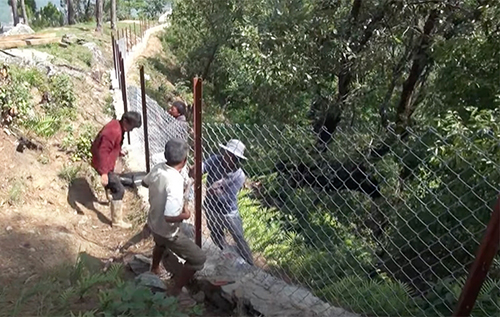
In Ramjar Gewog, Trashi Yangtse, where generations of farmers have worked the land through monsoon and heat, a new kind of rural development is taking root. It is not coming from contractors or machines, but from the farmers themselves — shoveling earth, hammering steel posts, and unrolling wire. They are building a 9.5-kilometre chain-link fence around their farmland, not as beneficiaries, but as the driving force behind it.
The fence, funded by the government at a cost of Nu 12.2 million in materials, is designed to protect nearly 500 acres of crops and benefit more than 300 households. But while the materials were provided, it is the people of Ramjar who are doing the work — no hired labour, no outsourced teams. For them, this is not just a fence. It is a line they are drawing — between the old way of waiting for outside help, and a new model where rural communities shape their own future.
For years, farmers here faced repeated crop losses from wild animals, especially boars and deer. They tried what they could afford: makeshift fences of green netting, wooden planks, and recycled zinc sheets. Some even pooled money for electric fencing, but it proved unreliable, dangerous in some cases, and too expensive to maintain. The result: damaged fields, slashed incomes, and land left idle. Many gave up growing high-value vegetables altogether, unable to risk the loss.
Ramjar is one of the top vegetable-producing gewogs in the district, known for seasonal crops like chillies, cabbage, potatoes, and ginger. But in recent years, those fields have not yielded what they should. Income dropped, in some cases from Nu 100,000 to half that. Entire plots were abandoned. Some farmers spent nights sleeping in the cold just to chase away animals. Others stopped planting altogether, not because they lacked interest, but because they could not protect what they grew.
This fencing project marks a shift. It is the first time many here feel they are part of something lasting not just recipients of help, but contributors to a solution. That mindset of shared ownership is spreading across the community. When a section of wire sags or a pole leans, no one waits for an official. They pick up tools and put it right. That is the kind of self-reliance that past development models often lacked.
And it is already changing how people think about farming. Fields that had been left fallow are now being cleared. Some are preparing to grow ginger again, while others are ready to scale up vegetable production. It is not just about safety it is about confidence. With protection in place, farmers can plan their seasons without fear. That freedom to plan without the constant threat of destruction is something many have not felt in years.
The fence is expected to be completed by the end of this month. When it is, Ramjar will not just have protected fields. It will have something far more powerful — a working example of farmer-led development that goes beyond policy and funding. It shows that when communities are trusted with the tools and given the lead role, rural infrastructure can be built faster, better, and in ways that last.
There are no machines, no ribbon-cutting ceremonies. Just people, working together with purpose. In a country where wild animals continue to threaten crops and drive farmers away from agriculture, Ramjar’s quiet effort stands out. Not for its size, but for its method. The fence they are building is not just about keeping animals out — it is about letting something else in: dignity, independence, and the ability to farm without fear.
As of mid-2025, Bhutan has made significant progress in installing chain-link fencing to protect farmland from wildlife damage. The initiative covers 16 out of 20 dzongkhags, with the remaining four close to completion. So far, over 3,600 acres of farmland and more than 1,290 households have benefited from these fences.
The government plans to expand the program to cover all 205 gewogs nationwide.