The Bhutanese Leading the way.
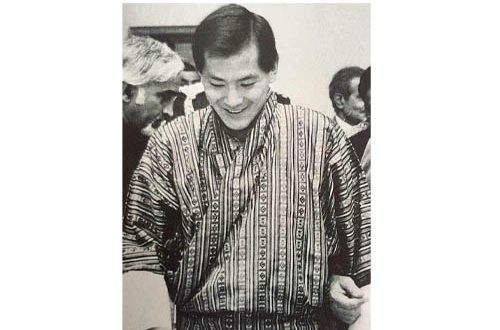
His Majesty The Fourth Druk Gyalpo Jigme Singye Wangchuck played a significant role in recognizing and nurturing the country’s private sector as an essential partner in national development.
Starting with the Sixth Five-Year Plan (1987–1992), His Majesty formally recognized the private sector as a key partner in economic growth. Early in his reign, efforts were made to foster domestic industries, including the establishment of industrial estates and the provision of loans to entrepreneurs to establish enterprises, thereby encouraging private enterprise.
His government also took steps toward a market economy, at a measured pace, reflecting His Majesty’s words that Bhutan was ready for a market economy, but we have to go slowly. This gradual approach included liberalizing the licensing system, simplifying import and export rules, and beginning the process of joining the World Trade Organization.
During His Majesty’s reign, the government’s economic policies also evolved to pursue corporatization of state entities where feasible and to outsource or privatize functions that could be more efficiently delivered by private entrepreneurs.
Investments in infrastructure, such as roads and telecommunications, further helped create an environment where private businesses could thrive, particularly in areas like trade and transport. A key goal of His Majesty’s economic policies was achieving economic self-reliance, which involved encouraging domestic industry and reducing dependence on foreign aid. The private sector was seen as an important vehicle for this.
The government initiated steps to encourage private enterprise and investment in certain sectors. A notable example of this was the privatization of the tourism industry in October 1991 to encourage increased private sector participation. This was managed under the ‘high-value, low-impact’ tourism policy, which limited tourist numbers to preserve cultural and environmental integrity while ensuring revenue generation. His Majesty also supported the development of an enabling environment for businesses, including the establishment of industrial estates in places such as Phuentsholing and Gelephu and providing access to credit for entrepreneurs.
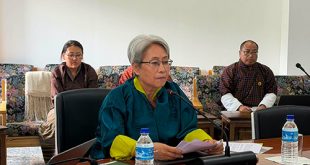
The Secretary General of the Bhutan Chamber of Commerce and Industry, Chandra Chhetri, said, “In the 1980s, the business people were given an audience by His Majesty The Fourth Druk Gyalpo, where he gave a royal command stating that this chamber (BCCI) should be established and it should be operated and sustained by the businesses, and it should be a body that should foster the growth and diversification of the private sector. While it was established in 1985 under the command, due to lack of management and some other constraints, since the private sector was very less in number during that time, the chamber was dormant for three years until 1988. Then His Majesty granted another audience and a strong command was pronounced under which this chamber was re-established. Behind the efforts, the philosophy, everything was that from His Majesty. His Majesty, in one of his audiences, told us to be prepared to reap the benefits of privatization. We did indeed reap a lot of benefits from this noble decision such as in the passenger transport services sector where we had Bhutan Government Transport Services (BGTS) which was privatized and a lot of people started their business from there and even in tourism, people reaped a lot of benefits from this.”
The reforms introduced during His Majesty’s reign laid the groundwork for a more robust private sector. Subsequent policies have aimed to position the private sector as an equal partner in development, a goal that continues to be a focus even now. The Fourth King’s role was not to fully privatize the entire economy, but to strategically open up certain sectors and create a framework for a sustainable private sector to grow in harmony with the principles of Gross National Happiness.
His Majesty’s reign also saw the government helping set up major industries and companies like BCCL, BFAL, BBPL, Penden Cement, BNB, RICBL etc as the private sector could not do so and gradually the shares were sold to the public and the private sector for them to manage.