The Bhutanese Leading the way.
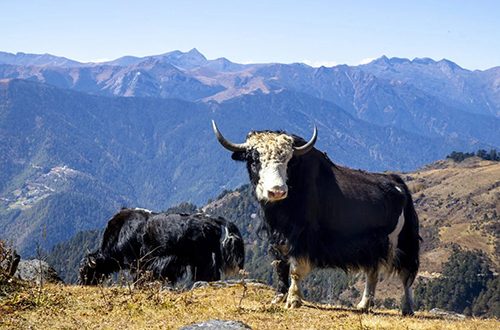
Despite a Nu 800 million (mn) allocation and a 50 percent government subsidy, the National Crop and Livestock Insurance Scheme (NCLIS) has seen a very low initial uptake, with only six enrollments reported so far. Launched on 11th November 2025, the scheme aims to transition from ad hoc compensation to a structured, shared responsibility model for risk management.
Farmers, including highland yak herders, have expressed that premiums remain unaffordable, a burden further increased by the 5 percent GST.
Other challenges cited include the limited regional coverage of crops and livestock, a lengthy reporting process, and a nationwide shortage of livestock and agriculture extension staff to promote the program.
During the virtual Meet-the-Press held yesterday, the government stated that initial uptake for new insurance programs is expected to be gradual as farmers take time to assess benefits and procedures.
“It is important to recognize that, as with any new insurance program, initial uptake is expected to be gradual. Farmers understandably take time to fully assess benefits, coverage, and procedures before enrolling, especially when it involves a shared premium contribution,” said Sonam Pelgen, Deputy Chief of the Policy and Planning Division, MoAL.
To address affordability, the government provides a 50 percent premium subsidy, significantly lowering the cost for farmers, and maintaining rates at levels comparable to or lower than similar schemes in India (8-30 percent), Sri Lanka (7-10 percent), Bangladesh (5-10 percent), and Pakistan (6-12 percent).
Furthermore, farmers have the flexibility to insure their holdings partially, such as selecting specific crops or livestock, to adapt to their financial capacity.
“Even with GST, the actual annual contribution remains modest relative to the level of protection provided,” the MoAL said.
The government also emphasized that the scheme is designed for nationwide coverage across all 205 gewogs, with Local Governments and Tshogpas playing a central role in registration and facilitation.
While some perceive the reporting and claims process as lengthy, officials maintain these steps are necessary for transparency, verification, and sustainability, though they are working to streamline procedures based on field feedback.
Participation in the NCLIS remains voluntary, but the government highlights its necessity due to increasing risks from climate change, pests, diseases, and human–wildlife conflict.
“It is also important to emphasize that participation is voluntary. The government’s role is to provide a reliable platform for risk protection but adoption ultimately depends on farmers’ confidence and willingness,” said Sonam Pelgen.
Recent events have already resulted in millions of Ngultrums in losses for hundreds of households.
Moving forward, the government plans to strengthen awareness, further streamline processes, and progressively enhance product coverage to build farmer confidence in the long-term security of the scheme
“The scheme is a long-term investment in the security and resilience of our farmers, and with time, we are confident that participation will grow as its value becomes more evident on the ground,” Sonam Pelgen added.