The Bhutanese Leading the way.
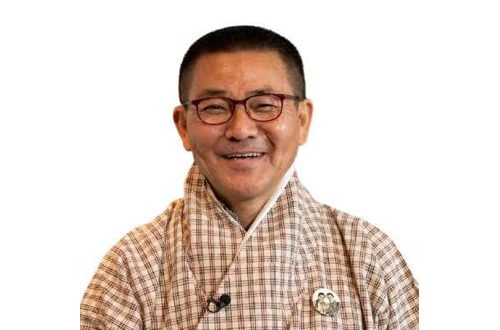
By Dorji Dhradhul
In my recent article, Beyond Employability: Are We Preparing for the Jobs of Tomorrow?, I argued that Bhutan’s employment challenge cannot be solved simply by creating more jobs. We must prepare Bhutanese to become opportunity creators who can innovate, solve problems and create value.
But there is another side to the equation: Are we building an economy that allows these opportunity creators to thrive? If we prepare young people to be creative, entrepreneurial and globally competitive, but continue to operate within an economy that rewards volume more than value, compliance more than initiative, and transactions more than innovation, we will have prepared people for an economy that does not yet exist.
Bhutan’s economic transformation therefore requires more than new industries. It requires a new economic mindset.
Small country. Big possibilities
Bhutan has a small population, limited domestic market, challenging geography and relatively high production costs. We cannot realistically compete with countries that manufacture millions of identical products at a fraction of our cost.
And perhaps we should not try. Bhutan cannot and should not pursue a high-volume economic model. Our opportunity is to become a high-value economy that creates greater economic, social and environmental value from our resources, knowledge, culture, creativity and identity.
This is not about producing less, but creating more value from what we produce. A farmer need not remain a producer of raw vegetables, a craftsperson compete on price, a tourism entrepreneur chase visitor numbers, or a technology entrepreneur build another generic digital service. We should ask: How can I make this more valuable, distinctive and meaningful?
From production to value creation
Consider agriculture. Bhutan has long spoken about agricultural productivity, food security and increasing production. But the bigger opportunity is moving from production to value creation. The World Bank’s 2026 Bhutan Development Update highlights the potential of the agrifood system to create more and better jobs. It notes that the sector employs about 55 percent of Bhutan’s employed population and that moving workers from on-farm production into processing, logistics and food services could significantly increase earnings.
The opportunity may not be simply growing more chillies or apples, but turning them into premium Bhutanese products such as juice, cider, dried fruit and cosmetics. Nor is it merely harvesting medicinal plants, but developing high-value wellness products grounded in traditional knowledge and backed by modern research.
The question changes from “How much can we produce?” to “How much value can we create?”
The value of being Bhutanese
Our opportunity is hiding in plain sight: Bhutan itself is a brand. Our leadership, culture, spirituality, environmental stewardship, traditional knowledge, architecture, cuisine, textiles, biodiversity and distinctive way of life all carry value. We must transform these assets into high-value experiences, products and services without commodifying or compromising them.
Creativity becomes an economic asset when a traditional textile becomes a contemporary design product, a local herb a researched wellness product, a village festival a meaningful cultural experience, or a mountain landscape part of a carefully designed wellness, adventure or learning experience.
The difference is the imagination applied to the resource.
High Value, Low Volume: Beyond tourism
For years, High Value, Low Volume has been associated primarily with tourism. What if it became an economic principle across sectors: better products and visitor experiences, more innovative businesses, premium agricultural brands, knowledge-intensive services, specialised digital products, wellness and healthcare, creative industries, research and education?
The objective is to maximise value while protecting what makes Bhutan valuable.
The WTO moment
Bhutan’s decision to resume negotiations to join the World Trade Organization after an 18-year hiatus is significant. The fifth Working Party meeting was held in Geneva on 9 July 2026, the first since 2008. WTO accession is not simply about trade; it is an invitation to compete. As markets open, Bhutanese businesses will face products and services from around the world. We must prepare for that competition.
The answer is not to protect Bhutanese businesses indefinitely, but to make them good enough to compete through better design, quality, branding, customer service, technology, research, productivity and, above all, greater value.
From regulation to liberation
Another transformation may be just as important. The Government is undertaking a national business regulatory reform exercise aimed at making the business environment simpler, smarter and more responsive. But regulatory reform should ultimately be judged by one question:
Does it make it easier for a good idea to become a good business?
A young person should not spend more energy navigating bureaucracy than developing an idea. Small businesses should not be buried under procedures that add little public value. Investors must understand the rules, entrepreneurs know where to go, and businesses must be able to grow or learn from failure and try again.
We need smart regulation that protects the public interest without suffocating enterprise.
Entrepreneurship must become a national culture
The launch of Bhutan’s National Entrepreneurship Strategy 2026 is important, but a strategy alone cannot create entrepreneurs. Entrepreneurship must become part of our national culture, not remain confined to startup centres.
Students should be allowed to experiment, civil servants encouraged to innovate, farmers supported to commercialise, and women enabled to start and grow businesses without unnecessary barriers. Young people and those in their sixties should not be ashamed of business failure.
We should celebrate the person who creates ten jobs as much as we celebrate the person who gets one. Perhaps even more.
GMC: A test of our economic imagination
Gelephu Mindfulness City presents an even larger opportunity. Built around mindfulness, sustainable businesses, Bhutanese identity and Buddhist spiritual heritage, GMC asks whether Bhutan can compete globally without copying others, attract capital without losing its identity, embrace technology without losing humanity, and create prosperity without sacrificing sustainability or culture.
These are questions of imagination. Perhaps the most important resource for GMC is not land, but ideas.
From GDP to GNH to GEP
The world measures economic progress largely through GDP growth, investment, production, exports, employment and revenue. GDP cannot capture the full picture of human wellbeing or the natural systems that sustain economies. The United Nations is advancing a Beyond GDP agenda for broader measures of progress. Bhutan has been part of this conversation for decades. Fifty years ago, it introduced Gross National Happiness (GNH) as an alternative to defining progress through economic growth alone.
Today, Bhutan is taking another step through Gross Ecosystem Product (GEP). The National Statistics Bureau’s work includes ecosystem-service valuation and carbon sequestration, recognising nature’s contribution to wellbeing and economic activity. This represents an evolution in how we think about development.
GNH asks us to look beyond GDP to human wellbeing. GEP asks us to recognise the value of the ecosystems that sustain that wellbeing and our economy.
Together, they reinforce a distinctly Bhutanese proposition: development should be measured not only by what we produce, but by how well people live and how well the natural systems sustaining life thrive.
This brings us back to value: how much are we creating from each visitor, acre of land, litre of water, agricultural product, hour of human talent, ecosystem, idea and young Bhutanese?
A high-value economy creates not necessarily the most money, but greater value with less waste, greater dignity, deeper meaning and stronger long-term sustainability.
The courage to think differently
We cannot simply produce more of what the world already has. We must create what the world values and Bhutan can uniquely offer. That requires courage to experiment, fail, question old assumptions, let young people lead, open markets while strengthening our capabilities, and believe that being small does not mean thinking small.
The world does not need another country trying to become a bigger version of someone else. It needs Bhutan to become a better version of itself. Our next question should not simply be how to create more jobs or businesses.
Perhaps the more important question is: How do we create more value while protecting and enhancing the human and natural wealth on which it depends? Answering it creatively could make Bhutan’s small size our biggest advantage.
When you cannot and should not compete through volume, you learn to compete through value, quality, originality, meaning and sustainability, an economic model worthy of a country that has always dared to think differently.
Palden Drukpa Gyalo!!!
Author of Creativity, Time to Crown Again: Critical Competency for 21st Century and Cosmos