The Bhutanese Leading the way.
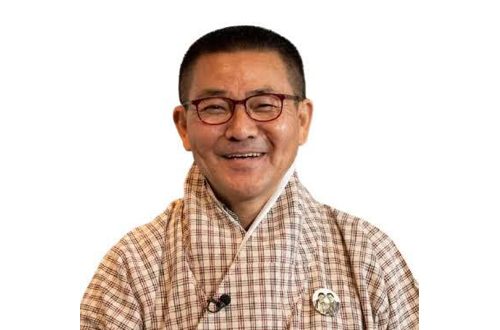
By Dorji Dhradhul
Bhutan is talking about jobs more than ever.
We talk about unemployment, overseas migration, skills, entrepreneurship, startups, the private sector and emerging opportunities in Gelephu Mindfulness City. We talk about attracting investment, creating industries and preparing our young people for the future.
But perhaps we are asking only half the question. Instead of asking only, “Where are the jobs?” perhaps we should also ask: “What kind of people will be needed for the jobs that do not yet exist?”
That is a very different question. And it may be one of the most important questions facing Bhutan today. The issue is no longer simply whether Bhutan has enough jobs. It is whether our people, institutions and education system are evolving fast enough for a world in which the nature of work itself is changing.
The World Bank has noted that Bhutan’s strong economic growth has not automatically translated into enough well-paid jobs, particularly for young people. More than 40 percent of workers remain in low-productivity agriculture, while quality jobs are still concentrated largely in the public sector. At the same time, the Government’s 21st Century Economic Roadmap identifies digital businesses, AI-ready data centres, knowledge services, wellness, education, green technologies, tourism and other emerging sectors as areas with potential to diversify Bhutan’s economy and create jobs.
So, here is the paradox:
We are preparing for new industries while many of our people are still being prepared for old jobs.
AI (Super Intelligence) Wake-Up Call
Artificial intelligence makes this conversation even more urgent. Bhutan already has a National AI Strategy. Its ambition is not merely to introduce another technology, but to use AI to support national development while keeping human well-being, culture, environment and good governance at the centre. AI skills and talent development are identified as fundamental enablers.
That is encouraging.
But AI should also force us to rethink what we mean by “skills”. If a machine can increasingly write, calculate, translate, analyse, design, summarise and perform many tasks that once required human effort, simply knowing how to perform a particular task may no longer be enough.
The premium will increasingly be placed on qualities that technology cannot easily replace: curiosity, imagination, empathy, judgement, collaboration, ethical reasoning, communication and the ability to see possibilities where others see only problems.
In one word:
Creativity.
And I do not mean creativity as painting, singing or writing poetry. I mean creativity as the human capacity to imagine possibilities, connect seemingly unrelated ideas, solve problems in new ways and turn imagination into value.
That is a competency. Not a talent reserved for a gifted few.
From Job Seekers to Opportunity Creators
Perhaps Bhutan’s greatest opportunity is to change our definition of employment. For generations, the conventional aspiration has been straightforward: study hard, obtain qualifications, find a good job and build a secure career.
There is nothing wrong with that aspiration. But it cannot be the only model anymore. A young Bhutanese person should not see herself only as someone looking for a job. She should also see herself as someone capable of creating a service, solving a problem, building a business, developing an application, revitalising a traditional product, transforming an agricultural practice or creating an experience that the world is willing to pay for.
This is not an argument for turning every young person into an entrepreneur. It is an argument for developing an entrepreneurial and creative mindset in everyone.
The distinction matters. An entrepreneur may start a company. A creative, entrepreneurial person sees a problem and asks:
“What can I do about it?”
That mindset is valuable whether one becomes a farmer, teacher, nurse, civil servant, designer, engineer, monk, tour operator or businessperson.
From Teaching Answers to Cultivating Questions
Perhaps this is where education needs its next transformation. We have traditionally rewarded students for knowing the right answer. The future may increasingly reward them for asking the right question. We have taught people to follow instructions. We must also teach them to challenge assumptions. We have rewarded memorisation. We must reward imagination. We have prepared people to compete for existing opportunities. We must prepare them to create new ones.
Bhutan is already moving in this direction. The Ministry of Education and Skills Development’s 21st National Education Conference focused on advancing education and skilling for 21st-century learning, while the Youth Tech-Novation initiative in 2026 trained hundreds of young people in digital and innovation skills and culminated in technology-based solutions to real-world problems.
These are important beginnings. But skilling cannot remain a programme. It must become a culture.
What If Creativity Became a National Competency?
We often speak about human capital. Perhaps it is time to speak about human creativity capital. Imagine if every Bhutanese asked three questions:
What problem can I solve?
What possibility can I create?
Who can benefit from it?
Imagine if schools gave students opportunities not only to remember information but also to generate possibilities. Imagine if colleges rewarded interdisciplinary projects rather than disciplinary silos. Imagine if government agencies invited citizens and service users to redesign public services. Imagine if businesses hired not only for qualifications but also for curiosity, adaptability and problem-solving. Imagine if villages became laboratories for innovation. Imagine if our farmers were not simply producers of food but innovators in agritech, organic products, wellness, tourism and climate resilience.
That would be more than skilling. That would be nation-building through human potential.
Turning Demographic Pressure into Human Potential
This conversation is particularly important because Bhutan is simultaneously dealing with economic transformation and overseas migration. The Honorable Prime Minister, in the 2026 State of the Nation report, identified overseas migration as a major national concern, with more than 71,000 Bhutanese working abroad.
The answer cannot simply be to tell young Bhutanese to stay. We have to make staying meaningful. And meaningful employment is about more than salary. It is about dignity, purpose, learning, mobility, recognition and the feeling that one’s contribution matters. That is why the conversation about jobs must ultimately become a conversation about the kind of economy and society we want to build.
Gelephu Mindfulness City, for example, is already attracting attention around technology, finance, spirituality, sustainable development and new forms of employment. A recent recruitment drive attracted nearly 750 applicants and brought together Bhutanese professionals with emerging opportunities in these areas.
The opportunity is significant. But buildings, investment and technology alone do not create transformation.
People do.
Bhutan’s Greatest Competitive Advantage
Bhutan cannot and should not pursue a high-volume economic model. Our advantage may lie elsewhere. We have the great leadership of our Golden Throne, a distinctive culture, a unique development philosophy, extraordinary natural assets, a relatively small population and the possibility of experimenting at a national scale.
What if we combined all of these with our greatest renewable resource: human creativity?
Hydropower may power our data centres. Technology may connect us to the world. AI may multiply our capabilities. But creativity will determine what we do with all of them. This is why I believe the next frontier of Bhutan’s development should not merely be job creation.
It should be human potential creation. Because the future will not belong only to those who have the most resources. It will increasingly belong to those who can imagine new possibilities, adapt quickly, collaborate across boundaries and turn challenges into opportunities.
The Human Mind: Bhutan’s Most Valuable Infrastructure
The question, therefore, is not whether Bhutanese are employable. The bigger question is: Are we enabling Bhutanese to become creators of the future?
If we can make that shift from job seekers to opportunity creators, from qualification to capability, from compliance to curiosity, and from talent to creativity, we may discover that the most valuable “industry” Bhutan can develop is one we already possess.
The human mind.
And perhaps the most important infrastructure for Bhutan’s future is not a road, a building or a data centre. It is an imagination bold enough to envision the Bhutan we aspire to become and the creativity to make that vision a reality.
The Creativity Catalyst
Author of Creativity, Time to Crown Again: Critical Competency for 21st Century and Cosmos.