The Bhutanese Leading the way.
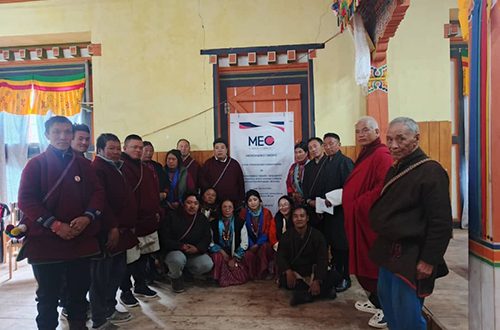
For generations, high-altitude and rural households across Bhutan have relied on traditional biomass, firewood burned in bukharis (wood-burning stoves) and liquefied petroleum gas (LPG) to get through biting winters and daily meal preparations. While essential for survival, this reliance carries a heavy toll: indoor air pollution, mounting pressure on forest resources, and significant physical and financial labor.
Now, a pioneering national clean energy initiative is looking to change that narrative by turning Bhutan’s abundant hydropower advantage into cleaner, safer, and more sustainable domestic energy.
Led by the Bhutan Ecological Society (BES) in partnership with the US based MicroEnergy Credits, an ambitious carbon reduction project is rolling out under the Bhutan-Singapore Carbon framework.
The initiative aims to deploy 100,000 clean energy appliances, including high-efficiency electric space heaters and electric cookstoves, to rural and low-income households at heavily subsidized rates.
A pilot rooted in community transition
The project has kicked off its pilot phase across six dzongkhags, distributing a total of 300 units split evenly between cookstoves and space heaters.
Sonam Wangmo of BES explains that the core objective is to curb the heavy domestic reliance on firewood and LPG. “Our target is to reduce LPG and fuel use,” she notes, highlighting that secondary benefits include improvements in public health, the protection of forest resources, and easing the daily time burden of gathering firewood.
Fuel dependence in Bhutan
Firewood is still central to how Bhutanese households cook and keep warm. According to the Ministry of Energy and Natural Resources’ Bhutan Energy Data Directory 2022, the country used about 254,600 tonnes of fuelwood in 2022, and households accounted for nearly 200,000 tonnes of it.
Of the wood burned at home, about 36 percent went to cooking, 22.5 percent to space heating and 41 percent to other uses such as annual rituals, hot-stone baths and crafts. Biomass supplied about 25 percent of Bhutan’s total energy and about 63 percent of all energy used in buildings, more than any other fuel.
LPG is the second main cooking fuel. In 2022, households used about 9,200 tonnes of LPG, almost all of it for cooking, and every kilogram is imported. Households also used about 950 kilolitres of kerosene, about 80 percent of it for heating.
Satya Ranjan of MicroEnergy Credits said, “These fuels produce substantial emissions. Using standard international emission factors from the Intergovernmental Panel on Climate Change (IPCC), household LPG use alone releases about 27,000 tonnes of CO₂ a year.”
Additionally, burning nearly 200,000 tonnes of firewood also releases large amounts of CO₂, methane and black carbon. Under international carbon accounting, only the share of wood that forests do not regrow sustainably is counted as a net emission.
Satya Ranjan added that national surveys show the same pattern at household level. Bhutan’s SDG 7 Roadmap (UNESCAP, 2022), using 2017 survey data, reports that about one in three rural households cooked mainly with biomass and about six in ten heated their homes with fuelwood, mostly in traditional bukharis.
He said that MicroEnergy Credits’ baseline assessment in 2026, carried out with BES across all 20 dzongkhags, found the same picture.
Most families use firewood and LPG side by side, keeping wood for long cooking, livestock feed, and especially winter heating. In colder dzongkhags, where winters can last seven to eight months, the bukhari heats the home and cooks the meals.
Traditional stoves and bukharis convert only about 10–15 percent of their fuel’s energy into useful heat. Induction and infrared cookstoves convert 80–90 percent, and electric heaters more than 90 percent. The detailed survey results are under independent review for international certification and will be shared once that process is complete.
Because the rollout is in its early stages where it has only been a month, officials are closely monitoring electricity consumption and gathering feedback.
While comprehensive data on winter space heating is yet to be captured since the cold season has not fully clocked in, the response to the electric cookstoves has been overwhelmingly positive and high in demand. Both appliances operate at an impressive 90 percent efficiency.
To ensure accessibility, the financial model is heavily weighted in favor of the community: 80 percent of the equipment cost is borne by BES, with households covering the remaining 20 percent.
Following the pilot and pending final approvals from the Department of Environment and Climate Change (DECC), BES plans to scale up the project nationwide by covering all the 20 dzongkhags.
Cost-effectiveness and benefits
In places like Dogar in Paro, where winter temperatures plunge, the traditional dependence on bukharis and firewood is steep.
Households frequently purchase multiple truckloads of heavy timber, such as oak hardwood, which can cost up to Nu 8,000 per trip, or pine at Nu 6,000 per trip just to survive the freezing months. Combined with LPG cylinders priced between Nu 1,700 and Nu 1,800, home heating and cooking represent a major drain on rural household finances.
Chimi Dema, a resident of Dogar and a beneficiary of the e-cookstove pilot, has already felt the shift.
“BES has given us either a cookstove or a space heater of our choice and has asked us to do away with using LPG and firewood for the time being,” Chimi Dema shares. “I found the cookstove to be very good. Sometimes I feel as if LPG finishes too soon, and the e-cookstove works well as an alternative.”
She emphasizes how practical the shift is for her community: “It is also very reliable for the community since per cylinder it costs Nu 1,700–1,800, and firewood consumption is high during winter in the area.”
This shows the increasing need for cost-effective and eco-friendly solutions to Bhutan’s rural and highland households that heavily depend on firewood.
Satya Ranjan of MicroEnergy Credits said, “Affordability is at the heart of the program. Carbon finance pays for part of the price of each cookstove and heater, so families pay much less upfront. This removes the biggest barrier that has kept low-income households from switching.”
“Carbon finance also pays for user training, after-sales service and repairs, so the devices keep working throughout their life,” he added.
Tackling hurdles and scaling
Despite the warm reception, transitioning rural communities away from deeply entrenched habits requires more than just hardware distribution.
The program began distributing devices in 2026 and aims to reach up to 50,000 households with induction or infrared cookstoves and up to 50,000 households with electric space heaters, all powered by Bhutan’s renewable hydropower over the next five years.
Each household that switches cuts its use of firewood and imported LPG, and the electricity that replaces them produces almost no emissions.
Satya Ranjan said that the success of the project will be measured against the four UN Sustainable Development Goals of Climate Action (SDG 13), Affordable and Clean Energy (SDG 7), Gender Equality (SDG 5), and Decent Work and Economic Growth (SDG 8).
Project coordinators note that awareness-building is vital to dispel local assumptions regarding cooking tastes, appliance safety, and electricity costs. To ease user concerns, BES has built robust support into the pilot, including a one-year warranty on glass components along with free repairs for coils, while early monitoring indicates no disruptive spikes in electricity bills.
As officials navigate initial logistical hurdles and secure long-term funding for the full-scale rollout, the project stands as a model for how international carbon markets can directly benefit local communities.
By bridging modern technology with traditional rural life, Bhutan is taking a decisive step toward a cleaner, greener domestic future.