The Bhutanese Leading the way.
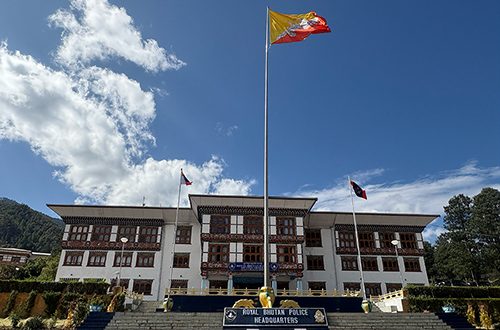
The death of a 12-year-old girl in Kabesa, Thimphu, has renewed concerns over the safety of children in Bhutan, as police statistics show an increase in reported sexual offences during the first half of 2026.
The incident has brought renewed attention to the risks children face in their daily lives, including their journeys between school and home, and the need for stronger child protection measures.
According to crime statistics from the Royal Bhutan Police (RBP), reported by The Bhutanese in July, sexual offences increased from 55 cases between January and June 2025 to 67 cases during the same period in 2026.
The 2026 figures included 23 cases involving child molestation and rape of a child above 12 years of age. Other reported offences included six cases of sexual harassment, four cases each of rape and statutory rape, and three cases of attempted rape of a child above 12 years.
The figures indicate an increase in reported sexual offences, although they do not establish whether every category of child sexual abuse has increased.
In 2025, RBP recorded 59 cases of rape of a child above 12 years of age, 35 cases of child molestation and eight cases of statutory rape.
Petition calling for tougher laws gathers over 20,000 signatures
Public concern over the murder of the 12-year-old girl has also gained momentum online, with a petition hosted on Change.org gathering more than 20,000 signatures.
The petition, initiated by Pema C and titled “Are Our Children Safe? Is Our Justice System Strong Enough?” calls on Parliament and the Royal Government of Bhutan to urgently review existing laws, introduce the strongest constitutionally permissible penalties for aggravated crimes against children and strengthen child protection mechanisms.
It also calls for a transparent national debate on capital punishment, questioning whether the most serious crimes against children warrant reconsideration of Bhutan’s current constitutional position.
The petition acknowledges that Bhutan’s Constitution prohibits capital punishment and that any reconsideration would require a constitutional process.
It states that the campaign is not about revenge but about justice, accountability, deterrence and ensuring that no child is left unprotected.
The petition has added to the wider debate on punishment for serious crimes against children, with some social media users also calling for the death penalty for perpetrators of rape and sexual violence against children.
Parliament discusses stronger legal protection for children
During the press conference on the Sixth Session of the Fourth Parliament of the National Assembly of Bhutan, Chairperson of the Women, Children and Youth Committee, MP Lhaba, raised concerns over the murder and reported sexual assault of the 12-year-old girl in Kabisa, saying that there have been many similar cases involving children.
He said Her Majesty The Gyaltsuen had called for stronger legislation to address sexual offences against children. Following this, amendments to the relevant provisions of the Penal Code are expected to be initiated through the Office of the Attorney General (OAG) and submitted through the Cabinet as a government amendment Bill.
However, this can happen only next year as an earlier attempt in the National Council to amend certain provisions of the Penal Code was not successful and so it became a dead bill. A dead bill can be brought back only after a year.
Public calls for tougher punishment spark debate on social media
The murder of the 12-year-old girl has also triggered widespread discussion on social media, with some users calling for tougher punishment for perpetrators of rape and sexual violence against children, including the introduction of the death penalty.
The debate has brought renewed attention to public concerns over whether existing laws provide sufficient deterrence and accountability for serious crimes against children.
While some social media users have called for the death penalty, the proposed amendments to the Penal Code discussed by Parliament remain a separate legislative process. Whether tougher sentencing provisions will be included has yet to be established.
Parents stress importance of school transportation safety
For parents, ensuring children’s safety during their daily journeys to and from school remains a major responsibility.
Kinga Choden, a mother of a Class II student, said she regularly has to pick up and drop off her daughter at school, as parents are required to take responsibility for their children’s transportation.
She said the school has made it mandatory for parents to pick up and drop off their children, adding that such an initiative is important in ensuring children’s safety and reducing the risks they may face while travelling alone.
She said initiatives that encourage parents to take responsibility for their children’s school journeys are particularly important in light of growing concerns over child safety.
The responsibility for protecting children, however, extends beyond parents, schools and local governments. Communities and child protection institutions also have a role in identifying risks, responding to reports of abuse and ensuring children can seek help without fear.
Local authorities plan CCTV installation and awareness programmes
Speaking to The Bhutanese, Kawang Gup Dawa Tshering said plans are underway to install CCTV cameras at locations considered risky in Kabisa and other necessary places in Kawang gewog to strengthen community safety.
He said the installation is expected to take place soon, with the aim of improving surveillance and helping prevent incidents that could threaten the safety of residents, particularly children.
The Gup also said the gewog would continue conducting community awareness programs to educate residents about safety and the importance of protecting children. He added that awareness activities have already been carried out in the community.
The recent case also raises questions about the safety arrangements for students travelling home, particularly when school schedules change or children have to walk alone.
With reported sexual offences increasing in the first half of 2026, the effectiveness of existing child protection mechanisms and coordination among relevant agencies will be important areas of scrutiny.
The challenge for Bhutan is not only to investigate crimes after they occur, but also to strengthen prevention, ensure timely intervention and create an environment where every child can feel safe at home, in school and in the community.