The Bhutanese Leading the way.
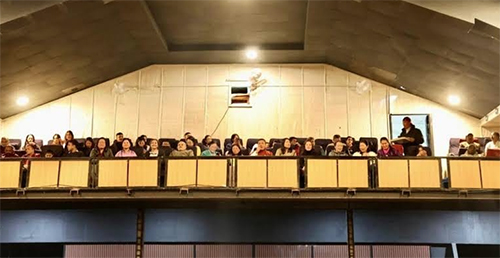
Bhutan’s cinema halls are experiencing a significant surge in attendance, a trend driven by stronger storytelling, advanced production techniques, and evolving audience preferences, according to local filmmakers and theater operators.
Tek Nath Adhikari, manager of City Cinema in Thimphu, confirmed that both the volume of film screenings and overall public interest have risen compared to previous years.
Adhikari explained that a film performing moderately well might attract around 150 viewers per day over a 30 day screening period, while a more successful film could draw around 265 viewers per day over the same period. A blockbuster, he said, could attract approximately 200 viewers per day over a 90-day screening period at a city cinema.

He cited “Dobchu”, which screened for more than 99 days, “Perfect Girl 2”, which ran for more than 60 days, and “Khekpa”, which screened for around 60 days, as examples of films that have sustained theatrical runs.
For Adhikari, the success of a film depends on storytelling that allows audiences to connect emotionally with what they see on screen.
“Movie making with storytelling which audiences can feel and connect with that is what a movie should be like,” he said.
He also observed that audience preferences are changing, particularly among Generation Z and Millennials, who are increasingly interested in watching films in theatres. He added that monks continue to be part of the audience and that tourists, too, are showing interest in Bhutanese films and the experience of watching them in cinema halls.
While he believes Bhutanese filmmaking has improved in acting, production and sound, Adhikari said cinema infrastructure has not progressed at the same pace.
He argued that upgrading cinema halls should become a priority for the government and relevant agencies, including the Bhutan InfoComm and Media Authority (BICMA) and those supporting the creative industry. He said support for filmmakers should be complemented by assistance for theatre operators so that audiences can experience films in more comfortable and modern surroundings.
Adhikari compared the relationship between films and theatres to that between people and temples, arguing that better cinema infrastructure could help the industry grow alongside improvements in filmmaking.
“Movie is like people and theatre is like temple,” he said, stressing that better equipped halls would allow audiences to enjoy the quality of films that filmmakers are increasingly able to produce.
He acknowledged that over-the-top (OTT) streaming platforms offer an alternative to cinema-going, but said watching films in a theatre provides a different experience from watching at home. Cinemas offer opportunities for friends and families to gather and share an experience, he said.
In his view, outdated facilities and a lack of comfort could lead some viewers to choose streaming platforms instead, even when they are interested in watching a film.
Adhikari said government support should extend to cinema halls as well as film producers, allowing the industry to improve both the films being made and the places where they are screened. He also linked the shared experience of cinema-going to Bhutan’s broader aspiration of promoting happiness and togetherness under Gross National Happiness (GNH).
Alongside infrastructure, he highlighted the importance of accessible ticketing systems. City Cinema has developed its own online ticket-booking application, which Adhikari said is intended to make bookings easier for audiences and provide a platform that filmmakers can use to reach viewers.
He said the platform was scheduled to go live on 26th October 2026, initially for MNG and other upcoming films. According to Adhikari, the service is intended to simplify ticket booking for audiences and help filmmakers avoid the difficulties of arranging online ticketing independently.
Film producer Dorji Wangchuck of Dorjis Production also observed an increase in theatre audiences following the COVID-19 pandemic.
“I think after post COVID there is increase in audience coming to theatre,” Wangchuck said.
He noted that audiences were already attending cinema halls before the pandemic, but said the post-COVID period had seen further growth alongside improvements in film budgets, technical production and storytelling.
He said these developments have helped filmmakers and production houses, while younger generations are also becoming a more visible part of the cinema audience.
However, the growth of cinema-going does not necessarily mean that every viewer is choosing theatres over watching films at home.
A young moviegoer interviewed for this story said they had last watched a film in a cinema around five months ago and rarely watched Bhutanese movies.
Despite this, the viewer said watching films in a cinema offered a distinct experience, particularly because of the sound system and the scale of the visuals.
“I would say in cinema because hearing rich layers in a theatre sound system elevates the emotional resonance and also cinematic scales and scenes,” the viewer said.
The viewer also pointed to practical considerations when deciding whether to visit a cinema, noting that the combined cost of tickets, transportation and refreshments can influence the decision to watch a film in a theatre or at home.
For the viewer, the decision to visit a cinema more frequently depends on the overall experience and value for money. Affordable ticket prices, greater comfort, respectful audience policies and special events alongside blockbuster screenings could encourage more frequent visits.
While stronger films and changing audience interests may be contributing to cinema going, the experience offered by theatres remains an important consideration.
As Bhutanese filmmakers continue to improve their storytelling and technical production, the question is whether cinema halls can modernize alongside them. For operators and filmmakers, sustaining audience interest may depend not only on producing films that people want to watch, but also on ensuring that the cinema experience gives audiences a reason to return.