The Bhutanese Leading the way.
By Dhanapati Sharma
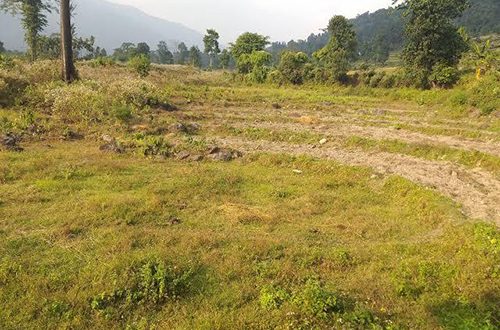
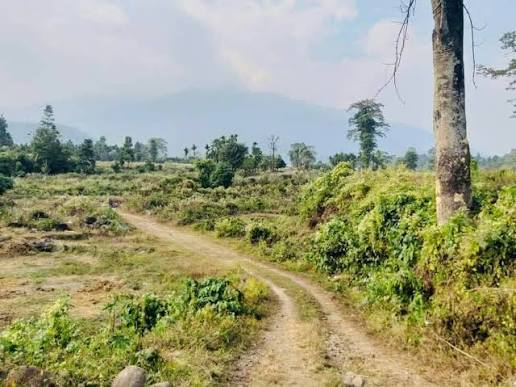
On a recent visit to my village to see my ageing parents and grandparents, I was struck by a troubling sight. As I drove towards Tashichholing, stretches of once-cultivated land lay barren. The fields seemed to tell a story of a changing rural Bhutan, where the land remains, but the hands to cultivate it are disappearing.
I stopped at a small village along the way and spoke with a few people. They were preparing to travel to a nearby Indian market to shop for the Dashain festival. With a touch of humour, I asked whether they would be buying everything there, including rice, flour and cooking oil. Their answer surprised me less than the explanation that followed. They had stopped growing paddy because they could no longer find enough farm labour. For years, they had relied on food purchased from India. Their terraces were difficult to mechanise, and they still depended on oxen for cultivation.
A little further along the road, I met another group of villagers. Their story was different, but the underlying problem was much the same. They still grew enough food for their households, and some cultivated arecanut, commonly known as doma, as a cash crop. Yet finding a profitable market remained a challenge. They felt that middlemen captured much of the value, while farmers who did the hard work received relatively little. Without better bargaining power and reliable market access, producing more did not necessarily mean earning more.
In Tashichholing, I heard a third story: one of farmers battling wildlife. Elephants can destroy an entire paddy crop, wiping out months of labour and investment. One frustrated villager made a striking observation: if more households cultivated their fields, the losses from wildlife might be spread across the community, allowing everyone to harvest at least something. Another suggested that the government should require landowners to cultivate their land so that villages could produce enough to eat and sell.
Their frustration was understandable. But the answer cannot simply be to compel every landowner to farm. People need reasons to cultivate their land, confidence that their crops will survive, and assurance that their labour will bring a fair return. The challenge is to make farming viable, not merely obligatory.
The scale of the national challenge makes these village stories important. According to the National Statistics Bureau’s Integrated Agriculture and Livestock Census, paddy production fell from about 54,088 metric tonnes in 2020 to 40,804 metric tonnes in 2023. More recently, Bhutan’s first Food Balance Sheet Report, as reported by the Bhutan Broadcasting Service in September 2026, showed that the total area planted with crops declined from nearly 42,000 hectares in 2021 to around 37,000 hectares in 2024, a reduction of about 13 per cent. These figures do not establish a single cause, but they underline the need to understand why cultivated land is shrinking.
The World Bank’s 2026 Bhutan Development Update offers a reason to look beyond farming as a subsistence activity. Its analysis estimates that the broader agrifood system employs about 55 per cent of Bhutan’s employed population, including 71 per cent of rural workers. It also finds that moving workers into activities such as food processing, logistics and food services could increase earnings by up to 33 per cent. In other words, agriculture can create better livelihoods when farmers are connected to the wider food economy.
We must therefore rethink how we support our farmers. Labour shortages call for appropriate machinery, shared equipment services and practical support for small, fragmented and terraced farms. Irrigation channels must be repaired and maintained wherever water access is a constraint. Farmers need stronger cooperatives, transparent pricing, reliable market information and better links with buyers.
Crops such as arecanut should not leave farmers dependent on individual middlemen with greater bargaining power. Local processing, storage, grading and packaging could help retain more value within farming communities.
Wildlife conflict also deserves urgent attention. Community-based crop protection, maintained fencing where appropriate, timely support for affected households and coordinated responses to elephant movements can help reduce losses. At the same time, the government and communities must identify which land is suitable for cultivation and which areas may require different land-use approaches. Food security should not come at the expense of ecological balance.
Some villagers told me that irrigation could be addressed through collective effort. Their willingness to cooperate is encouraging. Yet irrigation is not the only barrier, and building infrastructure is only the beginning. Without labour, viable markets and protection from repeated losses, even well-watered fields may remain uncultivated.
We may not be able to achieve complete food self-sufficiency in every commodity to strengthen our food security. However, we need to make better use of suitable agricultural land, improve domestic production where feasible and reduce avoidable dependence on imported essentials. This requires coordinated action by government agencies, local leaders, farmers, businesses and consumers.
As I continued my journey, the barren fields stayed with me. They were more than unused land; they represented lost labour, weakened rural livelihoods and food that could have been produced at home. The question is no longer simply why people are leaving their fields behind. It is what we must do to make them worth returning to.
A field should not remain barren because a farmer cannot find workers, cannot reach a fair market or fears losing an entire harvest to wildlife. If we want a resilient rural economy, we must help farmers turn their land into a reliable source of food, income and dignity. The time to act is now, before more of our fields become memories of what we once cultivated.
GCBS, Gedu