The Bhutanese Leading the way.
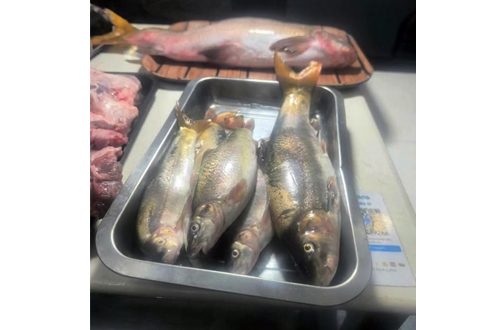
The recent floods in Gasa and Punakha have brought unusually large quantities of fish downstream, prompting people in some areas to collect and dry them for consumption, while reports of flood-affected fish being offered to meat shops in Thimphu have raised concerns over food safety.
Speaking to The Bhutanese, Sonam Rigsoel Tshering from Dagana said he witnessed people gathering large quantities of fish from the Kali Khola in Lhamoizingkha following the floods. He said people collecting them in bulk and drying them for consumption.
While some people collected the fish for consumption, others tried to rescue the live fish and return them to the water.
The Divisional Forest Office in Wangdue had warned the public against collecting or consuming fish killed by floodwaters, cautioning that they could pose serious health risks. The office has also urged people to stay away from riverbanks, while forestry officials have been deployed to monitor the affected areas.
The fish have reportedly been carried downstream into lower-lying areas along the Sankosh River in India, where people have also been gathering and catching them for consumption.
In Assam, five members of a family reportedly fell ill and four were hospitalized after consuming fish washed downstream following the recent floods.
In a separate incident, a bear carcass was found in the Sankosh River at Uttar Haldibari in West Bengal, India. The carcass is suspected to have been washed downstream following the recent glacial lake outburst flood (GLOF) in Bhutan. Forest officials recovered the carcass and sent it for post-mortem examination.
Concerns have also emerged in Thimphu after a TikTok video showed flood-affected fish being sold at a meat shop for around Nu 700 per kilogram, raising questions about the safety of fish entering the local market.
Speaking to The Bhutanese, a worker at a meat shop in Sabji Bazar said the shop had received offers to purchase the fish but had refused to buy them due to concerns about their safety.
Floodwaters can carry sewage, chemicals and other pollutants, while fish killed during floods may deteriorate quickly if they are not properly handled or stored.
The Ministry of Health has advised the public not to collect or consume dead or stranded fish following the floods. The ministry warned that consuming contaminated or decomposed fish could cause nausea, vomiting, diarrhoea, abdominal pain and fever, and may lead to gastrointestinal infections and other serious complications, particularly among children, older people and individuals with weakened immune systems.
The large-scale collection and drying of fish in areas such as Lhamoizingkha, coupled with reports of attempts to sell flood-affected fish in Thimphu, have raised questions about public awareness of food safety risks and the measures needed to prevent potentially unsafe fish from entering the food supply.