The Bhutanese Leading the way.
By Dr Ugyen Tshewang
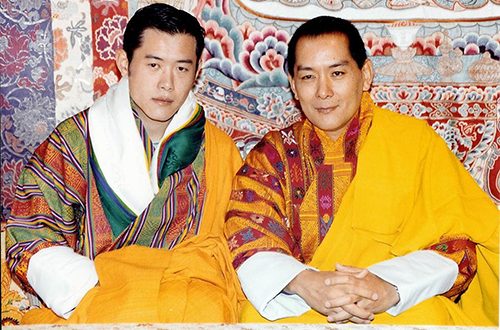
Throughout the unfolding pages of a nation’s history, there arise extraordinary beings whose wisdom, compassion and enlightened vision illuminate the path of generations. Through their noble deeds and selfless dedication, they safeguard their people’s heritage, nurture peace and harmony, and lay foundations for enduring national well-being. His Majesty the Fourth Druk Gyalpo, Jigme Singye Wangchuck, is revered among such exceptional leaders. Through his profound devotion to the Tsa-Wa-Sum, His Majesty guided Bhutan through 34 transformative years, from 1972 to 2006, safeguarding its sovereignty, preserving its heritage and preparing the Kingdom for a future founded on peace, harmony and democratic governance.
As Bhutan commemorates His Majesty’s 71st birth anniversary on 11 November, we reflect with profound gratitude on a reign whose greatest achievements extend far beyond its years. His extraordinary foresight in preparing the nation for a future beyond his own reign remains among the most remarkable expressions of selfless leadership.
Development with a human purpose
One of His Majesty’s most distinctive contributions was articulating Gross National Happiness (GNH) as a guiding philosophy of development. At a time when progress was commonly measured through economic growth, His Majesty advanced a broader vision that placed people’s well-being at the centre of national development.
The philosophy recognised that prosperity alone could not define progress. Education, health, cultural identity, environmental conservation, social harmony and good governance were equally essential. Over time, this vision evolved into the four pillars and nine domains of GNH, offering Bhutan a distinctive framework for pursuing balanced and holistic development. Its enduring message is that economic growth must ultimately serve the happiness and well-being of people.
Transforming the foundations of the nation
Building on the modernisation initiatives of his predecessors, particularly the Third Druk Gyalpo, His Majesty guided Bhutan through successive Five Year Plans that strengthened the country’s social and economic foundations.
Road networks expanded, connecting remote communities and improving access to markets and public services. Investment in education opened opportunities for successive generations, while hospitals, basic health units and trained healthcare personnel brought essential services closer to the people.
Hydropower emerged as a major pillar of the national economy. Projects such as Chhukha and Tala strengthened electricity generation, government revenue and economic cooperation with neighbouring countries, creating resources for further national development.
These achievements reflected the collective efforts of governments, civil servants, development partners and the people. His Majesty’s vision and leadership, however, provided the direction and continuity that enabled Bhutan to become more connected, prosperous and prepared to engage with the wider world.
Protecting our natural and cultural heritage
Environmental conservation was another defining feature of His Majesty’s vision. Bhutan’s protected-area network expanded, and conservation became integral to national development planning.
His Majesty’s commitment to maintaining at least 60 percent forest cover, subsequently enshrined in the Constitution, demonstrated a profound understanding of the relationship between nature and national well-being. The constitutional responsibility to protect the environment for present and future generations remains a precious national inheritance.
Equally important was His Majesty’s recognition that modernisation must never come at the expense of Bhutan’s spiritual and cultural identity. Our language, traditions, architecture, festivals and living heritage remain central to who we are as a nation. His Majesty’s vision showed that Bhutan could embrace progress while preserving the values and traditions that make it distinctive.
Preparing Bhutan for democracy
Perhaps the most far-reaching expression of His Majesty’s foresight was his decision to prepare Bhutan for constitutional democracy. This historic transition reflected his conviction that the nation’s long-term future should rest on strong institutions and the participation of its people.
The process was gradual and carefully guided. The establishment of Dzongkhag Yargay Tshogdus in 1981 and Gewog Yargay Tshogchungs in 1991 created opportunities for greater public participation in local governance. In 1998, His Majesty devolved executive powers to an elected Council of Ministers, further advancing institutional change.
In 2001, His Majesty commanded the drafting of a written Constitution. A 39-member committee, chaired by then Chief Justice Lyonpo Sonam Tobgye, undertook this historic responsibility. His Majesty and the Crown Prince, now the Fifth Druk Gyalpo, subsequently travelled to all twenty Dzongkhags to explain the draft Constitution and hear the views of citizens.
On 17 December 2005, His Majesty announced that Bhutan’s first national election under parliamentary democracy would take place in 2008. In December 2006, he transferred the responsibilities of the Throne to His Majesty the Fifth Druk Gyalpo, Jigme Khesar Namgyel Wangchuck. The Constitution was adopted in 2008, followed by the country’s first parliamentary elections.
This was more than a political transformation; it was an extraordinary expression of trust in the people. His Majesty initiated and guided change not for the continuation of his own authority, but to prepare Bhutan to stand confidently on its own. Such willingness to place the nation’s long-term interests above personal power represents one of the highest expressions of selfless leadership.
Sovereignty, security and responsible leadership
His Majesty’s legacy must also be understood in the context of Bhutan’s sovereignty and security. For a small Himalayan nation situated between two large neighbours, safeguarding independence and national resilience has always been essential.
His Majesty guided the country through complex regional circumstances while steadfastly safeguarding its sovereignty and national interests. The December 2003 operation against armed camps in southern Bhutan stands as a defining episode in the nation’s contemporary history. His Majesty’s personal leadership of the operation, despite the risks to his own safety, demonstrated extraordinary courage, unwavering resolve and an abiding commitment to protecting the sovereignty and security of the Kingdom.
His leadership also strengthened Bhutan’s international engagement and partnerships. It reflected the understanding that sovereignty rests not only on security, but also on national unity, capable institutions, economic resilience and responsible diplomacy.
Carrying the vision forward
As Bhutan enters a new phase of national transformation, His Majesty’s legacy calls upon us to reflect on our collective responsibilities. The challenges of creating meaningful employment, protecting the environment, strengthening democracy and building a resilient economy require renewed commitment and responsible action.
These responsibilities belong not to government alone, but to every Bhutanese. His Majesty’s confidence in the people was also a trust placed in our hands. The institutions he helped establish must be strengthened, the values he championed must be practised, and the opportunities created through decades of national effort must be used wisely. Each generation has a responsibility to preserve these precious inheritances while responding courageously to the challenges of its time.
A legacy beyond a lifetime
The true greatness of a noble leader is measured not only by the achievements of his reign, but by the enduring blessings he leaves for generations to come. His Majesty the Fourth Druk Gyalpo safeguarded Bhutan’s sovereignty, strengthened its national identity, protected its natural and cultural heritage, and prepared the Kingdom for constitutional democracy. His wisdom, farsighted vision and selfless devotion to the Tsa-Wa-Sum laid foundations for a nation better equipped to meet the future.
His legacy lives on in the institutions established for the service of the people, the pristine environment entrusted to future generations, the democratic system that gives every Bhutanese a voice, and the values that continue to guide our beloved Kingdom. These are precious inheritances that we must cherish, strengthen and pass on responsibly.
On the auspicious occasion of His Majesty’s 71st birth anniversary, may we offer our humble prayers at His Majesty’s sacred feet. May the blessings of the Three Jewels bestow upon His Majesty long life, excellent health and boundless happiness. May His Majesty continue to grace our nation with his wisdom and benevolent blessings.
May the sovereignty and harmony of our beloved Kingdom remain ever secure; may the Dharma flourish; and may all sentient beings enjoy peace, happiness and freedom from suffering. His Majesty prepared Bhutan for a future beyond his own reign. To honour that extraordinary vision is to uphold the responsibilities entrusted to us—with humility, wisdom, compassion and unwavering devotion to the Tsa-Wa-Sum.
The author is a former Commissioner of the RCSC and currently serves as Director of the Bhutan Qualification and Professional Certification Authority under the Ministry of Education and Skills Development. The views expressed are personal and do not represent the views of the Ministry or any agency.