The Bhutanese Leading the way.
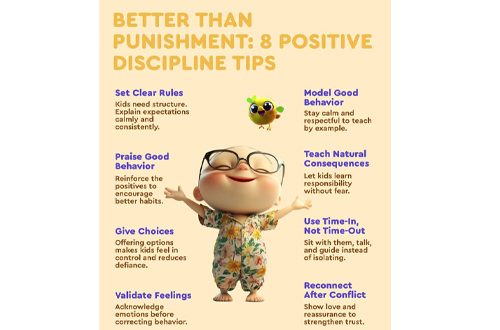
Corporal punishment may make a child obey in the moment, but the fear and pain used to achieve that obedience can come at the cost of the child’s long-term mental and emotional well-being, according to the child psychiatrist at the Jigme Dorji Wangchuck National Referral Hospital (JDWNRH).
While physical punishment has traditionally been accepted as a way of disciplining children, she said children learn more effectively when adults set firm and consistent boundaries without humiliating, frightening or hurting them.
Obedience through fear is not self-discipline
Corporal punishment, by definition, involves physical force intended to inflict pain. The psychiatrist said it has historically been culturally accepted in Bhutan, with many parents continuing to use the same disciplinary methods they experienced while growing up.
“The way you parent actually depends on the way you were parented,” she said.
She said corporal punishment may appear effective because children often obey immediately after being hit or threatened. However, that obedience is temporary and driven by fear rather than an internal understanding of right and wrong.
“When you hit the person, it induces fear, and the chance is they are obeying because of fear, not because they are learning self-discipline,” she said. “It might improve the chance of obedience temporarily, immediately, but in the long run, it definitely has a negative impact on children’s mental health.”
According to her, children learn through observation. When they see parents or teachers using physical force, they may learn that aggression is an acceptable way of dealing with behaviour or conflict.
“If they observe the parent hitting them, or they observe the teachers hitting them, later on the risk of them becoming aggressive is heightened,” she said.
She also said children exposed to corporal punishment may face increased risks of anxiety and depression, and may develop more anxious behaviours later in life.
“There is no question about whether corporal punishment is healthy or unhealthy. Definitely it is unhealthy,” she said.
The psychiatrist said discipline should not be confused with physical punishment. The objective should be to help children develop self-discipline rather than simply making them comply out of fear of being beaten. Respect for parents and teachers, she said, should develop internally, shaped by the examples children see from adults.
Children need safety, not fear
The psychiatrist said home and school are supposed to be safe environments, particularly for young children whose brains are still developing.
“For small children especially, home and school are supposed to be a safe environments. However, if they are being beaten up at home and beaten up at school, the people who are supposed to protect them become a threat to them,” she said.
She said safety is a fundamental need for young children, who may not yet have developed the ability to fully understand or process why an adult is behaving aggressively towards them.
“Safety is the first thing for them, whether it be at home or at school, they have to feel safe,” she said.
A child who is constantly worried about how a parent or teacher might react to a mistake can become increasingly anxious. Unpredictable responses from adults can create ongoing fear, leaving children unsure of what might happen if they make a mistake. The psychiatrist said parents and teachers, therefore, need to be responsive and sensitive while remaining firm and consistent.
Discipline without fear or pain
The psychiatrist said positive discipline does not mean allowing children to do whatever they want. She said both authoritarian and permissive parenting can be problematic.
Authoritarian parenting relies heavily on obedience, with children being threatened or physically punished if they fail to comply. Permissive parenting, on the other hand, allows children to do almost anything without clear consequences.
Instead, she recommended a middle path where parents are firm and consistent while also showing love and care.
“You have to be firm. When the child has to be shown that no is no, it has to be taught to children,” she said. “On the other hand, do not be permissive, do not let your child do whatever he or she wants.”
Clear boundaries, she said, should be established at home and in school. For undesirable behaviour, adults can use proportionate consequences rather than physical punishment. For example, if a child repeatedly throws tantrums at home, a parent could temporarily withdraw a privilege the child values.
“The child will know, ‘If I behave like this, I’m going to lose my privileges,’ so I cannot behave this way,” she said.
The same principle can be applied in schools. If students repeatedly disrupt a class or fail to follow instructions, a teacher could temporarily withdraw a privilege, such as a free period, as a consequence.
She said positive reinforcement can also help children understand desirable behaviour, and that rewards do not necessarily have to be material or monetary; verbal praise and simple gestures of appreciation can be enough to reinforce good behaviour and clarify expectations.
The psychiatrist stressed that positive parenting and discipline should be introduced from early childhood rather than waiting until adolescence.
“It has to start from a very young age, from day zero itself. You can’t wait to use positive parenting or positive disciplining until they are adolescents or teenagers,” she said.
Look beyond the behaviour
The psychiatrist said parents and teachers should ask why a child is behaving in a particular way before assuming the child is simply being disobedient or difficult.
“When a child behaves a bit differently, or has some issues in terms of behavioural issues, emotional issues, the first question that you need to have is, ‘Why is my child behaving this way? Why is my student behaving this way?’” she said.
A child who is struggling academically, for instance, may be punished by a parent after a teacher complains about poor performance. But the underlying reason may have nothing to do with unwillingness to learn.
“If a child is not performing well at school and the teacher complains that the child is not doing well, the parent gets mad and ends up beating the child,” she said, adding that teachers should instead ask, “Why was this child not able to perform well at school?”
She said children may have conditions such as attention-deficit/hyperactivity disorder (ADHD), learning disabilities, or other neurodevelopmental difficulties that affect their behaviour and academic performance. The school environment can also contribute like a child frightened of a teacher may struggle to concentrate, and a child repeatedly bullied by peers may become afraid to attend school. “How can we expect these kind of children to perform well at school?” she said.
Teachers may not always identify these underlying problems and may instead perceive a child as spoiled, difficult, or unwilling to listen. Rather than immediately punishing the child, she encouraged parents and teachers to ask questions, engage children in open and supportive conversations, and try to understand what the child may be experiencing rather than immediately interpreting the behaviour as disobedience and resorting to punishment.
Every child needs a different approach
The psychiatrist said parenting and teaching are particularly challenging when children have developmental or behavioural difficulties.
“Raising a normal child, a typically growing child itself, is very difficult and is very complicated,” she said. “So how difficult is it going to be to bring up a child who has ADHD, who has autism, who has a learning disability?”
She said parents often expect their children to perform like their peers, but children develop at different rates and have different needs, some follow typical developmental patterns, while others have different developmental needs. For this reason, there is no single disciplinary strategy that can be applied to every child.
“Your strategy has to be individualized; you just cannot borrow one strategy and apply this to all the children,” she said.
This applies both at home and in schools, where children with similar developmental conditions may still require different approaches based on their individual needs.
Although corporal punishment may not always be the primary reason a child is referred for psychiatric assessment, she said it can emerge as one of several contributing factors to a child’s mental and emotional well-being. It remains relatively common and socially accepted, with some adults justifying physical punishment by saying a child “deserves” to be beaten for misbehaving.
Children learn from adults
The psychiatrist said corporal punishment can reinforce a cycle in which children learn the same behaviours that adults use to discipline them. She referred to the psychological concept of identifying with the aggressor: children learn behaviours by observing the adults around them.
“If the adults have been aggressive, they also eventually become aggressive,” she said, while acknowledging that this does not happen in every case. Conversely, children who grow up in loving and caring environments are more likely to learn and demonstrate similar behaviours.
“Children learn from adults, they learn by observing and through their experiences with the adults in their lives,” she said.
Ultimately, she said, the goal of discipline should not be to make children obey out of fear of punishment, but to help them understand boundaries and develop the ability to regulate their own behaviour. Replacing corporal punishment does not mean removing discipline, it means changing its purpose, from making children obey out of fear to helping them understand boundaries, consequences and responsibility.
Parents and teachers, she said, have a crucial role in shaping how children respond to conflict and authority, and creating safe, supportive environments from an early age is essential for healthy emotional development. Children should learn that mistakes have consequences, but those consequences do not have to involve fear, humiliation or pain. The aim, she said, should be to raise children who can regulate their own behaviour and make the right choices even when an adult is not there to punish them.