The Bhutanese Leading the way.
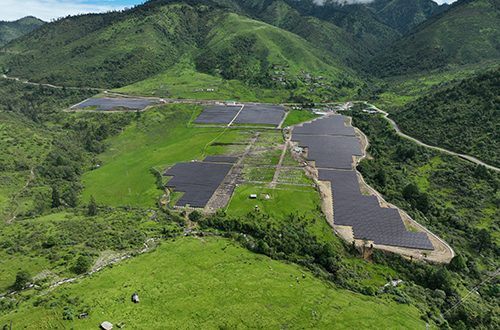
The National Energy Policy 2025 introduces a comprehensive strategy for Bhutan to diversify its energy mix beyond hydropower in response to rising domestic demand, and the need for long-term energy security.
While hydropower remains the backbone of Bhutan’s electricity generation, the policy emphasizes harnessing other renewable energy sources, such as solar, wind, biomass, geothermal, and emerging technologies including green hydrogen.
As of June 2025, Bhutan’s total installed generation capacity is 3,490 megawatts (MW), with only 6 MW coming from solar and wind sources combined. The policy aims to significantly expand the share of non-hydro renewables, targeting the addition of 5,000 MW of solar energy by 2040 alongside contributions from wind, geothermal, biomass, green hydrogen, and other renewable sources. This diversification strategy is guided by the Renewable Energy Development Roadmap 2024.
According to the policy, Bhutan’s solar and wind potential is estimated at about 12,000 MW and 800 MW respectively, while the usable biomass energy potential is around 2,700 GWh annually. To achieve its 2040 target of 25,000 MW installed capacity, the Royal Government of Bhutan plans to add 15,000 MW from hydropower and 5,000 MW from solar, alongside tangible contributions from other complementary renewables.
The Department of Energy (DoE) is tasked with promoting these resources through public and private investments, including Foreign Direct Investment (FDI), Public-Private Partnerships (PPP), Independent Power Producers (IPP), and captive power arrangements. The Renewable Energy Master Plan (REMP) 2017 will be updated to identify and list priority solar and renewable sites, which will be made available to project developers. Developers may also propose new sites subject to approval.
Renewable Energy Service Providers (RESP) will be supported to deliver distributed energy solutions, particularly in areas not connected to the national grid. The policy promotes the concept of prosumers who can generate electricity for self-use and supply surplus to the grid.
Green hydrogen is part of the diversification plan, with the policy referring to the Hydrogen Roadmap that envisions production of 70,000 tons of green hydrogen by 2040–2050, targeting the transport and industrial sectors. Hydrogen derivatives such as ammonia are also included.
Other technologies mentioned in the policy include Battery Energy Storage Systems (BESS), small modular reactors (SMR), and waste-to-energy systems. These are identified as part of Bhutan’s strategy to strengthen energy security and explore energy storage and alternative fuels.