The Bhutanese Leading the way.
Bhutan’s health workforce has expanded in recent years, with the number of doctors and nurses reaching their highest levels in seven years, according to the Annual Health Bulletin 2026.
However, the number of Health Assistants (HAs) has declined from its 2021 peak.
According to the bulletin, the number of doctors increased from 318 in 2019 to 463 in 2025, a 46 percent increase over seven years. The density of doctors also increased from 4.32 to 5.90 per 10,000 population.
The report states that doctors have shown the “most consistent upward trajectory” among the health workforce groups tracked, rising from 318 in 2019 to 463 in 2025. It says this “suggests sustained medical training and recruitment efforts.”
Nurses also increased to 1,869 in 2025, the highest figure recorded during the seven-year period, with a density of 23.64 per 10,000 population. Within the nursing workforce, there were 1,431 Staff/Assistant Nurses and 438 Clinical Nurses.
“The current figure is the highest across the entire seven-year period, a positive signal for frontline care delivery,” the report states.
The increase in doctors and nurses means the two key health workforce groups recorded their highest numbers in the period covered by the bulletin. The number of doctors increased by 145 from 2019 to 2025, while nurses increased by 505 during the same period.
However, the trend has not been the same for HAs. The number of HAs increased from 620 in 2019 to a peak of 683 in 2021 before declining to 566 in 2025. Their density also fell from 8.95 per 10,000 population in 2021 to 7.16 in 2025.
“Health Assistants (HAs), however, show a worrying decline, from a peak of 683 in 2021 to just 566 in 2025, with density falling from 8.95 to 7.16 per 10,000,” the report states.
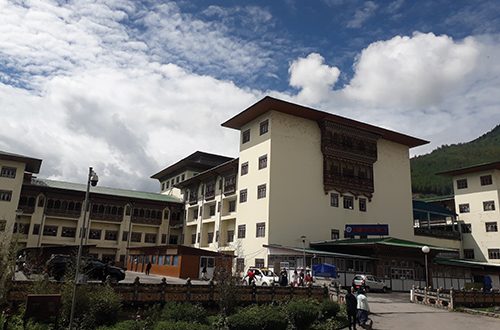
Despite the decline in HAs, Bhutan continues to maintain a wide network of health facilities to provide services across the country.
According to the report, there were 62 hospitals in 2025, including IMTART and military hospitals, along with 189 primary health center and traditional medicine health centers facilities. This included five thromde health centers in Thimphu and one in Phuentsholing.
There were also 53 sub-posts serving rural communities and 540 outreach clinics providing healthcare services in remote areas. Of the outreach clinics, 470 had sheds while 70 operated without sheds.
Other health workforce groups also recorded increases. The number of pharmacists rose from 48 in 2024 to 61 in 2025, while traditional medicine had 73 Drungtshos and 166 Menpas.
The report also highlights the importance of the country’s health infrastructure, stating that healthcare infrastructure comprising hospitals, primary health centers and smaller health outposts “serves as the backbone of an effective healthcare system.”
The workforce indicators are based on clinical human resources as of March 2026, while the health facility figures relate to 2025. Overall, the figures show continued growth in the number of doctors and nurses, alongside a broad network of health facilities supporting healthcare delivery across the country.
The Bhutanese has sought updated information from the Ministry of Health on the current health workforce, and further updates will be published in the paper’s upcoming issues.