The Bhutanese Leading the way.
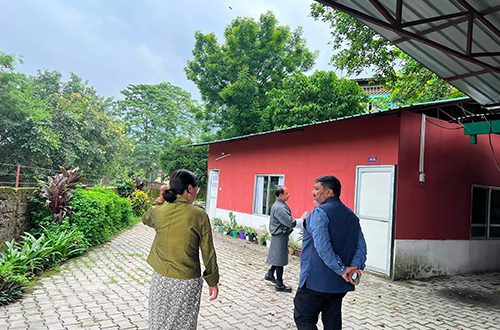
With support from RENEW Community Service Center in Phuentsholing, the women rebuilt their lives
30-year-old Karma (name changed) believed enduring the pain was easier than facing an uncertain future.
When her husband gradually stopped coming home, she hoped it was because of work. Late nights turned into weeks, and eventually, he stopped coming home altogether.
Soon after, she learned that he had another partner.
When she confronted him, he denied it and gave her the cold shoulder. Then, she received an unexpected call from the legal office informing her that her husband had filed for divorce.
With two children under five and no income of her own, Karma faced a question familiar to many women in abusive relationships: how would she survive if she left?
“I agreed to the divorce because he no longer wanted me and our children. But since we were completely dependent on him, I didn’t know what I was going to do,” she says.
For Karma, the emotional pain of betrayal was only one part of the hardship. Her greatest fear was how she would support her children.
Unable to see a way forward, she came across RENEW’s Community Service Center in Phuentsholing while scrolling through Facebook. She called the center, visited the office and, for the first time, felt reassured.
Recognising that financial independence would be key to rebuilding her life, the centre helped her secure a job that also provided accommodation for her and her children.
Today, she says the greatest difference is not simply having a job, but having peace of mind.
“My children and I are much happier now. My work may not be something big because I am not educated, but it is enough to feed my children and send them to school.”
Her message to other women is simple. “I want to tell women who remain silent because their husbands are the breadwinners that we should also find our own happiness. We should become independent if such a situation comes. This decision became my breakthrough.”
While domestic violence is often associated with bruises and broken bones, RENEW counsellors say many people seeking support have no visible injuries.
While physical abuse was the largest reported category in 2023, emotional abuse became more prominent in the following two years, accounting for 64 cases in 2024 and 49 in 2025.
As of 24 July 2026, the center had handled 102 cases. Emotional abuse and non-gender-based violence were the highest reported categories, with 34 cases each. The center also recorded 15 physical abuse cases, 14 economic abuse cases and five sexual abuse cases.
According to the center, physical violence remains one of the more visible forms of domestic abuse, involving acts such as kicking, punching, strangulation and assaults using objects including belts, sticks and stones.
However, the center manager said emotional abuse has become increasingly common, often stemming from jealousy, extra-marital affairs, lack of communication and emotional neglect.
Economic abuse frequently involves husbands withholding financial support for basic household needs or failing to pay child support (Sothey), leaving women and children financially vulnerable. The center also handles cases of sexual violence, including marital rape, sexual assault, attempted assault and harassment.
The manager added that although many women decide to leave abusive relationships after repeated infidelity and emotional distress, financial dependence can keep them in those relationships longer than they want.
“In many cases, women want to leave, but because they depend financially on their husbands, they compromise and continue living in the relationship,” she said.
The second survivor’s experience shows another side of emotional and economic abuse.
33-year-old Sonam (name changed) had divorced her husband once before deciding to reconcile in 2018 for the sake of their children. She said she also feared being left without love and care.
For a while, she said, life seemed to improve, but the peace did not last. Her husband began staying away from home for weeks, then months, and eventually years.
Along with his absence came another burden. He stopped paying rent and gradually withdrew financial support for food and household expenses. At times, he also physically assaulted her.
“When I asked him for money, he would tell me that I had my own hands and legs and should work. I felt the true helplessness. It wasn’t that I didn’t want to work. My children were still very small and needed someone to look after them,” she says.
There were days when Sonam and her children had to stay with relatives because they could no longer manage on their own.
“I was mentally exhausted and had completely lost faith in him. It was embarrassing for the three of us to seek shelter and food from relatives, but we had no other option left.”
Eventually, after confiding in an official during a meeting at her children’s school, she was advised to seek help from RENEW.
The centre referred her for legal assistance, which helped her complete the divorce process. It also arranged counselling support for her children.
“Looking back, I believe financial independence is essential. After the incident, I feel wives should not depend completely on their husbands financially. Even a small job is better than living with beatings and constant worries about who will provide.”
Her greatest motivation now is ensuring that her children receive an education so they do not experience the hardships she endured.
According to the Royal Bhutan Police, domestic violence remains the country’s most frequently reported crime despite an overall decline in crime.
RBP data shows that reported domestic violence cases rose from 358 in the first half of 2025 to 438 during the same period in 2026, an increase of more than 22 percent.
Police attributed the rise partly to alcoholism, substance abuse and financial hardship, as well as improved awareness and a greater willingness among victims to report abuse.
Suk Bdr Tamang, Mangmi of Logchina gewog in Chukha, said women, particularly those in rural communities, had previously been reluctant to report violence in their homes.
He said domestic violence cases were often handled through informal mediation involving elderly family members, and such mediations sometimes urged victims to remain silent to avoid bringing shame on the family. Some victims were also told that being beaten by their husbands was normal.
However, he said he had not seen these practices continue in the same way in recent years.
“Over the past four years, I have observed women approaching local officials not only about violence but also about partners’ extramarital affairs.”
He said victims are now more aware of their rights and approach the relevant authorities directly. Minor disputes may be brought to local officials, while serious abuse and related trauma are referred by communities or reported directly to agencies such as the Royal Bhutan Police, the courts or RENEW.
He attributed the change to awareness activities conducted by local governments, police, RENEW and other agencies, which inform people about reporting violence and available support. Local government officials also receive training on handling domestic violence and child protection matters.
RENEW’s case manager said women living in Phuentsholing Thromde generally approach the center because they know services are available. Women in villages, however, may endure abuse for years before seeking help.
“When they finally come to us, they usually come with firm decisions because they have already tolerated enough,” she says.
Despite expanding its services, the center said significant challenges remain. The manager said stigma and fear of community judgement can prevent survivors from seeking help, particularly in close-knit rural communities. Difficult terrain, poor roads and adverse weather can also hamper outreach and emergency responses in remote areas.
Providing timely intervention for Bhutanese people living across the border can be difficult because of jurisdictional limitations, while legal matters such as divorce may require people to return to their home dzongkhags.
The center manager said the nature of abuse is also evolving, with technology-facilitated gender-based violence and online abuse involving children emerging as growing concerns.
Alongside case management, the centre provides emergency shelter, counselling, legal and medical referrals, livelihood support, scholarships for children affected by domestic violence, advocacy programmes and telephone counselling.
So far, RENEW has helped 12,109 clients between 2004 and 2025. As of June 2026, a further 597 clients were reported across the centers and the Headquarter.
RENEW operates a multi-level system to respond to gender-based violence (GBV), linking its Headquarter, Community Service Centres (CSCs), and the Multi-Sectoral Task Force–Community-Based Support System (MSTF-CBSS) network.
This story is published under an EU-funded project managed by Save the Children Bhutan in partnership with the Bhutan Transparency Initiative and RENEW.