The Bhutanese Leading the way.
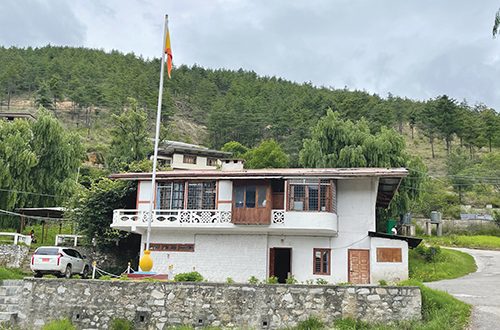
The Thimphu District Court on 29th October, 2025, sentenced Lekden D. Dorji to life imprisonment for the murder of a 25-year-old women in March 2024, at Changangkha, Thimphu.
The Context
The mother of Lekden D. Dorji claimed that he had schizophrenia like symptoms from a young age imagining voices and people. However, the family never got a proper diagnosis done for him even outside Bhutan as there is no medical certification to prove it.
It must also be clarified here that the vast majority of people with schizophrenia are not violent or dangerous, and the perception that they are is a common and harmful myth. Anywhere from 85% to 90% of people with schizophrenia never engage in violent acts and those that do are more likely to do harm to themselves. People with schizophrenia are, in fact, 14 times more likely to be the victims of violence than the perpetrators.
A claim made in court was that Lekden also suffered from a form of autism spectrum disorder. Here again, in the international context it takes a team of doctors and experts to diagnose autism of any kind along with a battery of tests which Lekden was not subjected too either in Bhutan or outside.
Again, as per international research and data autistic people are not inherently violent. Evidence does not support autism spectrum disorder (ASD) as a predisposition to crime or violence, and autistic individuals are, in fact, more likely to be victims of violence, bullying, and abuse than perpetrators. While some autistic people may have behavioral issues due to communication challenges there is no intentional violence or aggression. The link between autism and violence is another harmful myth.
Another defense made in court was that Lekden had a low IQ and here again internation research shows that it is not accurate or appropriate to generalize that low IQ people are violent. Intelligence is only one of many complex factors associated with an increased statistical risk of violent behavior across a large population, and it does not determine an individual’s character or actions.
It is true that Lekden struggled academically from a young age according to records and according to his mother was not aware he was doing something wrong when he hurt a cat for example. It was clear that Lekden suffered from something with his lack of empathy for hurting the cat like ‘psychopathy or sociopathy, certain psychiatric disorders, or some other brain condition, but his parents did not send him for medical diagnosis and treatment and instead tried things like meditation in India. Even if this was the case it would have to be a culmination of several factors both inherent and environmental that led to violence that night against the victim.
During the trial a prison roommate of Lekden testified in court he had to tell Lekden when it was time to brush his teeth, eat etc.
The verdict
During the trial, the defendant’s lawyer argued that he suffered from various mental disabilities, claiming that these conditions impaired his ability to understand his actions. The lawyer requested leniency or medical treatment under Section 119 of the Penal Code, and sought testimony from a psychiatrist of JDWNRH.
However, the Court found no credible evidence to prove mental incompetence. The earliest medical record from 2012 described the defendant as slow in learning and comprehension but capable of performing normal activities.
A 2024 psychiatric evaluation by Dr Chencho confirmed no signs of psychosis or delusion.
When the psychiatrist testified before the Court in March 2025, he clarified that when the RBP asked him about the individual’s mental health and his potential culpability in the crime he said he was not in a position to comment on his culpability as this requires a thorough forensics assessment which includes a detailed investigation, forensic reports and professional expertise that he does not possess.
Dr Chencho told the court that in countries like Australia forensic specialists and psychologists apply a battery of tests to measure IQ, and forensic psychiatrists assess and individual’s culpability based on detailed investigations and interviews.
“Unfortunately, such specialists are not available in Bhutan, which limited my ability to make a conclusive statement on the matter,” said Dr Chencho.
The Court also reviewed the defendant’s confession and video-recorded statement, which provided a detailed and coherent account of the events, approaching the victim, hiring a taxi, paying the fare via MBoB, assaulting her, concealing the body, and returning home, indicating full awareness and deliberate action.
The court said CCTV footage and witness testimonies, including that of the taxi driver, further supported the prosecution’s claim that the accused acted with clear intent and awareness.
The Court concluded that the defendant’s cognitive limitations did not amount to legal insanity or mental incapacity. Therefore, the plea of mental incompetence advanced by the defendant Section 119 of the Penal Code of Bhutan was dismissed.
The Court established that the defendant forcibly took the victim against her will, assaulted her, and attempted to rape her, resulting in her death.
Witnesses, including the defendant’s cousin and taxi driver, testified that the victim resisted the defendant’s attempts to take her home.
The driver stated that the defendant forced the victim out of the taxi despite her pleas to be taken home. Despite her resistance, the defendant forcibly pulled her out of the taxi, closed the door, and instructed the driver to leave.
The victim’s underwear, was found separately from the body, and post-mortem reports confirmed blunt force trauma and manual strangulation. The forensic report stated that all injuries were ante-mortem and inflicted with significant force, consistent with the CCTV footage showing the defendant kicking and dragging the victim before concealing her body the next morning.
Considering the brutality of the assault and the gravity of the offence, the Criminal Bench of the Thimphu District Court found him guilty of Felony Murder under Section 138(b) of the Penal Code of Bhutan and liable to sentence of the first degree which is life imprisonment.
The incident happened on 31st March, 2024, at around 3 a.m., when the defendant encountered the victim, who was intoxicated and alone near the 8 Eleven Shop in Thimphu. He persuaded the victim to accompany him, took her by taxi to the vicinity of his residence at Changangkha, and there violently assaulted her, attempted to rape her, inflicting multiple injuries that caused her death.
The victim’s body was subsequently discovered concealed beneath cardboard boxes and a piece of plank at the scene.