The Bhutanese Leading the way.
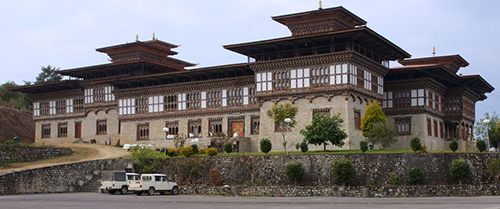
Tsirang has reached a significant milestone in its 13th Five-Year Plan (FYP), with a recently conducted midterm review highlighting a landscape of substantial economic growth coupled with a concerted push for greater local autonomy.
As of 24th March 2026, the dzongkhag has demonstrated efficient fiscal management, utilizing approximately 74.18 percent of the total budget received to date, an expenditure of Nu 890.822 million (mn).
While physical progress is evident across all 12 gewogs, the review also brought to light a uniform set of challenges regarding administrative ‘handcuffs’ that local leaders believe are hindering the efficiency of grassroots service delivery and the preservation of local heritage.
The ambition to transform Tsirang into a vibrant local economy is rapidly materializing, with several Key Performance Indicators (KPIs) already meeting or exceeding their 2029 targets.
The dzongkhag has successfully introduced five new commercial products, comb honey, packaged meat, buckwheat flour, banana chips, and kharang while ‘ghee’ has been launched as an OGOP product.
Productivity in the Renewable Natural Resources (RNR) sector remains a standout achievement, particularly in vegetable production, which has hit 100 percent of its target at 2,365.7 MT.
Livestock production is equally robust, with pork and chicken outputs currently reaching 86 percent and 80 percent of their final plan goals, respectively, contributing to the creation of 100 new private-sector jobs in farms and milk collection centers.
Similarly, social welfare and human capital development show positive trends, spearheaded by a consistent 100 percent primary school enrollment rate.
In the student learning outcomes, the BCSEA results for 2025 show average marks of 78.83 percent for class 6, 73.67 percent for class 8, 83.94 percent for class 10, and 88.14 percent for class 12.
The labor force is being proactively upskilled, with 534 individuals receiving training in various trades such as tailoring, entrepreneurships, weaving, plumbing etc. through partnerships with RENEW and Tarayana.
In the health sector, the prevalence of non-communicable diseases (NCDs) reached 13.07 percent in 2025, a figure that officials said is a success of the mass NCD screening program.
Furthermore, the dzongkhag has achieved a 100 percent identification rate for needy and destitute individuals for the Kidu system, ensuring that the most vulnerable residents receive proactive social protection.
Infrastructure projects are significantly enhancing rural connectivity and resilience across the region.
Notable achievements include the blacktopping of major farm roads, such as the 7 km Kapazhing road and the 5.581 km stretch in Doonglagang, as well as the completion of concrete bridges over the ChangChey and Burichu Rivers.
To support commercial farming, 2,278.3 acres of land are now serviced by climate-proof integrated irrigation systems, and farm biosecurity fencing has been installed for 259 farms to protect livestock from disease and wildlife conflict.
Despite these physical advancements, a primary theme of the midterm review was the call from Gewog leaders to lift restrictive administrative ceilings.
Leaders from Barshong, Goserling, and Tsirangtoed have specifically recommended the removal of the 10 percent ceiling on cultural and religious grants, arguing that such limits restrict their ability to fund essential local infrastructure.
Widespread concern was also expressed regarding the Nu 0.200 mn annual procurement limit for office equipment and the Nu 0.300 mn ceiling on specific gewog activities, which are seen as barriers to flexible, need-based planning.
Additionally, Gewogs like Kilkhorthang and Patshaling noted that mid-year budget notifications often disrupt planned activities, calling for clearer and more timely communication from central authorities.
Gewog like Phuentenchu raised concerns on lack of human resource such as engineers, technicians ana accounts assistant. It called for recruitment in each gewog in order to help deliver the services efficiently and on time.
Tsirang’s progress in disaster management was a highlight of its safety initiatives, with emergency response times now managed within 30 minutes.
This efficiency was attributed to the strategic use of social media for information sharing and a high level of disaster preparedness among local leaders. This was strengthened by the establishment of multi-hazard Standard Operating Procedures (SOPs) and regular mock drills conducted for schools, civil servants and monastic bodies.
Looking ahead, the dzongkhag aims to host 10,000 tourists by 2029, a goal set higher with notable record of 2,120 tourists in 2025 (471 international, 5 regional and 1644 domestic visitors).
To ensure the plan’s ultimate success, the dzongkhag recommended standardizing reporting formats, resolving system conflicts between tools like eGP, CMS, and e-tools, granting local governments the flexibility to make minor budget adjustments to meet unpredictable rural needs.