The Bhutanese Leading the way.
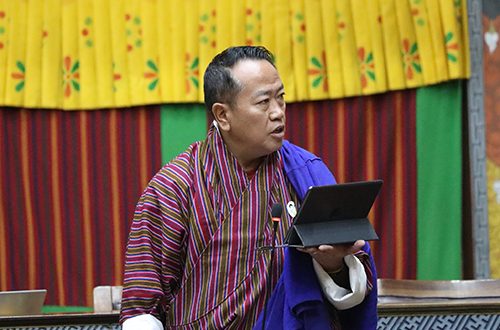
The Member of Parliament (MP) of Gangzur–Menji constituency, Loday Tsheten, has raised concerns in Parliament over a significant loss of purchasing power for senior diplomats posted in Geneva and Brussels, following the depreciation of the US dollar (USD) against the Swiss Franc (CHF) and Euro.
He referred to the July 2023 Pay Structure Reform and Pay Revision Notification, which states that P1-level officers receive a foreign allowance of USD 3,599 in Geneva and USD 2,940 in Brussels. He said that the ongoing weakening of the U.S. dollar had severely eroded the real income and living standards of officials serving in these high-cost duty stations.
The MP asked whether the Ministry of Finance (MoF) was aware of the financial detriment caused by exchange rate volatility, what immediate relief measures the government would implement to offset documented losses over the past two years, and what long-term policy reforms were being considered to peg foreign allowances to a cost-of-living index or adjust them periodically based on exchange rates. He also questioned the rationale for maintaining a compensation system that, in his view, exposed international staff to significant and uncontrolled financial risk if no remedial measures were planned.
In response, the Ministry of Finance (MoF) stated that it is fully aware of the concerns related to foreign service allowances. MoF explained that the 5th Pay Commission had anticipated exchange rate fluctuations and had recommended that foreign service allowances be disbursed in the local currency of duty stations, such as CHF, Euros, or USD, so that employees would receive fixed packages while the government absorbed any foreign exchange gains or losses.
However, the ministry stated that during the legislative process, Parliament enacted a provision requiring all payments to be made in USD. As a result, all mission allowances are now pegged to the USD. MoF said it has no authority to amend this arrangement outside the mandate of the Pay Commission, in line with Article 30 of the Constitution.
According to MoF, while this policy has exposed some employer foreign exchange risks, it reflects a conscious decision made during parliamentary deliberations rather than a lapse on the part of the ministry. MoF stated that the situation highlights the need for careful risk assessment when proposing changes that shift currency exposure, and reiterated that it cannot independently address outcomes arising from Parliament-approved provisions.
The issue, MoF said, has been submitted to the Prime Minister by the Ministry of Foreign Affairs and External Trade. On the Prime Minister’s instructions, both ministries are currently exploring the possibility of addressing the matter within the existing framework.