The Bhutanese Leading the way.
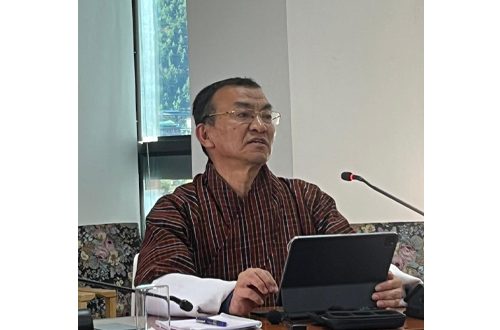
The Finance Minister Lekey Dorji, during the meet-the-press, said that the ESP concessional loan scheme has reached farmers across all Dzongkhags, with the majority of beneficiaries being smallholder farmers accessing loans under Nu. 1 million projects.
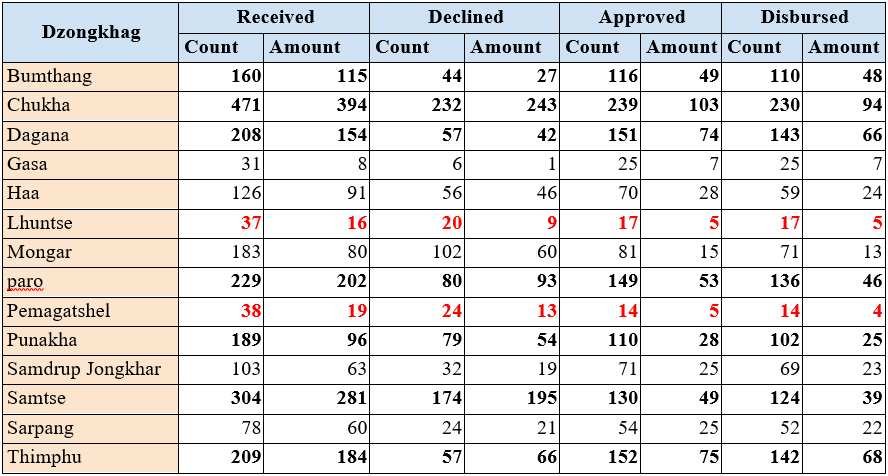
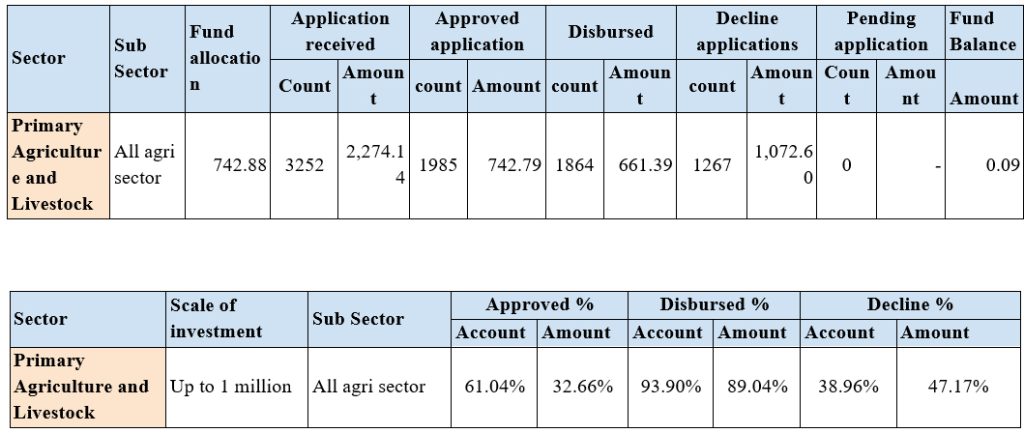
As of 24th November 2025, BDBL and participating Financial institutions had received 3,252 applications, of which 1,985 were approved and of this, 1,864 were already disbursed. He said this represents a strong overall approval rate and a high disbursement efficiency.
The concessional loan for primary agriculture and livestock sector supports projects up to Nu. 900,000, and therefore almost all beneficiaries fall under smallholder and household level ventures.
“As of 24th November 2025, and details of the loan status breakdown which has also been shared with the Media before, the approval rate for the accounts is about 61%, while 94% of the approved loans have already been disbursed, showing smooth processing and service delivery,” said Lyonpo.
Geographically, all 20 Dzongkhags recorded beneficiaries, with large participation in Chukha, Paro, Trashigang, Samtse, and Wangdue. Dzongkhag wise distribution shows a healthy spread of access across western, central, eastern, and southern regions although the lowest participation and loan approvals are recorded for Pema Gatshel, Zhemgang and Lhuentse.
Overall, the loan scheme remains heavily pro-smallholder, as the product design itself caps loans up to Nu. 1 million projects to support grassroots farmers and livestock producers.
Impact on farmers
Lyonpo said many projects are still becoming fully operational, so the most accurate impact figures will emerge over time.
“However, early indications are highly positive. Based on current approvals, we know that 1,985 farmers will be directly engaged in agriculture and livestock production under the ESP loan portfolio. That’s a job creation of 1985 jobs even if we consider one person engaged for the project.”
He said in addition, complementary interventions under the ESP, such as the Price Guarantee Scheme (PGS), already show substantial gains.
FMCL’s aggregation of priority crops increased 27-fold compared to before the scheme.
Pork collection increased from 14.19 MT to 147.46 MT (over tenfold increase).
Chicken collection rose from 63.40 MT to 300.32 MT (almost 5 fold increase).
Fish and trout production also increased significantly.
“These results signal improved market access, better income stability, and stronger engagement of rural farmers in structured value chains.”
Lyonpo said ss more projects mature, the ESP Secretariat will continue to monitor job creation, production output, and livelihood improvements through quarterly field monitoring and coordinated reporting with BDBL, FMCL, and BLDCL.
Loan distribution allegations
On allegations that some more well off and connected got the majority of ESP loans, Lyonpo said these arise largely from unverified social media allegations.
“To ensure full transparency, the Government had requested the Anti-Corruption Commission (ACC) to investigate these claims, and that process is currently underway. The facts will be known once the ACC completes its assessment.”
Lyonpo said they can reiterate that all ESP loans in the primary agriculture and livestock sector, follow strict CCL guidelines, which treats all applicants equally regardless of background or status. Every loan undergoes due diligence and internal scrutiny at BDBL to ensure fairness, objectivity, and compliance with financial standards.
He said one thing that must be understood is that there are three categories of loans available through CCL by design. One is Nu 1 mn projects of primary agriculture and livestock; Two is Nu 10 mn projects of cottage and small industry, production and manufacturing; and three is Nu 100 mn projects of medium scale production and manufacturing.
“It is, therefore, obvious that applicants applying to these categories of projects will be getting different loan amounts – from the maximum of 9 lakhs for primary agriculture and livestock, to maximum of 9 mn for the CSI category, to a maximum of 90 mn for the medium scale industry. So it is obvious that some applicants will get more loans approved than others based on the projects they have applied to. So, we can’t say that those who got more loan amounts are getting more because of corruption.”
Safeguards to ensure fairness
Lyonpo said the ESP framework includes several built-in safeguards to ensure fairness and prioritize smallholder farmers.
One is strict CCL guidelines applied uniformly to all applicants, with no preferential treatment.
Second is due diligence by BDBL, including verification of project feasibility and applicant eligibility.
Prioritization of primary agriculture and livestock, reflected in the decision to increase the initial allocation from Nu. 500 mn to Nu. 742.88 mn due to high grassroots demand.
Support systems such as the Nu. 500 mn for Price Guarantee Scheme (PGS) and the Nu. 800 mn National Crop and Livestock Insurance Scheme directly benefit smallholders.
No intervention by ESP Committee or any Government leaders, and the investment decisions left to professionals in BDBL and other PFIs, who will be fully accountable.
Lyonpo said these mechanisms collectively ensure that the scheme remains pro-farmer, pro-rural, and pro-smallholder, aligned with the ESP’s objective of boosting domestic food production and rural livelihoods.
CCL loan (primary agriculture and livestock sector) disbursement status as of 24th November, 2025
Dzongkhag wise disbursement status of CCL (primary agriculture and livestock sector)