The Bhutanese Leading the way.
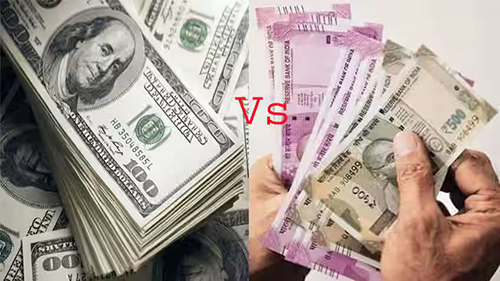
On 3rd December, the Indian Rupee (INR) fell to a record low of INR 90.28 against the United States Dollar (USD). In fact, the INR has been Asia’s worst performing currency in 2025, so far, against not only the USD but also other major convertible currencies.
As of Friday evening, the INR was at 89.95 against the USD.
This is bad new for Bhutan as the Ngultrum (Nu) is pegged to the INR and any fall in the value of the INR also means the same drop for the Nu.
The first hit will be on the import front, as Bhutan needs convertible currency for imports from raw materials for industries to finished goods from third countries.
The other major hit is on Bhutan’s convertible currency debt.
As per 30th June 2025 Public Debt Situation Report, Bhutan had Convertible Currency (CC) loans of USD 1,123.31 million (mn) worth Nu 96.115 billion (bn) when the INR was 85.56 against the USD.
Today, assuming the dollar loan is the same, the USD 1.123.31 mn will be worth Nu 101.041 bn if the INR value of 89.95 is taken against the USD.
This means Bhutan’s CC debt value went up by Nu 4.926 bn in 5 months due to the weakening INR.
A Ministry of Finance (MoF) official said they expected the CC debt to come down as repayments are being made, but now with the fluctuation in the exchange rate, the total CC Debt will go up despite the payments.
Bhutan’s CC debt is poised to shoot up in the near future with Bhutan planning to take large amounts of CC loans for its various projects and also hydro projects.
The World Bank announced a USD 175 mn loan for Bhutan for 2025-29 for various infrastructure projects in Bhutan.
Apart from that, DGPC will be taking huge dollar loans for the 1,125 MW Dorjilung project which is worth around USD 1.7 bn or Nu 152.915 bn (1 USD= INR 89.95).
Of the USD 1.7 bn loan project around 70% of the project size or USD 1.190 bn will be the loan component which will likely be sourced from the World Bank and International Finance Corporation (IFC). So far World Bank and IFC are likely to give USD 700 mn and DGPC is requesting this be INR denominated to save it from exchange rate swings of the future.
The 30% equity portion is worth around USD 510 mn of which DGPC’s 60% equity at USD 306 mn will have to be borrowed by DGPC again from the World Bank and others. DGPC is trying to get this as a concessional loan.
The USD loans will shoot up more in the coming years, especially in hydropower, as Bhutan aims to build 20,000 MW worth of hydro (15,000 MW ) and solar (5,000 MW) by 2040 for which Bhutan will need USD 26 bn.
This means Bhutan, on an average, will need USD 1.5 to 1.6 bn requirement every year to be invested in the energy sector alone when the GDP of the country is about USD 3 bn.
Till now, most mega hydro projects were bilateral in nature with the Indian Government and so the loans were rupee loans with a grants component that came from India.
Henceforth, a large chunk of the loans will be in USD or other CC and so swings in currency value can cost Bhutan billions.
There is a cautionary tale in the 126 MW Dagachu project owned 59% by DGPC, 26% by Tata and 15% by NPPF, which had taken a chunk of its loan in USD and Euro when the valuation of USD and Euro was lower against the INR, but its subsequently climbed up over time.
Between its eight-year operation from 2015 and 2022 the project lost around Nu 1 bn in profits purely due to the fluctuation in the exchange rate.
Dagachu had taken a USD 29.4 mn loan of which USD 19.7 mn remains to be paid.
Nikachu has a loan of USD 50.6 mn of which USD 43.7 mn has to be paid. A rising USD will also impact Nikachu.