The Bhutanese Leading the way.

During the 3rd Sitting of the Joint Sitting of the Fourth Parliament, the Public Accounts Committee (PAC) reviewed the findings of the Royal Audit Authority (RAA) and expanded its assessment to examine the state of Water, Sanitation, and Hygiene (WASH) facilities and services in all 566 government schools across Bhutan.
The review focused on whether schools are providing and managing WASH facilities in line with national standards and policies. It follows a performance audit carried out by the RAA in May 2025, which examined WASH facilities in all 20 government schools under Thimphu Thromde. The audit assessed the adequacy, functionality, and accessibility of facilities, as well as monitoring and management practices.
The RAA audit found that many schools are failing to meet the national standards for WASH, particularly in terms of adequacy, with direct implications for students’ health and learning environments. The audit states, “There are inappropriate and inconsistent designs of facilities provided in various schools, which impede accessibility for students with disabilities and younger children.”
According to the RAA, one of the main reasons behind these gaps is the limited budget allocated for WASH upkeep. This has restricted schools’ ability to carry out repairs, upgrades, and routine maintenance. As a result, WASH infrastructure continues to deteriorate, affecting students’ health, safety, and overall well-being.
The audit also raised serious concerns about drinking water safety in schools, noting that water quality testing is neither consistent nor well-coordinated. “Due to this, there is a risk of students potentially being exposed to contaminated water, which may result in outbreaks of waterborne diseases impacting their health and well-being,” the RAA states.
Based on these findings, the RAA proposed ten recommendations to address gaps in infrastructure, maintenance, water quality, hygiene practices, and management.
The PAC noted that the problems identified in Thimphu Thromde are not limited to the capital. A nationwide survey covering all 566 government schools revealed similar challenges across the country, including unreliable water supply, broken or poorly maintained toilets, nonfunctional handwashing stations, and shortages of soap and other hygiene supplies.
Weak monitoring systems, low budgets, and limited technical support were found to be common across many schools. The Committee observed that many schools do not have enough toilets for boys and girls, face frequent water shortages, and struggle to maintain basic hygiene standards.
According to the report, “Of the 297 schools that responded to the Committee’s questionnaire survey, 257 schools (86.5 percent) reported inadequate budgets for WASH facilities and services, indicating that many students lack access even to essentials such as soap.”
Some schools reported relying on fundraising activities such as sports matches or movie screenings to manage WASH needs, an approach the Committee described as unreliable and unsustainable.
During field visits, the PAC observed several toilets that were broken or unusable. At Ura and Chumey Central Schools, blocked drains, broken flush systems, and missing doors were seen affecting students’ privacy, safety, and hygiene.
The Committee also highlighted that “much of the WASH infrastructure has never undergone comprehensive renovation; some toilets built as early as 1978 have not received any upgrades since their initial construction.”
Many schools reported that their toilet facilities do not meet the design standards outlined in the National Standards for WASH in Schools (2024), further affecting hygiene and the learning environment.
The Committee also found that WASH facilities in many schools do not adequately meet the needs of all students. Some urinals are too high for younger children, while girls’ toilets often lack proper and private disposal bins for sanitary pads, forcing students to use open bins or plastic bags.
Handwashing stations are frequently installed too high for smaller children, and 261 schools reported that their facilities are not designed to accommodate students with disabilities.
Poor construction quality was another concern, with toilets and sinks deteriorating quickly due to frequent use.
Water supply remains unreliable in many areas, with sources drying up during summer and pipelines freezing in winter. Although Bhutan is known for its clean environment, the Committee found that tap water in many schools is not safe for direct consumption. Of the 268 schools surveyed on water testing, only 116 conduct tests twice a year, 68 once a year, and 41 have never tested their water, posing serious health risks.
Access to hot water also remains limited. In 107 schools, water is heated manually using firewood, while only 29 schools rely on electric heating systems.
Budget constraints continue to affect maintenance and repairs. Many schools reported lacking skilled personnel to carry out even basic repairs. Septic tank services are also limited; in Gasa, schools are forced to hire desludging services from Punakha, which is both costly and unsustainable.
Consultations further revealed inconsistent support from local governments. While some schools receive technical guidance and funding, others receive little or none, highlighting the absence of a coordinated national approach to school WASH management.
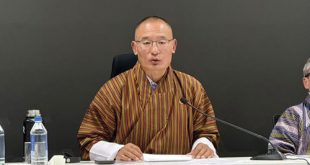
Responding to concerns about funding, the Finance Minister, Lekey Dorji, said the Nu 14 billion central school budget is a key government program and should not be diverted for WASH. Lyonpo added, “However, .”
Lyonpo Lekey Dorji added that this is an important issue, and concerted efforts need to be made to find sustainable solutions.
The House adopted all ten recommendations proposed by the RAA. These assign responsibilities to the Ministry of Education and Skills Development (MoESD) and Thimphu Thromde.
MoESD is expected to develop a prioritized plan to upgrade WASH facilities, ensure inclusive access, strengthen hygiene awareness, establish monitoring systems, and conduct a nationwide assessment.
Thimphu Thromde is tasked with ensuring a reliable water supply, water quality testing, and coordinated maintenance support.
In addition, the PAC reorganized the recommendations into two simplified sets. The first calls for a national WASH flagship program for all schools, while the second emphasizes stronger coordination and support among schools, Thromdes, Dzongkhags, and relevant agencies to ensure sustainable and reliable WASH services nationwide.