The Bhutanese Leading the way.

The Bhutan Innovation Lab, aimed at transforming how public policy is developed and implemented, was officially launched on 10th July in Thimphu by the Prime Minister (PM), Dasho Tshering Tobgay, and UNDP Resident Representative (RR), Mohammad Younus. Although inaugurated this month, the Lab has been operational for the past four months.
Established by the Office of the Prime Minister (PMO) and Cabinet in partnership with UNDP, the Lab is designed to support innovation in the public sector and tackle complex development challenges. A team of six leads the Lab’s operations, offering policy advice, testing solutions, and assisting with the implementation of the 13th Five-Year Plan.
According to the team, the Lab will provide innovative solutions to problems identified by both agencies and individuals, as well as those the Lab identifies itself. It is meant to serve as a collaborative space where government bodies, civil society, private sector, academia, and citizens come together to co-create strategies. These solutions will be tested and refined before being scaled, using people-centred and adaptive approaches.
PM Dasho Tshering Tobgay highlighted the importance of innovation in governance, noting that the Lab can serve as a support system for agencies that wish to try new approaches. “If you want to innovate but don’t know how, let us know. Let’s work together,” PM said, encouraging ministries and agencies to use the Lab as a resource.
UNDP RR Mohammad Younus said the Lab’s purpose is to provide deeper analysis on key development challenges and to support policy innovation. He added that the initiative is aligned with His Majesty’s vision and Bhutan’s 21st Century Economic Roadmap.
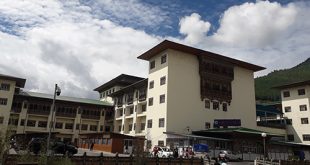
One of the Lab’s first focus areas at the moment is improving the appointment process at the Jigme Dorji Wangchuck National Referral Hospital. Working with the National Medical Service and the Ministry of Health, the Lab developed solutions to make the system more efficient and user-friendly. These changes will be rolled out by August or September of this year.
In another project, the Lab conducted a two-month analysis of the tourism sector to identify barriers and risks. Based on its findings, it is currently designing phased, high-impact interventions to better align the sector with national economic goals.
The Lab will serve as an open, interdisciplinary space for co-designing, prototyping, and testing solutions across critical sectors, including hydropower, tourism, financial services, and agri-processing. It will focus on evidence-based decision-making, inter-ministerial collaboration, and broad stakeholder engagement, including government agencies, the private sector, academia, and citizens.
Emphasizing function over form, the Prime Minister highlighted that business as usual is not enough in the face of urgent challenges such as youth emigration, private sector constraints, and emerging development risks. The BIL will provide a safe space for policy experimentation and act as a catalyst for fostering an entrepreneurial mindset in governance. By leveraging data, technology, and innovative tools, the Lab is positioned to help Bhutan overachieve the targets of the 13th Five Year Plan and realize the vision of His Majesty The King for the nation’s future.