The Bhutanese Leading the way.

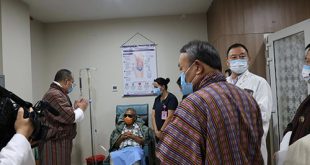
The Bhutan Stroke Foundation (BSF) is planning to conduct a nationwide stroke risk assessment across monasteries and religious institutions in the country, marking one of the first large-scale efforts to assess stroke vulnerability within Bhutan’s monastic community.
The foundation’s Executive Director Rinchen Khandu said, “The initiative will be implemented with support from the Government of India-Project Tied Assistance (GOI-PTA) grant.”
This reflects growing attention to Non-Communicable Diseases (NCDs) among traditionally underserved populations. The assessment will focus on identifying key stroke risk factors, including high blood pressure, diabetes, lifestyle habits, and early warning signs, among monks and residents of religious institutions.
While monasteries play a central role in Bhutan’s spiritual and cultural life, health screening within these institutions has often remained limited, particularly for conditions such as stroke that require early detection and continuous monitoring.
By targeting monasteries nationwide, the BSF can generate baseline data that can inform future preventive healthcare strategies, timely referrals, and awareness programs relevant to the monastic population, which often follows unique daily routines and dietary practices.
According to the World Health Organization (WHO), over 12 million people experience a stroke each year, leading to nearly 6.5 million deaths. Once considered a condition affecting mainly older adults, strokes are now increasingly being reported among younger individuals due to rising rates of hypertension, diabetes, unhealthy diets, and sedentary lifestyles.
In Bhutan, these risk factors are becoming more common, yet structured health screening for NCDs remains limited in certain populations. Monastic communities, in particular, have historically had little access to preventive healthcare services.
In a previous article, the BSF highlighted that Bhutan has witnessed a growing number of stroke cases in recent years, compounded by low public awareness and gaps in emergency response systems. The Executive Director said, “Many strokes in the country go unrecognized or are treated too late, reducing the chances of recovery and increasing the risk of long-term disability.”
To date, the BSF has assessed more than 19,000 people through its recent screenings. Of those screened, approximately 70 to 80 percent, around 15,000 individuals, were found to be at high risk of stroke, with elevated blood pressure identified as a major contributing factor. One of the key findings is that the majority of those at high risk were suffering from hypertension.
The screenings have also revealed a concerning trend: strokes are no longer confined to older populations but are increasingly detected among individuals aged 25 to 70. Recognizing this, the Foundation has expanded its focus to include younger individuals, now targeting those aged 15 and above, highlighting the growing importance of early detection and prevention across all age groups.
NCDs, including cardiovascular diseases, diabetes, and hypertension, are rising rapidly in Bhutan, mirroring a global trend where NCDs account for nearly 80 percent of deaths, claiming around 41 million lives each year.
According to the Ministry of Health (MoH), 72 percent of deaths in Bhutan are caused by NCDs, with cardiovascular diseases alone responsible for 28 percent.
Lifestyle-related risk factors remain a major concern. Around 31.4 percent of adults use tobacco, 40.2 percent engage in harmful alcohol consumption, 18.3 percent are physically inactive, and 74.6 percent consume fewer than five servings of fruits and vegetables per day. Metabolic risk factors further compound the problem: 30.3 percent of adults have raised blood pressure, while 5.6 percent have elevated blood glucose, increasing vulnerability to diabetes-related complications.
Cultural norms, environmental barriers, and deeply ingrained habits make behavior change challenging, despite government efforts such as the Quad 80 strategy to prevent and manage NCDs effectively.
Monastic communities, often located in remote areas and following unique daily routines, face additional barriers to regular health screenings and timely medical care.
In this context, the BSF’s nationwide assessment of monasteries and religious institutions is a critical step to identify NCD risk factors early, raise awareness, and provide timely referrals relevant to this population.