The Bhutanese Leading the way.
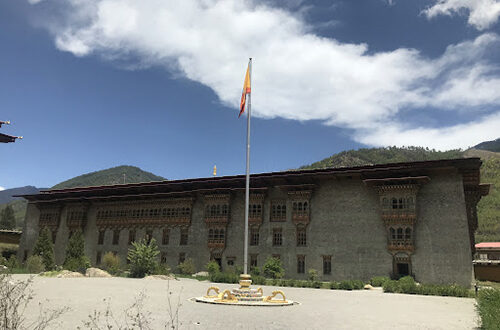
The mother of a deceased 16-year-old monk appealed the case to the High Court on 16 June 2026.
In her appeal, the mother stated that her son was brutally beaten by the Kudrung while four monks restrained him. She alleged that he was later confined in a closed room and denied not only meals but also water.
She said that following the incident, her son appeared to be depressed, which ultimately led him to take his own life.
However, she argued that the Kudrung was charged only in connection with battery, which she believes is unfair.
She stated that this injustice was further compounded by the judgments of the Dungkhag and Dzongkhag courts.
The Dzongkhag court rejected the mother’s argument that the former Kudrung should be held criminally responsible for the teenager’s subsequent suicide, alleging a direct link to the physical discipline.
In the appeal, she stated that her son was beaten 25 times.
Following the ongoing case, the Sarpang Rabdey, the official district monastic body, removed the Kudrung from his post.
Mother’s allegations
The mother said justice has not been served for her deceased 16-year-old monk son.
“My son, who was just 16, was beaten by five people, including the Kudrung. How could he resist, especially when he was given 25 lashes? Since four people held him while one beat him, isn’t it like a gang assault? Even imagining being beaten like that myself, I cannot bear to think about it.”
She said she is not falsely accusing anyone or making up stories about her deceased son.
“If the cause of my son’s death by suicide is not linked to the Kudrung beating him and later scolding him, then they have to provide me with solid evidence and convince me, which they still have not done.”
She now wants the other four monks who restrained her son while the Kudrung beat him to be held accountable as well.
A medical report issued on 31 October 2025 by the regional hospital stated: “Alleged assault by a known person, hit with a leather belt over the buttocks.” It further recorded bluish discolouration over the buttocks, multiple erosions over the gluteal region, and watery discharge from wounds ranging from 1 to 3 cm in size.
Additionally, a medical report issued on 3 November 2025 stated that the nature of the weapon or force was blunt and that the severity of the injuries was non-grievous.
She also questioned the timing of the battery conviction, stating that it came only after her son’s death.
“Charging the Kudrung with battery after my son died is useless now. Why didn’t they charge him while my son was alive? Now, there is no person and no body.”
The mother maintained that her son had visited the Dratshang a day before his death and alleged that he was not treated well during the visit, which she believes contributed to his distress and ultimately led to his decision to take his own life.
She said that, regarding the funeral rites conducted by the Dratshang, she had not asked the institution to host them for her or her family members, but that the rites were conducted because her deceased son was a monk of the institution.
She said the institution had not been solely responsible for the funeral rites, as she contributed in every way she could, including paying fees for the monks who participated in the rituals and supplying essential items.
She also alleged that several details were not presented before either of the lower courts, including digital evidence that she said was submitted on a thumb drive. She further alleged that she was tricked and kept inside the police station for an entire day without food or water while attempting to approach a senior official.
Furthermore, she said that all she is seeking is justice and the appropriate conviction of those responsible for her son’s death, not any form of financial compensation.
The mother said, “The compensation for me is conviction. I did not file the case or the appeal for any kind of compensation, but to fight for justice for my deceased son. Does having money mean that one can beat anyone and kill them?”
Police sources said that, regarding the mother’s allegation that she was kept inside the police station while attempting to approach a senior official, officers did so for security purposes.
The sources said that more important matters were being handled at the time and that it was not appropriate for her to approach the senior official, so she was asked to remain within the police station compound.
The Dzongkhag court in its judgment said that under the Penal Code of Bhutan (PCB), criminal liability for a secondary consequence requires an unbroken, foreseeable and proximate causal chain.
It held that the prosecution had not framed any formal charge of abetment or complicity in suicide, and that an appellate court cannot introduce new criminal charges suo motu without violating due process.
The judgment further referred to objective digital evidence compiled by the Royal Bhutan Police, including voice logs retrieved from social media chat history.
The court noted that these records indicated that 15 days after the incident; while residing at home, the deceased was planning a voluntary journey to Samtse.
The court also stated that the records pointed to distress arising from personal and domestic issues immediately before his death, which it considered as intervening factors breaking the causal chain between the assault and the suicide.