The Bhutanese Leading the way.
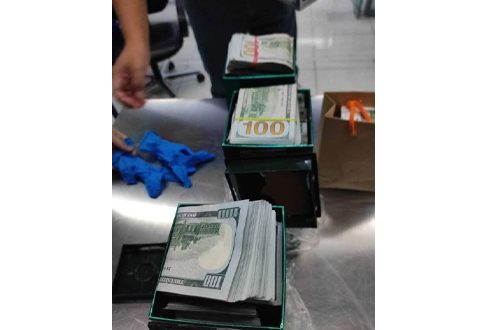
Paro Court ruled that the smuggling originated in Bhutan despite the cash being seized at Bangkok airport, sentencing the principal accused to nine years imprisonment and convicting two others for soliciting and aiding the offence
The Paro Dzongkhag Court on 5th August 2026 convicted three individuals in connection with the smuggling of USD 450,000 out of Bhutan after ruling that the offence originated within the country, even though the foreign currency was discovered and seized by Thai authorities upon arrival in Bangkok, Thailand.
The court sentenced Karma Tashi, the principal accused, to nine years imprisonment for smuggling under Section 279 of the Penal Code of Bhutan.
Dargo was sentenced to five years imprisonment for soliciting the offence, while Choki Wangmo was sentenced to three years imprisonment after the court altered the charge against her from accomplice liability to aiding and abetting.
According to the judgment, Karma Tashi boarded a Drukair flight from Paro International Airport to Bangkok on 23th June 2023.
Upon his arrival in Thailand, officers from the Thai Revenue and Customs authorities discovered and seized USD 450,000 concealed in his possession during an inspection.
Subsequent investigations by the Royal Bhutan Police (RBP) revealed that the foreign currency had been handed over to him by Dargo at Shaba in Paro before his departure.
Police further found that Karma’s wife, Choki, who worked in the catering section at Paro International Airport, assisted in concealing the money inside three K5 whisky boxes.
She used her access as an airport employee to place the boxes inside the aircraft cabin before passengers boarded.
Based on the investigation, the Office of the Attorney General charged Karma Tashi with smuggling, Dargo with solicitation to commit smuggling, and Choki with accomplice liability.
Defence argument
During the trial, the defence argued that Karma Tashi had no knowledge that the boxes contained foreign currency. They claimed that after attending an archery tournament in Thimphu, he met Dargo in Paro, who handed him three bottles of K5 whisky and requested that it be delivered to a person identified as ‘Anush’ at Bagdogra Airport in India.
The defence further submitted that he later handed the bottles to his wife at Paro Airport so that she could place them on the aircraft.
According to the defence, he subsequently handed the whisky bottles to Anush at Bagdogra Airport. They contended that, upon arrival in Bangkok, Anush requested him to carry one of his pieces of luggage through customs, where Thai authorities discovered the USD 450,000.
The defence argued that the money belonged to Anush, who allegedly accepted responsibility and paid the customs penalty imposed in Thailand.
On that basis, the defence maintained that the alleged offence, if any, occurred in Thailand rather than Bhutan, and therefore, Bhutanese authorities had no jurisdiction to investigate or prosecute the case.
They also questioned the reliability of the police-recorded confessions, arguing that the statements were induced, challenged the prosecution to prove the source of the USD 450,000, and argued that it was improbable that such a large amount of money could have been concealed inside three K5 whisky boxes.
They further argued that airport security screening procedures would have prevented any concealed currency from being loaded onto the aircraft.
Prosecution argument
The Office of the Attorney General (OAG) rejected these claims, arguing that the offence had been committed in Bhutan because the foreign currency was secretly exported through Paro International Airport.
The prosecution relied on the defendant’s own statements, which indicated that Dargo handed over the money to Karma in Paro, and that he and his wife concealed it inside the whisky boxes before arranging for it to be loaded onto the aircraft.
The prosecution also argued that action taken by Thai authorities did not prevent Bhutanese courts from exercising jurisdiction under the principle of dual sovereignty.
It further challenged the defence claim regarding Anush, stating that there was no evidence establishing the existence of such a person, including any record of him travelling on the same flight to Bangkok.
Court findings
The court rejected the defence jurisdiction argument, holding that although the foreign currency was physically seized in Thailand, the criminal acts that constituted smuggling began in Bhutan.
The court relied on confessions made by all three defendants, finding that Dargo admitted handing the USD to Karma in Paro, while Karma and his wife admitted concealing the money inside three K5 whisky boxes before arranging for them to be transported on the aircraft.
The court found that these statements had been made voluntarily and clearly established that the smuggling operation originated in Paro.
It, therefore, ruled that Bhutanese courts had territorial jurisdiction under Sections 24 and 28 of the Civil and Criminal Procedure Code.
In convicting Karma, the court found that his own confessions established that he had received the money from Dargo, concealed it with the assistance of his wife and smuggled it to Bangkok.
The court also found his conduct in having the boxes secretly loaded onto the aircraft through the airport catering system inconsistent with the transportation of ordinary whisky.
The court rejected the defence claim that the boxes had been handed over to Anush at Bagdogra, observing that if this had happened, the foreign currency would not have been discovered in his possession upon arrival in Bangkok.
It further noted that no evidence showed that such a person had travelled on the same flight.
The court also pointed to Karma’s earlier statements to both Bhutan police and Thai customs officials in which he admitted carrying the foreign currency and stated that it was intended for his own business transactions.
The USD had been seized and fine paid amounting to THB 3,114,738 have been recorded in his name.
The court held that by exporting USD 450,000 without obtaining the required permit or making the required declaration, Karma had committed the offence of smuggling under Section 279 of the Penal Code.
Section 279 of the Penal Code of Bhutan (PCB) states that a defendant shall be guilty of smuggling if he or she secretly and illegally imports or exports prohibited or restricted goods.
Currency in excess of the prescribed limit (USD 10,000) falls within restricted goods under the Customs Rules and Regulations of Bhutan, 2017.
Regarding Dargo, the court found that he had sourced the USD 450,000, handed it to Karma and intentionally caused him to illegally export the foreign currency.
The court also relied on Karma’s confession that he had previously transported foreign currency provided by Dargo to purchase gold and received commission for those transactions.
The court concluded that Dargo was guilty of solicitation under Section 126 of the Penal Code.
Section 126 of the PCB states that a defendant shall be guilty of the offence, if the defendant purposely or knowingly solicits, requests, commands, or causes another person to commit a crime.
For Choki, the court found that she admitted jointly packing the USD inside the three K5 whisky boxes, transporting them through the airport catering system and placing them inside the aircraft cabin before informing the cabin crew that they belonged to her husband.
She also admitted assisting her husband in transporting foreign currency on previous occasions.
However, the court found no evidence that she personally benefited from the offence. It therefore altered the charge from accomplice liability to aiding and abetting before convicting her under Section 125 of the Penal Code.
In sentencing, the court calculated the value of the USD 450,000 using the exchange rate applicable on the date of the offence, amounting to Nu 36.34 million. Since the value exceeded the threshold prescribed under the Penal Code, the offence was classified as a second-degree felony.
Karma was sentenced to nine years imprisonment, with two days spent in custody deducted, leaving a remaining sentence of 8 years, 11 months and 28 days from 5th August 2026.
Dargo, whose offence was classified as a third-degree felony, was sentenced to five years imprisonment, with one day in custody deducted, while Choki, convicted of aiding and abetting a second-degree felony, was sentenced to 3 years imprisonment.