The Bhutanese Leading the way.
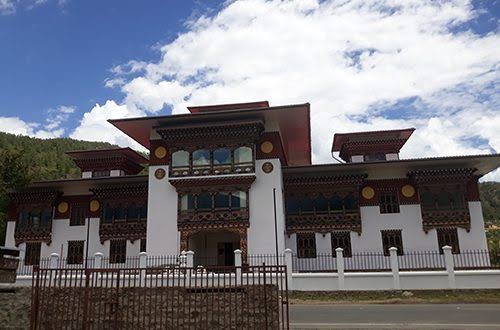
The Paro District Court has sentenced a teacher, Samdrup, from Shaba Higher Secondary School to two months of imprisonment for child battery after he struck two students 22 and 19 times with a rubber pipe.
The verdict was issued on 24th August.
As reported by The Bhutanese, the incident occurred on 15th July when students returned to school following the mid-year examination break. The teacher had reportedly punished students who had failed to score 55 percent, using a rubber pipe to hit them based on their examination marks.
The Royal Bhutan Police (RBP) filed two charges of child battery against the defendant, in connection with the two students who were struck with a rubber pipe.
According to the RBP’s investigation, Samdrup, admitted to the acts, while statements from 78 students verified the accounts of both victims. The investigation established that the defendant’s intention was solely to improve the students’ academic performance, with no evidence that the acts were carried out with malicious intent or negligence.
However, the court found that the physical punishment used by the defendant was excessive and disproportionate to what was necessary. As a result, the defense of justification under Section 109 of the Penal Code of Bhutan 2004 could not be granted.
The court combined the two charges of child battery under Section 215 of the Child Care and Protection Act 2011 and Section 13 of the Penal Code and sentenced the defendant to two months of imprisonment.
The sentence, however, may be commuted to a fine in lieu of imprisonment.
The Bhutanese contacted the Ministry of Education and Skills Development to inquire about actions taken against the teacher following the court’s verdict. The ministry referred the matter to the Paro Dzongkhag Education Office.
The Paro Dzongkhag Education Officer said that there were no available details on any action taken against the teacher, adding that the matter had been dealt with by the court.
Moreover, this reporter also contacted the principal of Shaba Higher Secondary School to ask whether the teacher would continue teaching following the conviction, and whether any further administrative action would be taken. The principal said he is not aware of any decision on the matter.
Sonam Tshering, a lawyer and former civil servant, said the teacher’s future employment hinges on two key factors. The nature of the conviction and whether it relates to official duties.
According to him, “Under the Civil Service Act of Bhutan 2010, civil servants can be terminated if convicted of a misdemeanor or higher offence related to their official functions. The distinction matters significantly. The Penal Code defines battery as the intentional use of physical force against another person, classifying it either as a petty misdemeanor (with sentences under one year) or a misdemeanor (with sentences under three years, depending on aggravating circumstances).”
The Civil Service Rules and Regulations 2023 provide an additional avenue for action. The RCSC may initiate disciplinary proceedings against civil servants for conduct violations, performance issues, or breaches of civil service values which are separate from criminal sanctions.
“The outcome depends on whether this incident occurred in the course of official duties and the severity of the conviction,” said Sonam.
The case has also brought renewed attention to the use of physical punishment as a means of disciplining students. While the teacher said the punishment was intended to improve academic performance, the court found the force used to be excessive and disproportionate, underscoring the illegality of physical discipline in schools.
The paper is yet to receive a response from the RCSC regarding any possible administrative action following the conviction.