The Bhutanese Leading the way.

For generations, Bhutanese have travelled to remote hot springs seeking relief from aching joints, chronic illnesses and spiritual healing.
Today, the government is exploring whether the heat beneath those same waters could one day strengthen Bhutan’s energy security and support future clean energy development.
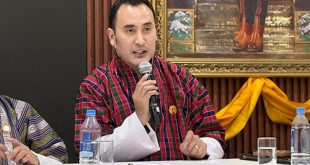
Prime Minister (PM) Dasho Tshering Tobgay says geothermal energy has the potential to become another source of clean, renewable energy for Bhutan, complementing the country’s hydropower and growing investments in solar energy.
“I am very much hoping and expecting that geothermal might create an opportunity to generate natural energy,” the Prime Minister said, pointing to countries such as Iceland, where geothermal resources are already being used to produce electricity.
Bhutan currently relies almost entirely on hydropower for electricity generation.
While hydropower provides the country’s primary source of electricity, seasonal fluctuations in river flows reduce generation during winter, when domestic demand often increases.
The PM (Lyonchhen) said Bhutan’s known hot springs, including those in Gelephu and Gasa, could indicate deeper geothermal resources that warrant further investigation.
The PM said, “What we can see is only the hot springs, for example Gelephu and Gasa Tshachu. Just imagine beneath these hot springs there might be a stream flowing, or there might be a pond whose temperature is extremely high.”
According to the PM, ongoing airborne geological and mineral surveys are producing encouraging readings.
Lyonchhen said, “While doing our airborne survey on geology and minerals, we are getting good results from the device readings, and they show that there might be a pond or stream of hot water underneath.”
Lyonchhen added, “We will know the geothermal potential once the survey is fully completed.”
Although Bhutan has around 10 officially documented hot springs, they are currently used primarily for traditional healing and wellness.
No commercial geothermal power project has yet been developed, and experts note that confirming geothermal resources suitable for electricity generation would require detailed geological studies and exploratory drilling.
If commercially viable geothermal reservoirs are identified, the PM said the benefits could extend beyond electricity generation.
“If we find these resources, the energy we produce will be green, clean and renewable,’’ the PM said, noting that together with solar energy, geothermal could provide self-sufficiency and energy security.
Lyonchhen added that reliable geothermal energy could also support Bhutan’s long-term economic ambitions, particularly in Gelephu Mindfulness City.
“It will not only benefit our nation but also Gelephu Mindfulness City. It will greatly support technical projects such as data centres, artificial intelligence and other industries,” he added.
The government’s interest in geothermal comes as Bhutan seeks to diversify its renewable energy portfolio in response to growing electricity demand and the long-term impacts of climate change on river systems.
While hydropower will remain the country’s primary source of electricity, geothermal could offer a stable, year-round supply of renewable energy that is not dependent on seasonal river flows.
Whether the underground heat that has long attracted Bhutanese in search of healing can also help power homes, industries and the country’s future now depends on the outcome of ongoing geological surveys, and what lies beneath the surface.
The survey found deep structural corridors and fault systems of the kind that govern geothermal circulation, together with zones of magnetic depletion consistent with hydrothermal alteration, and these correlate with the locations of Bhutan’s known thermal springs.
Bhutan is already carbon-negative and hydropower-anchored, but hydropower output is seasonal. Geothermal is not. The combination describes a firm, round-the-clock renewable base.
Magnetic depletion indicates geothermal potential according to the survey. Circulating hot fluid chemically alters magnetic minerals in host rock, reducing its magnetic signature. Zones of magnetic depletion coinciding with deep fault structures are therefore a recognised indicator of an active hydrothermal system.
The presence of lithium and thorium in the waters will be important to establish as it will show that the water is coming from deep below which means high heat, pressure and reliability for a power project.
Geothermal potential exists in Gelephu, Punakha and Zhemgang.