The Bhutanese Leading the way.
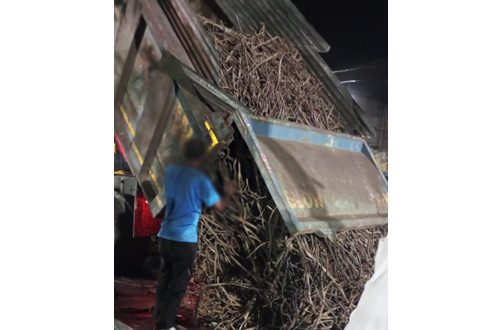
A small but important economic sector in Bhutan is the scrap business. Thimphu alone is estimated to have around 150 scrap businesses, and when other dzongkhags are included, the total could rise to 250 to 300.
This growing sector not only gets rid of our unwanted waste, but also makes money from it by exporting it, and generates employment in the process.
However, this entire sector is now threatened by fresh developments in Jaigaon that happened around two weeks ago.
Around three scrap trucks from Bhutan, while entering Indian scrapyards in Jaigaon at different times, were stopped by some miscreants claiming local political connections, who threatened to get the scrap and the trucks seized unless they paid Nu 100,000. The amounts were negotiated down to Nu 50,000 per truck, and the trucks were let go.
The above incidents brought a complete halt to the scrap trade between Bhutan and India for around two weeks. An Indian scrap dealer in Jaigaon, on condition of anonymity, said that earlier, 20 to 25 truckloads of scrap used to enter from Phuentsholing to Jaigaon in a day, but this came to a complete halt when the above incidents happened.
The Indian scrap dealers who import from Bhutan number around 20 to 25, and they have been negotiating with these “Gundas.” A rate has now been agreed upon, which is Nu 10,000 per truck.
However, this Gunda Tax is now likely to either kill the scrap trade business in Bhutan or considerably reduce its size.
The scrap business has a very low profit margin for most items, which are mostly plastic bottles, paper, carton boxes, and rubber, with the occasional copper and brass. A Bhutanese scrap dealer, on condition of anonymity, said the profit margin is only around Nu 20,000 to 25,000 per truck.
What brings down the profit margin even further is that Indian importers used to deduct Nu 4,000 per truck to grease the palms of local officials for allowing the import of scrap into Jaigaon.
This now leaves only around Nu 16,000 to Nu 21,000 per truck, and if an additional Nu 10,000 per truck is paid as Gunda Tax, dealers say the economics of the trade will be severely impacted, as dealers will be left with only Nu 6,000 to Nu 11,000 per truck, and not enough to make the business worthwhile.
The dealer in Jaigaon confirmed that many scrap dealers in Jaigaon are already planning to quit the business if the Nu 10,000 per truck rate stands and there is no intervention.
Before the pandemic, scrap trucks regularly went to Jaigaon with no problems. However, after the border was sealed and trade started to be formalized between the two countries, problems began. What did not help was that India banned the import of plastic as scrap in 2019, though its import as processed pellets, chips, and flakes is allowed, since Indian recycling plants used 70 percent local plastic the previous year.
After the borders reopened, misinformation spread on both sides that all scrap exports by Bhutan to India were not allowed, so people started paying Nu 4,000 per truck to get around this problem. In fact, most scrap, such as paper, carton boxes, and metals, can be legally exported to India with proper paperwork, but there is no system between the two countries to formalize this trade, due to ignorance of the issue. As a result, some officials on the Indian side are making a neat sum.
It also does not help that some plastic is being exported in the mix. However, there is potential to formalize this trade. The scrap trade in Bhutan now has 70 to 80 big players who have proper machines to compact and process waste, and even partially process it. If they can formalize the trade along with counterparts in Jaigaon and other areas, and even export plastic in the right way after some processing, then they will not have to pay the Nu 4,000 per truck bribe to officials in India, and can also reject the Nu 10,000 per truck demand from the new political players.
A Bhutanese scrap dealer said the source of the current problem seems to be the change in government in West Bengal, and that the resulting confusion, along with new players, is leading to such unreasonable demands. The dealer said that while these Gundas demand money claiming political ties, it is entirely possible this is local extortion, where the money may not even be reaching their bosses or those in between trying to make a buck.
The Jaigaon scrap dealer said the new Gundas seem to have support from local law enforcement in Jaigaon, as they threaten to get trucks from Bhutan seized in the name of the trade’s illegality. The trader said they had earlier paid off local law enforcement from the Nu 4,000 as well, among others, but the Gundas seem to have offered much more, likely to be three times as much.
The Bhutanese scrap dealer said that if this issue is not resolved, then Nu 14,000 per truck is unaffordable, and most of the business will shut down. He said the limited Bhutanese recycling industry cannot absorb so much scrap, and everything will have to go to the landfill, with waste piling up in Bhutan.
Industry sources say the problem stems from the absence of any formal export agreement for scrap between Bhutan and India. Because the volumes exported from Bhutan are negligible, there has been no inter-government understanding or standard operating procedure for scrap movement.
This vacuum has led to unaccounted fees being collected both by Indian officials and by local groups on the Indian side of the border.
“Without a formal channel, anyone can stop a truck and demand money,” said another scrap dealer. “This practice will only encourage more groups to form, and ultimately it will strangle the livelihoods of those who depend on scrap dispatch from Bhutan,” he added.
Scrap collection provides income for hundreds of informal workers and small aggregators in Thimphu, Paro, Haa, and Chukha. A drop in prices in Jaigaon is expected to directly reduce collection rates in Bhutan, leading to waste accumulation in towns.
Stakeholders are calling for urgent intervention from the Ministry of Industry, Commerce and Employment and the Royal Bhutanese Embassy in New Delhi to formalize the scrap export channel and curb unauthorized collections. They say a simple transit permit system or a bilateral understanding that sets a fixed, receipted fee instead of ad hoc demands is needed.
“If we don’t address this now, the informal ‘tax’ will spread to other goods as well,” a scrap dealer warned.
The Bhutan Waste Management and Recycling Association (BWMRA), which represents scrap dealers and recycling companies in Bhutan, has been in talks with the Jaigaon scrap dealers.
It has been agreed that the Jaigaon scrap dealers will write to BWMRA about the problems faced in Jaigaon, and BWMRA will then seek the help of the Ministry of Foreign Affairs and External Trade in Bhutan, and through that channel, also seek the help of the Indian Embassy in Bhutan.
A BWMRA Secretariat member said, “Before 2022, all our exports to India happened with no such fees, but after that our exporters started paying a Gunda tax, first Nu 4,000 per truck, and now an additional Nu 10,000 per truck is being demanded. We want to find out how this happened, and moreover, we are not sending waste to India but raw materials for their industries, after compacting it properly.”
The Nu 10,000 demand problem seems to be specific to West Bengal, as there is no such problem for exporters in eastern Bhutan sending to Assam.
In the current system, most of the scrap is sent to Thimphu and Phuentsholing, where major players collect, sort, and even compact it before sending it to Jaigaon. Jaigaon has around 100 scrap dealers, but the 20 to 25 biggest ones deal with Bhutan, and they send it on to Siliguri, Agra, Delhi, and Kolkata, where industries use it.