The Bhutanese Leading the way.
The Prime Minister Dasho Tsering Tobgay, at the close of the meet-the-press announced that His Majesty The King has commanded the formation of a Pay Commission to be chaired by the Druk Green Power Corporation (DGPC) Managing Director, Dasho Chhewang Rinzin.
It is understood that the Prime Minister, following constitutional protocol would have proposed the Pay Commission to His Majesty who gave assent.
It was a matter of time before the government announced a Pay Commission as the commissioning of mega hydropower projects in the past usually coincided with pay increases like in Chukha, Tala, Mangdechu and now Punatsangchu II.
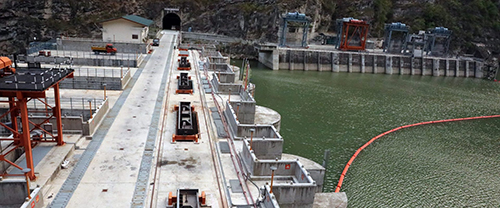
The pay hike recommendation of the Pay Commission is likely to be powered by the 1020 MW P II project.
This is because the 13th Five-Year Plan (FYP) has projected a revenue of Nu 318 bn from domestic sources of which around Nu 22 bn or 6 percent is projected to come from P II for the entire plan period.
This is an underestimation as the actual expected contribution will be higher.
Punatsangchu II has generated a total of Nu 28.245 bn in total revenue since its 2025 till 8th October 2026 of which Nu 22.575 bn was remitted to the government (including royalty and GST).
The first loan repayment was made in May 2026 of Nu 5.03 bn with another loan repayment due in October 2026.
The net revenue from Punatsangchu II for financial year (FY) June 2025 June to July 2026 is around Nu 6.964 bn minus loan repayment and operation and maintenance costs.
This net revenue is expected to go up significantly in FY 2026-27 as Bhutan could only start exporting P II power to India on 20 September 2025 missing the heavy generation months of July, August and 20 days of September 2025 which meant lesser net revenue in FY 2025-2026.
There is no such restriction in FY 2026-27 and so the net revenue will be Nu 9 to Nu 10 bn.
One can see that there will be surplus revenue from P II in the 13th plan as the actual revenue generated will be well above the projected Nu 22 bn for the plan period. The level of this surplus will play a major role in the level of the pay hike.
However, this time around it is not as simple as in the past. This is because the P II revenue is already carrying the Nu 4 bn a year load of the 50% pay hike in 2023.
The 50% pay hike that civil servants got in 2023 came with a bill of Nu 6 bn a year, money that the government did not have due to which Nu 4 bn was funded by Bitcoin for FY 2023-2024. Bitcoin would fund the hike for another year from FY 2024-25 at another 4 bn which meant a total of Nu 8 bn in two years.
This Nu 4 bn load was later shifted to P II in the FY 2025-2026. So, while there will be surplus P II money beyond the 13th plan projection a chunk of it is already given.
Another issue is that the 13th plan is a revenue constrained one with no provision kept for a pay hike and even if there is more revenue from P II there are also a lot of competing priorities and demands.
The level of the hike will thus depend not just on P II performance and surplus but also the actual revenue being more than the overall projected revenue and the spending required in other areas.
On the other hand, while civil servants and government corporate employees are already welcoming the news, the private sector will not share the same enthusiasm as the hike will only widen the pay gap between the government and private sector.
This hike also comes at a time when the economy is not doing very well and large parts of the private sector are still suffering.
Post democracy, the first pay hike was given in 2009 when a 35 to 55 percent hike was given with a higher hike for those at lower pay. The next pay hike was in 2014 with a 19 to 25 percent hike. In 2017 there was an increase in various allowances for teachers, health workers and local government leaders.
In 2019 there was a 6 to 35 percent hike with higher hikes for teachers, health workers and technical professionals.
In 2022 the clean wage was introduced which lead to a 5 to 26 percent hike with higher hikes for those lower down. Then in 2023 the big hike of a flat 50 percent hike came into play funded in large part by Bitcoins.