The Bhutanese Leading the way.
The rape and murder case of a 12-year-old Class Six student from Kuzhugchen Middle Secondary School on 5th November 2026 now hinges on DNA evidence, forensic evidence, evidence on the ground and circumstantial evidence.
Forensic and DNA
The forensic evidence, which is based on the post-mortem examination of the body, has shown that the cause of death was strangulation using the school ID card thread or lanyard.
The conclusion was based on the ligature marks around the neck caused by the lanyard that had been used to strangle the victim.
The lanyard thread is made of thick nylon and is very durable, even when pulled from both ends by an adult male. There are international cases where people have died of strangulation by a lanyard. One is the case of Dolores Young, whose lanyard was stuck in a machine conveyor belt, leading to her death in El Paso, Texas, USA, in September 2016. Another is an accidental fatal hanging when the lanyard of a 10-year-old child jumping from a high four-poster bed got stuck on a bedpost in Cook County, Illinois, USA, in November 2002.
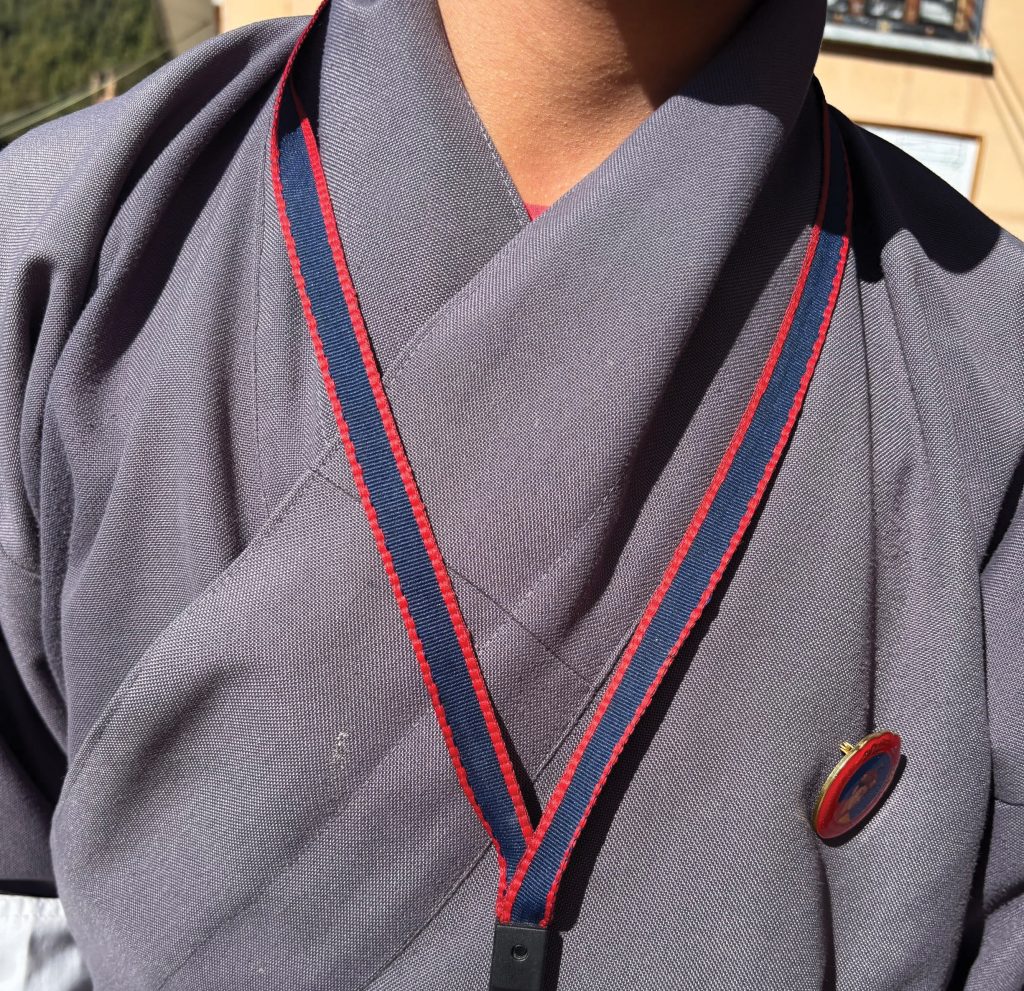
A similar lanyard from KMSS was used to strangle the victim
The forensic examination also established that sexual assault had happened based on the grievous and major wounds to the vagina of the victim, which the paper will not describe here. However, complicating the issue is that no sperm deposit was found.
The toxicology report of the victim is clear, showing that she was not fed any intoxicants or poison to disable her.
There was no other major injuries on the girl’s body.
As part of the forensic examination, various swabs were taken from various parts of the girl’s body to try and establish foreign DNA, which will be crucial to the case. The swabs are important as the girl has already been cremated.
DNA samples were also taken from the four suspects detained by the police.
The DNA tests will be done by the RBP’s own Forensic Science Laboratory (FSL). The tests can take anywhere from a few days to a few weeks, depending on the level of contamination, which is likely given that the body was buried under some soil and grass. The DNA report was still not ready as of the filing of this report on Friday evening.
The identification of the perpetrator mainly hinges on the forensic and DNA evidence.
However, evidence at the crime site and its location will also be important.
The day of the crime and the final path of the victim
On 5th November, the school let off the students early at 1.30 pm as the school teachers had to carry out an exam question moderation exercise to help select the questions to set the exam papers. There was no parent-teacher meeting, as speculated by some.
The victim could be seen on the CCTV of a shop walking by with her friends in the afternoon. The last person to see her was one friend, as they separated at the Gewog office road junction, with the victim heading up the road towards the Gewog office and her friend continuing on the main Kabesa road towards her home.
The reporter visited the road above where her shoes, bag, lunch bag, inner pant and underwear, and then finally her body, were found.
The area is an isolated stretch of narrow blacktopped road continuing above the Kawang Gewog office and heading to the Druk Ralung Shedrup Choling Monastery.
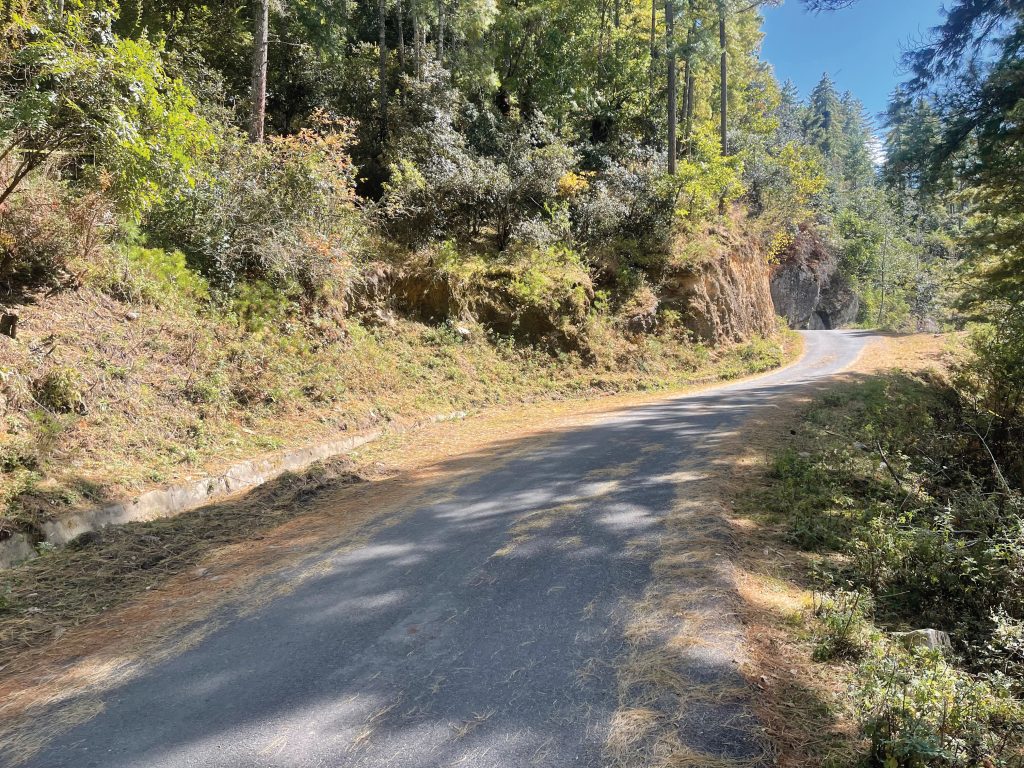
The crime scene is above this road
The victim’s aunty, with whom she was living, said her niece normally would not take the blacktopped road for fear of Gray Langurs in the forest area. She said her niece preferred to take a shortcut that starts from the main Kabesa road a few metres ahead of the Gewog office road junction, climbs from below the Gewog office through a narrow path going up, and then meets a stretch of feeder road before reaching near a chorten from where her home was not far.
The uncle said that, at the same time, the victim was also a bit scared of the shortcut too, as a house there had an aggressive dog which the house owner would not tie up despite being told.
On the fateful day of 5th November, as per the testimony of the last school friend who saw her, she did not take the shortcut and went up the blacktopped road starting from the Gewog office road junction.
It is worth noting that the crime scene is not only an isolated stretch, but it is also the only part of the narrow road where a car can be parked on the side of the road.
Once the victim reached this area, the attacker would have grabbed her, muffled her screams and dragged her above the road where the crime was committed.
The search
When the victim did not reach home by 5 pm, the aunty started worrying and informed her class teacher by phone. She went with her landlady along the shortcut looking for her niece at around 5.30 pm, when she heard a loud male shouting sound from the crime scene area above. This same noise was also heard by the landlady and the female Gewog caretaker.
The aunty said the voice sounded similar to that of a known drunkard, and later, people went to his home to find him there and not near the site.
The victim’s teachers made calls to all her friends to find out if she was at any of their homes, but she was not there. A call was then made to the police, who also joined the search parties of teachers and local community people.
The search carried on till 1 am in the dark.
Earlier, on the same day, two female support staff of the school who were coming back on foot at 2 or 3 pm after driving lessons met three drunkards on the way who teased them. The youngest one in the group, probably in his twenties, was particularly aggressive and said he wanted to take them.
At midnight, the teachers and police met one of the drunks from the above group roaming around and asking for directions. The teachers and support staff told the police this person was part of the eve-teasing group, so the police nabbed him and, the next day, his aggressive friend.
The search resumed the next day at 6 am in the morning, which was 6th November 2026.
There were two main search groups, with one comprising the teachers and another comprising the Gewog search party of around 40 to 50 people from the local community. The police were divided between both groups, with two sniffer dogs.
The find
On the second day of searching for her in the general crime scene area, three members of the Gewog group came across her school bag and lunch bag at around 12.30 pm in the afternoon, 40 to 50 metres above the road. The school bag and lunch bag were covered with some leaves and brush in between a rock and a tree.
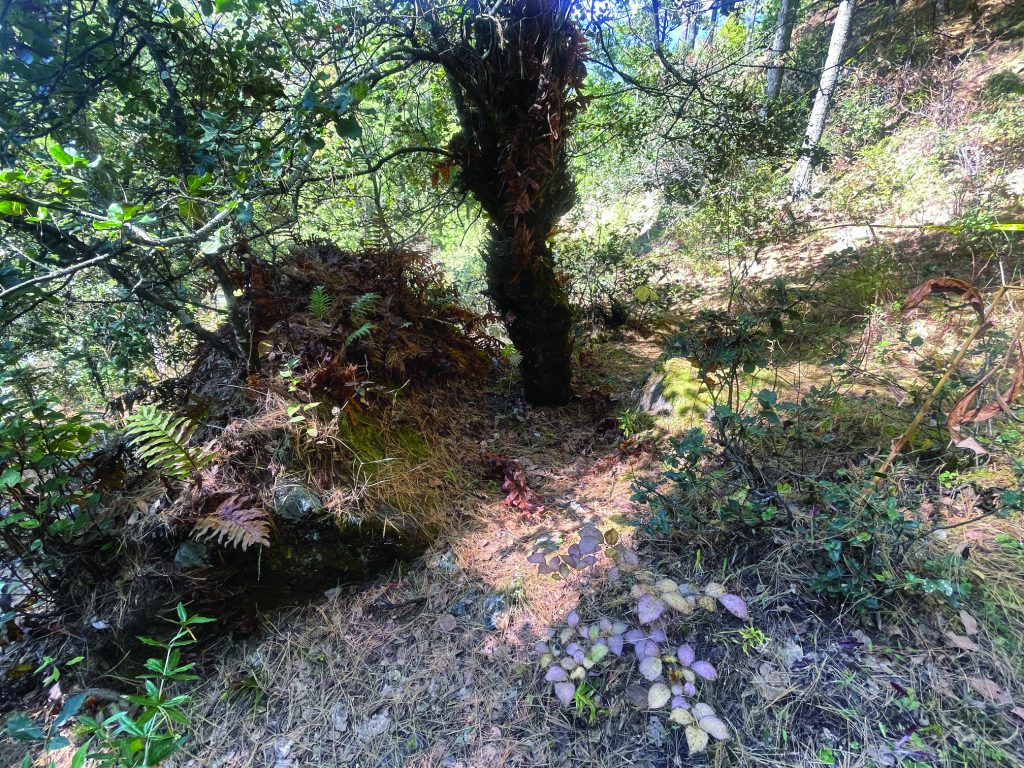
The school bag and lunch bag were found here
Two members of the group, a Desuup and a local carpenter (Zo), told the lead member not to touch the bag, but he anyhow touched the bag and even opened it, going through the contents.
This person also stayed on the floor below that of the deceased and is a statue maker by profession.
The police got suspicious that he touched and opened the bag despite being told not to and detained not only him but also the Desuup and Zo. The Desuup was let go later, as it was proven that he had just come with his family from Gelephu and was not even in Kabesa when the crime happened.
Around the same time the bag was found, the Gewog team also found one school shoe thrown below the road in the bush and another above the road among a bush of thorns.
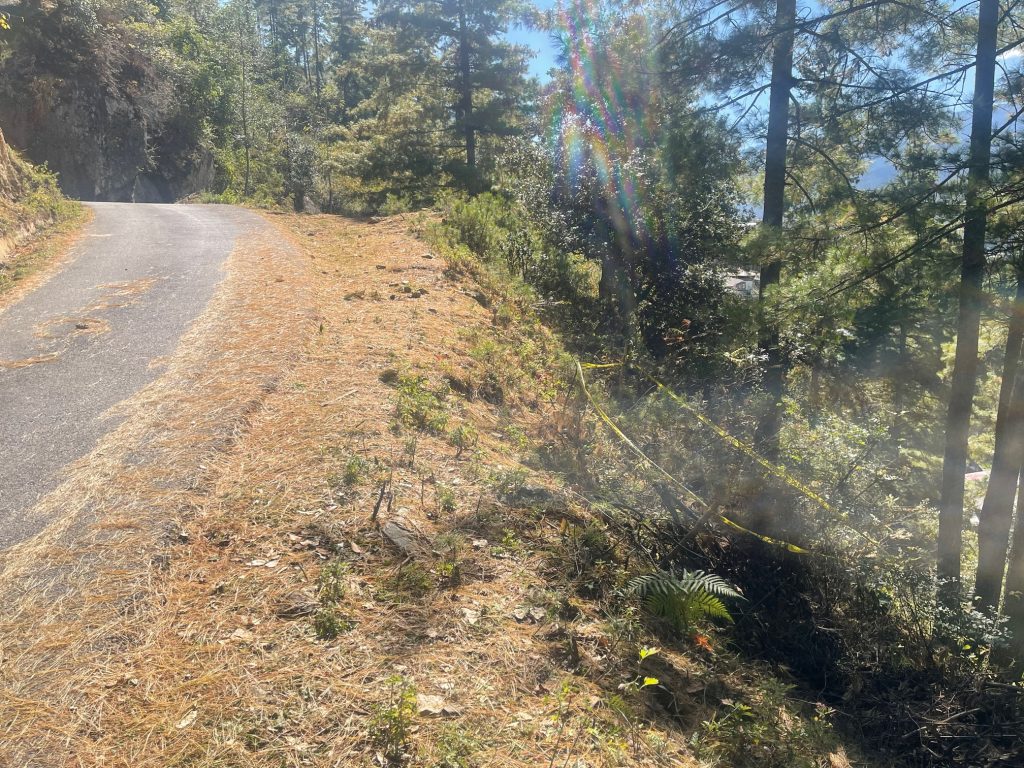
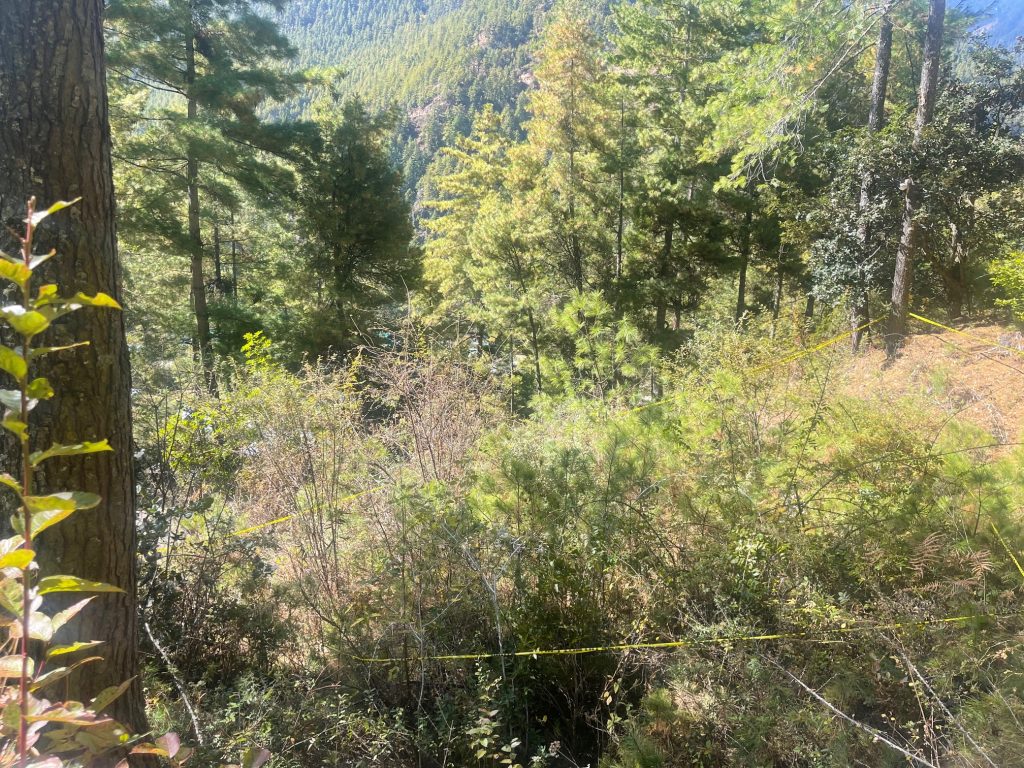
Shoes found below and above the road here
The search continued, and the next find was around 50 to 60 metres above the road in the same vicinity, where the police saw some signs of dug-up dark soil in a small flattish area.
On digging this area up slightly, the girl’s underpants and undergarment pant turned up. It was clear the girl had defecated in her pant, and there was some blood in her underpants.
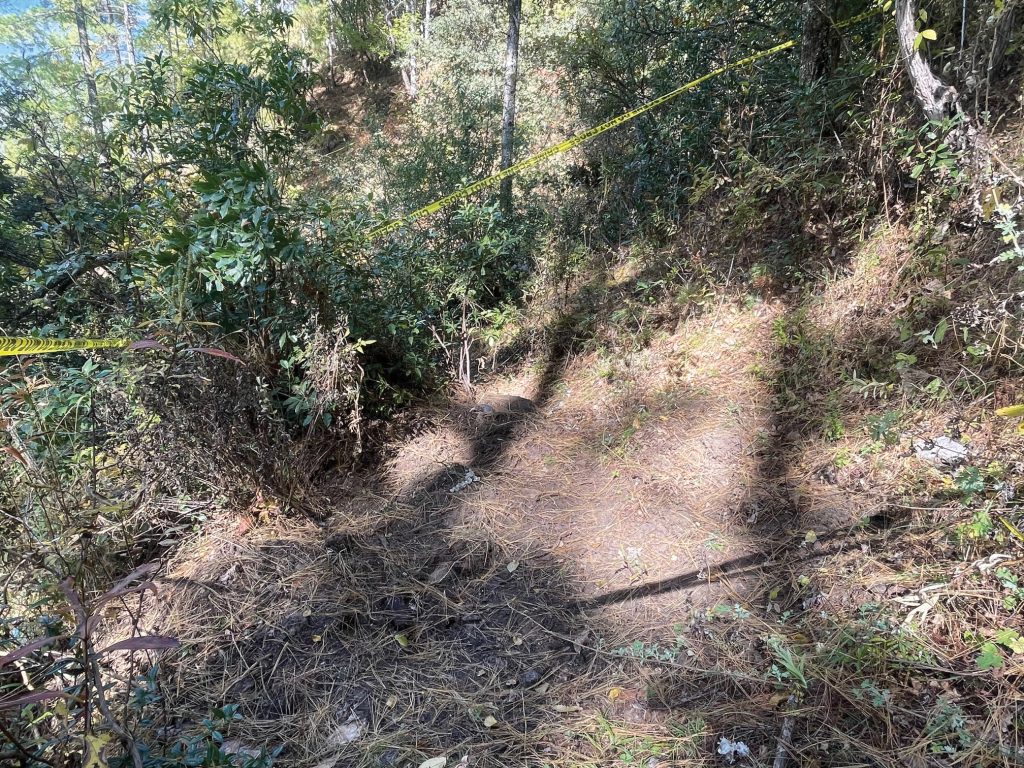
The pants and underpants were found here
A local who was a part of the search said it is likely that as the attacker was strangling her, she must have defecated. The local said the attacker had probably hidden the pant and undergarment away from the body to mask any smell while looking for the body. He said it was clear the attacker had used the pant to wipe the body of faeces to mask the smell on the main body.
The search intensified for the body, but search as they might, they could not find it. At around 6 pm, when it was dark and the teams were taking a tea break at the Gewog office with plans to call off the search for the day, a civil servant related to the family requested the police to continue the search for a little while longer in the dark.
The search continued, and by this time people were using torches and mobile phone torches to comb the same area where the bag and undergarments had been found.
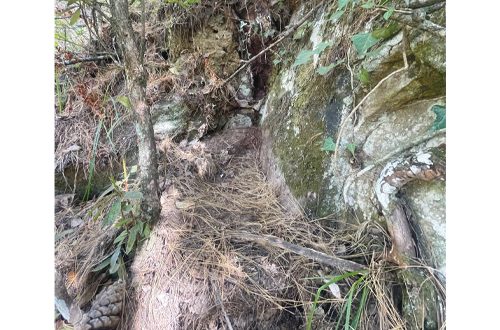
At 6.22 pm, a teacher using his mobile light first saw a small part of the victim’s school uniform coming out slightly in a step-like hollow formation next to a large rock. The teacher raised the alarm, and another teacher pointed his mobile torch and saw a small strand of human hair coming out from the front end. The teacher group then called the police, who took over the site and recovered the body. A medium-sized, flattish rock around a foot and a half in length had been placed on the girl’s legs to keep it down and hidden. A part of the body was in the hollow structure, and the upper part was covered by some light soil and local leaves.
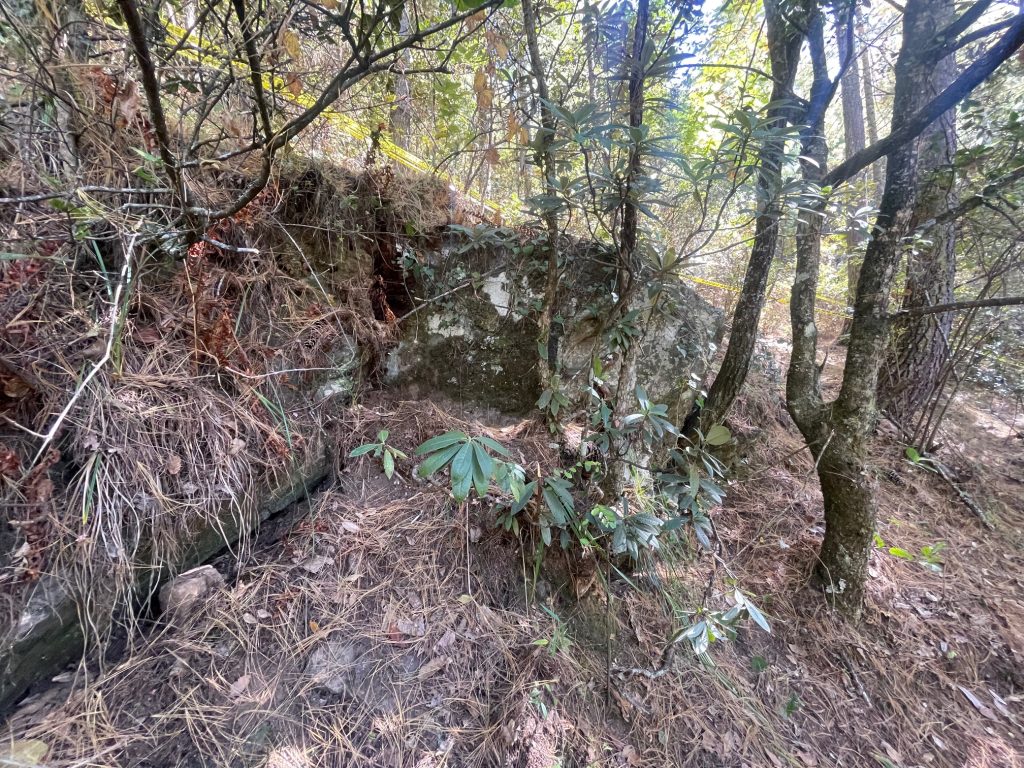
The place where the body was found
The body was found in a steep slope area around 100 metres above the road.
A teacher who was involved in the group said what worked in their favour at night was that the phone light was focused on a smaller area and things showed up in more detail and focus.
The soil is quite hard in the area, which explains why the murderer could not dig a hole to bury the body. The limited time after which the search started and continued till late night also meant that the attacker could not come back at night to dispose of the body and evidence.
Retracing the steps and the road
The reporter retraced the route of the girl from the school to her home by driving and found it takes around seven minutes at moderate speed. The crime scene area is hardly a minute away by car from the car park above her home.
Her aunty said it took around one hour for the victim to reach her home on foot from the school.
The reporter also parked his car in the afternoon on the road below the crime scene area and waited to note the level of road traffic. Only one car passed in around 20 minutes, showing that the road hardly has any traffic in the afternoon, which was also the time when the crime likely occurred on 5th November.
Since the victim had left school around 1.30 pm, it can be assumed that she had reached the crime scene area at around 2.30 or 3 pm, and it was only by around 5 pm that the aunty realised she was missing. This means the attacker had around 2 hours to 2 hours and 30 minutes to carry out the crime and then try and get rid of the evidence. The rape and murder happened in broad daylight in the afternoon above the road, and since it was a very isolated area, there was likely no eyewitness passing by who heard or saw anything.
The reporter then asked around to find out which set of people used the road regularly.
The end of the roadhead has around six houses below the parking, and these six houses consist of around 10 families, with some being their own landowners and some staying on rent. The reporter found eight cars that were parked there at night, including one taxi.
The Druk Ralung Shedrup Choling Monastery has around 50 monks of various ages, from children to adults, and while the senior teachers use cars (parked inside the monastery) to get around, the younger monks usually take shortcuts to get to shops and the town area.
Apart from the victim, there were six children from the community below the monastery and also beyond who went to the same school. Most of them are from class PP, class two and class four, and the oldest among them is a boy in class 10 who is the landlady’s son and used the same shortcut.
All the other children had come home except for the victim. The landlady’s son, who is a shy student, had come home by around 2 or 2.30, taking the shortcut, but he did not see or hear anything and had changed at home and left to play football, going back the same shortcut route and then coming home at around 5 or 5.30 pm.
Given the isolated nature of the road, there are also those who come on late-night dates in the evenings.
The uncle of the victim said that in the past they would see the occasional vehicle parked at the side of the road at night, just below the crime scene.
Apart from suspicions of a local or locals who may have committed the crime, another factor that cannot be ruled out is somebody who came in from outside in a vehicle too.
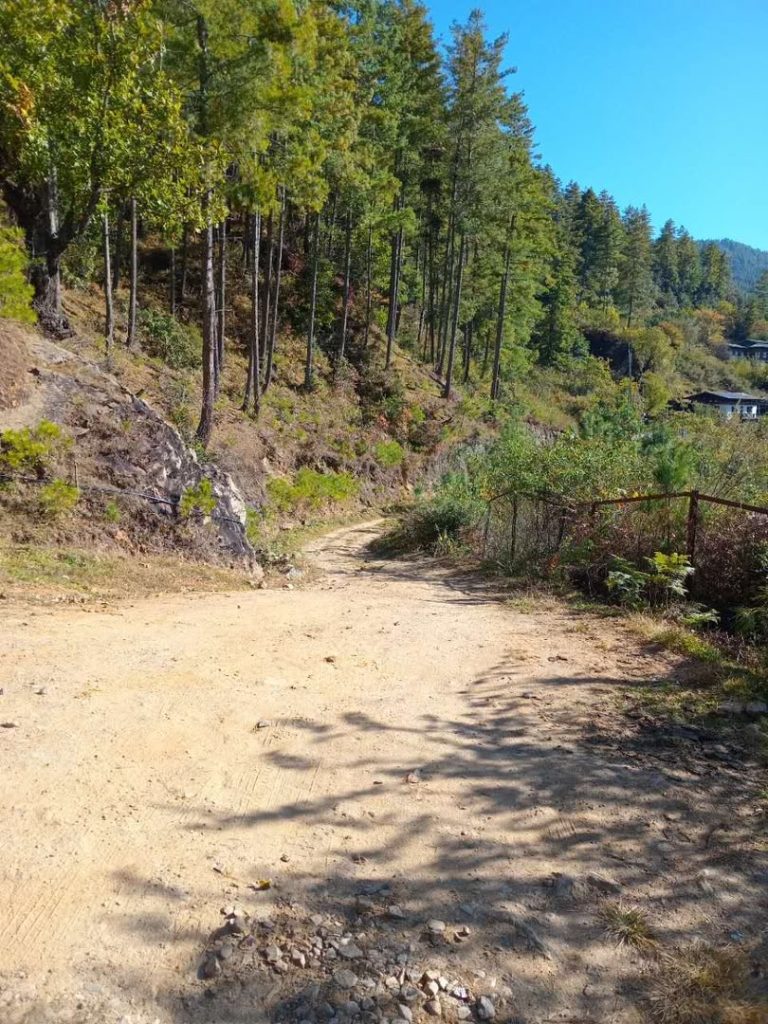
The shortcut which was not taken that day
The main suspect
The police have been searching the homes of the four suspects.
The main suspect who had touched the bag lives on the ground floor, just a floor below the victim, in what is a wide three-storied building, with the third storey effectively being an attic where the landlady stays. He makes religious statues.
A source said the main suspect had a habit in the past of sniffing thinner and would sometimes fight with his wife. In one instance, it got so loud that the landlady had given him a warning that she may ask him to leave. Since then, he did not engage in sniffing thinner or fighting again.
One of the reasons the police detained the four was their differing statements to the police on where they had been.
A good student
At school, the victim, by all accounts, was a good student, and the last position she secured was second in her class. A teacher said she was very punctual, well behaved and particularly good in science. She was small for her age and the silent type, but she also had two to three friends with whom she spent time. The victim also took part in sports. There was no known case of any trouble with the child, as teachers asked the counsellor and even her friends. Last year, she had in fact been helping the counsellor. The school had informed not only the students but also parents in a Telegram group that children would be let off early on 5th November.
At home, her aunty said she would come home, do her chores and then go to her room and study. She did not talk much at home and only talked when spoken to.
The aunty explained that the victim was her elder sister’s daughter and she had been sent here from class three onwards since the school in Trongsa was too far away from their village.
The aunty did most of the talking, as the mother, who had come from Trongsa, said she was in no condition to talk about her daughter.
A mother’s requests
The mother made two requests to the public. The first was not to share her pictures because she was afraid that a family member of the victim who was not yet aware of the death might be affected in upcoming exams. The other reason was that the mother was unable to bear seeing her daughter’s picture on TikTok. Many influencers who put up her picture took it down based on the request of another uncle.
The second request from the mother was for any eyewitnesses or those who had information to come forward and share it. The mother said she did not mind if the murderer was killed or even burned alive for the terrible crime he had committed.
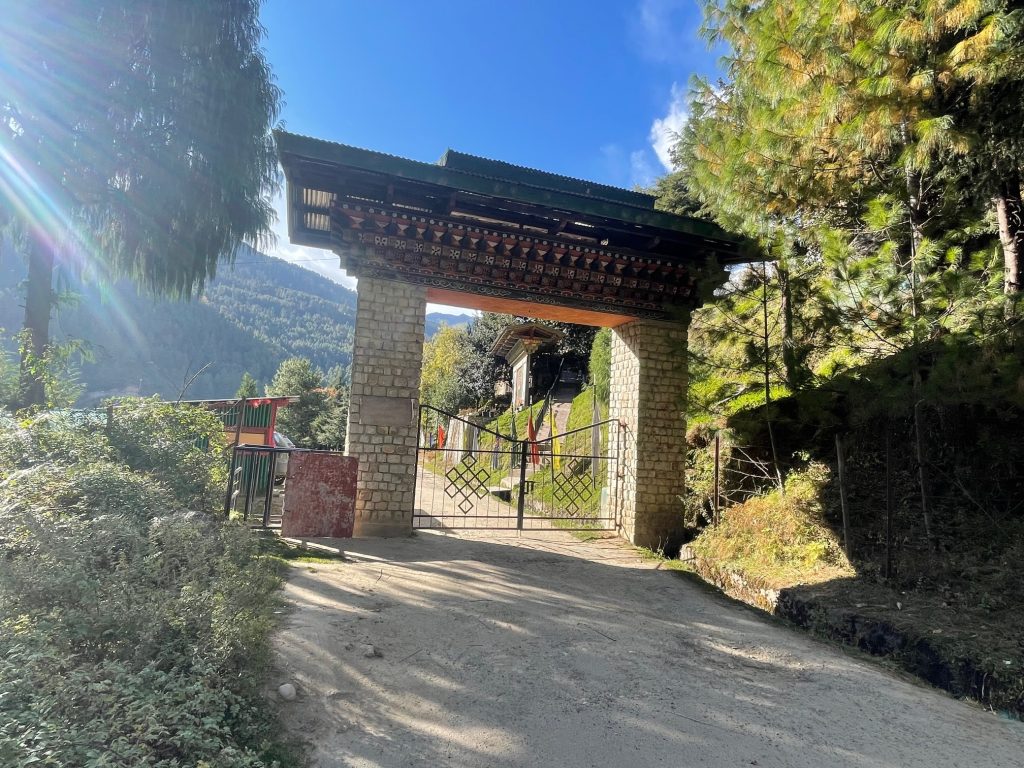
KMSS gate where victim started her walk