The Bhutanese Leading the way.
The Disabled People’s Organization of Bhutan (DPOB) has enrolled 1,321 members under its 10,000-member drive campaign, reaching 13.2 percent of its target, while expanding monthly assistance to 20 persons with disabilities. However, beneficiaries say access to skills development, employment opportunities and accessible infrastructure remains equally important to improving their lives.
The campaign, launched to encourage public participation and establish a sustainable support system for persons with disabilities (PWDs), aims to bring 10,000 individuals on board through monthly contributions and one-time donations.
According to DPOB, the number of beneficiaries receiving direct assistance has increased from 12 when the initiative was first reported in April this year to 20 currently. Monthly financial assistance has also doubled from Nu 1,000 to Nu 2,000 per beneficiary.
The assistance is intended to help beneficiaries meet essential daily needs, including purchasing diapers and other necessities. With 20 beneficiaries receiving Nu 2,000 each, the organization is providing Nu 40,000 in monthly assistance.
Despite the expansion of its support, the campaign has enrolled only 1,321 members so far, leaving 8,679 more members to reach its target.
DPOB said one of its main challenges is maintaining consistent monthly contributions to ensure continued support for beneficiaries. Limited public awareness of the organization and its work has also affected efforts to attract new members and secure regular contributions.
The organization is also exploring collaborations with social media influencers to promote the campaign and reach a wider audience.
Beyond monthly financial assistance, DPOB provides various forms of support to address the needs of PWDs, particularly those from financially disadvantaged backgrounds.
These include assistive devices such as bedside toilets, anti-bedsore mattresses, white canes and crutches. The organization also provides educational stipends to help PWDs continue their studies.
In addition, DPOB provides one-time medical assistance of Nu 20,000 to beneficiaries seeking medical treatment in India.
Depending on available resources and projects, the organization also facilitates vocational and skills development programs in areas such as information and communication technology, housekeeping, tailoring, bakery, massage and traditional music.
DPOB also operates Dra-Nyam, an outlet that provides a platform for PWDs to showcase and sell their products, supporting their livelihoods and economic empowerment.
The Wheelchair Home for Hope and Joy currently supports six beneficiaries, while the organization’s SSCI+ Club engages members in community service and activities promoting awareness, care and inclusion.
For some beneficiaries, financial assistance is only one part of the support they need. Access to skills development, employment opportunities and disability-friendly infrastructure remains equally important.
Tandin Gyaltshen, 30, who became paralyzed following brain tuberculosis, is among those receiving support from DPOB. While he appreciates the assistance, he hopes to participate in vocational skills development programs to become more independent and earn a livelihood.
Although he cannot use his legs, Tandin said he can still perform tasks using his hands and wants an opportunity to develop skills that would allow him to work.
However, accessing skills development programs has been difficult because he requires assistance with basic daily activities, including using the toilet. The lack of adequate support and accessibility arrangements makes it challenging for him to participate in training programs.
Tandin previously worked in marketing for a tailoring business run by another DPOB member, Leki Lhaden. However, after she closed her tailoring business, he lost his source of employment, making it difficult for him to continue earning.
After spending nearly two years unable to face society, Tandin now hopes to regain his confidence, acquire new skills and demonstrate his abilities.
He said he wants a platform where he can develop his skills and prove that he is capable of contributing to society.
Beyond employment, Tandin also highlighted the everyday difficulties wheelchair users face when accessing public places. Even visiting shops can become challenging because of inadequate infrastructure and the lack of proper accessibility facilities.
He said the services provided by hospitals have been helpful and expressed hope that similar attention to accessibility could be extended to other public places.
His experience highlights the need for disability support to go beyond monthly financial assistance, with greater attention to accessible infrastructure, practical skills training and employment opportunities that allow PWDs to participate meaningfully in society.
While organizations such as DPOB provide financial and material assistance, other disability-focused organizations are also working to address gaps in early intervention, rehabilitation, education and social inclusion.
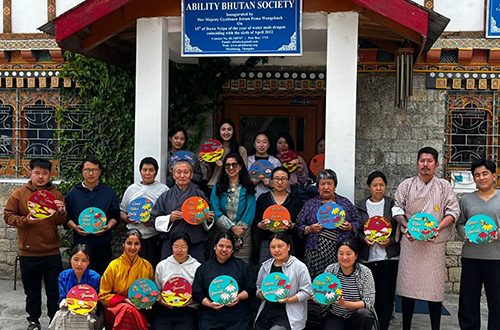
The Ability Bhutan Society (ABS) currently provides daily early intervention services to around 39 children with disabilities at its center in Thimphu. Although the center is based in the capital and does not have regional centers, ABS said its outreach projects and programs have reached PWDs, children and their families and caregivers across all 20 districts.
The organization said its services focus on early identification of developmental delays, supporting families and caregivers, promoting social inclusion, protecting disability rights and helping PWDs develop independence and live with dignity.
However, ABS highlighted several challenges faced by children with disabilities and their families, including delayed identification and diagnosis, limited access to appropriate education, healthcare and rehabilitation services, and social stigma and discrimination.
Families and caregivers also face financial burdens, emotional and psychological stress, limited caregiving knowledge and skills, and concerns about their children’s future.
At the service delivery level, ABS identified Bhutan’s difficult geographical terrain, shortages of specialized professionals, limited accessible infrastructure, lack of assistive devices and gaps in coordination among service providers as major challenges.
The organization also said that although it reaches all 20 districts through its outreach activities, its long-term project is currently implemented in eight districts.
Financial sustainability remains another concern. ABS said it does not have a reliable source of funding and depends largely on development-partner funding and grants to continue its programs.
While development partners support specific projects with defined objectives, geographical coverage and implementation periods, ABS said such funding does not adequately cover recurring institutional and operational expenses.
As a result, strengthening partnerships and collaborations and raising additional funds remain priorities for the organization.
DPOB said its long-term plan is to expand public participation and establish partnerships with individuals, businesses, agencies and institutions to sustain assistance for PWDs.
The organization is encouraging more Bhutanese to become monthly contributing members, stating that regular contributions are essential to maintaining support for beneficiaries and expanding its programs. This will ensure PWDs and their families receive the assistance they need.
For beneficiaries like Tandin, however, support must also translate into opportunities to learn, work and participate in society with dignity. Reaching the 10,000-member target may strengthen financial assistance, but ensuring that PWDs can live independently and contribute to society requires more than monthly contributions.
The Bhutanese will continue to follow up on the issue in its next edition, looking further into the challenges faced by persons with disabilities, particularly in accessing skills development, employment opportunities, healthcare and disability-friendly infrastructure.